13 illustrations · 1:30
Watch & listen.
Follow the images with a narrated journey through the book.



Overview
- Coverage
- c.3500–539 BCE
- Earliest secure evidence
- c.3500 BCE
- Transmission
- the scribal school and the collated tablet
That is the fact this volume is built on. Writing was invented in southern Iraq to run a storehouse, and for roughly its first five centuries it was spent on barley, beer, sheep and land. The gods of these cities were householders with estates, staff and posted lending rates, and the record they left is an economic one, which is why it can be checked.
The coverage period and the earliest secure evidence are different dates. A tradition’s own account of its beginnings may differ from both.
Historical setting
The Disk of Enheduanna
The first author in human history whose name survives is a priestess — Enheduanna, daughter of Sargon, en-priestess of the moon god at Ur around 2300 BCE — and the two ways we know her teach the series’ whole method in one object: a carved disk from her own lifetime establishes that she existed and held the office, while the hymns that carry her name survive only in schoolroom copies five centuries younger, so her authorship is a tradition, and the chapter says which is which.
The Stacked Shrines
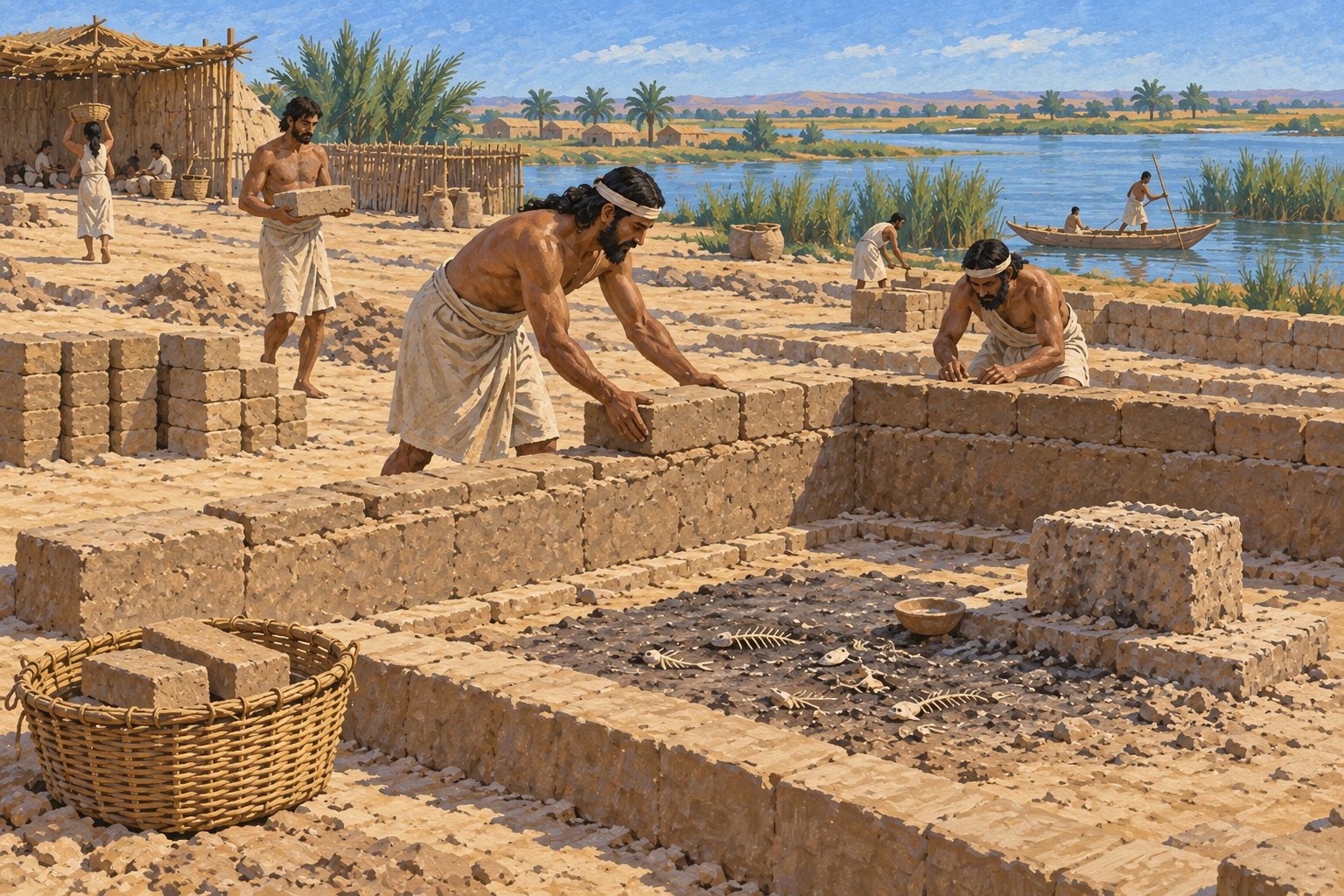
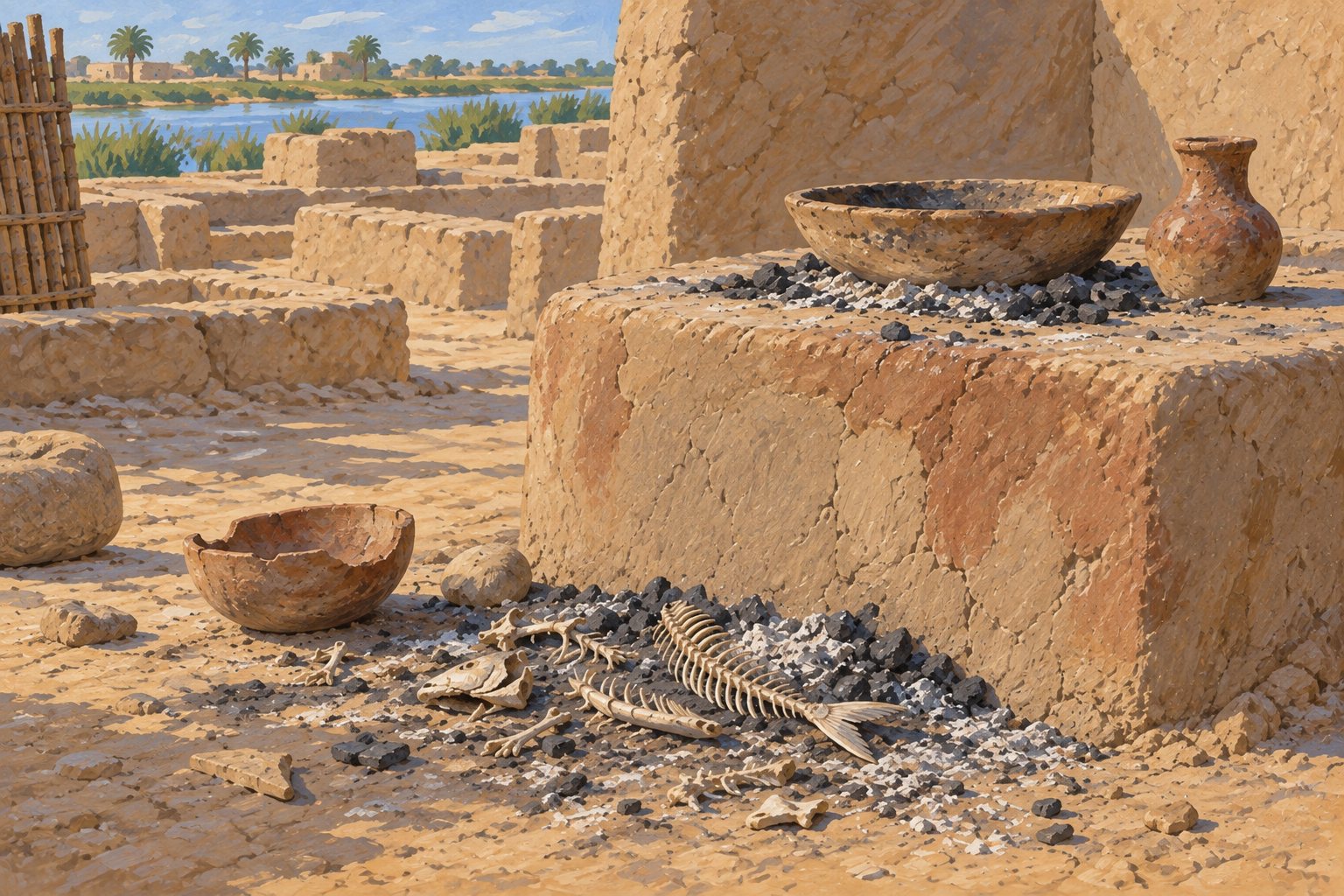
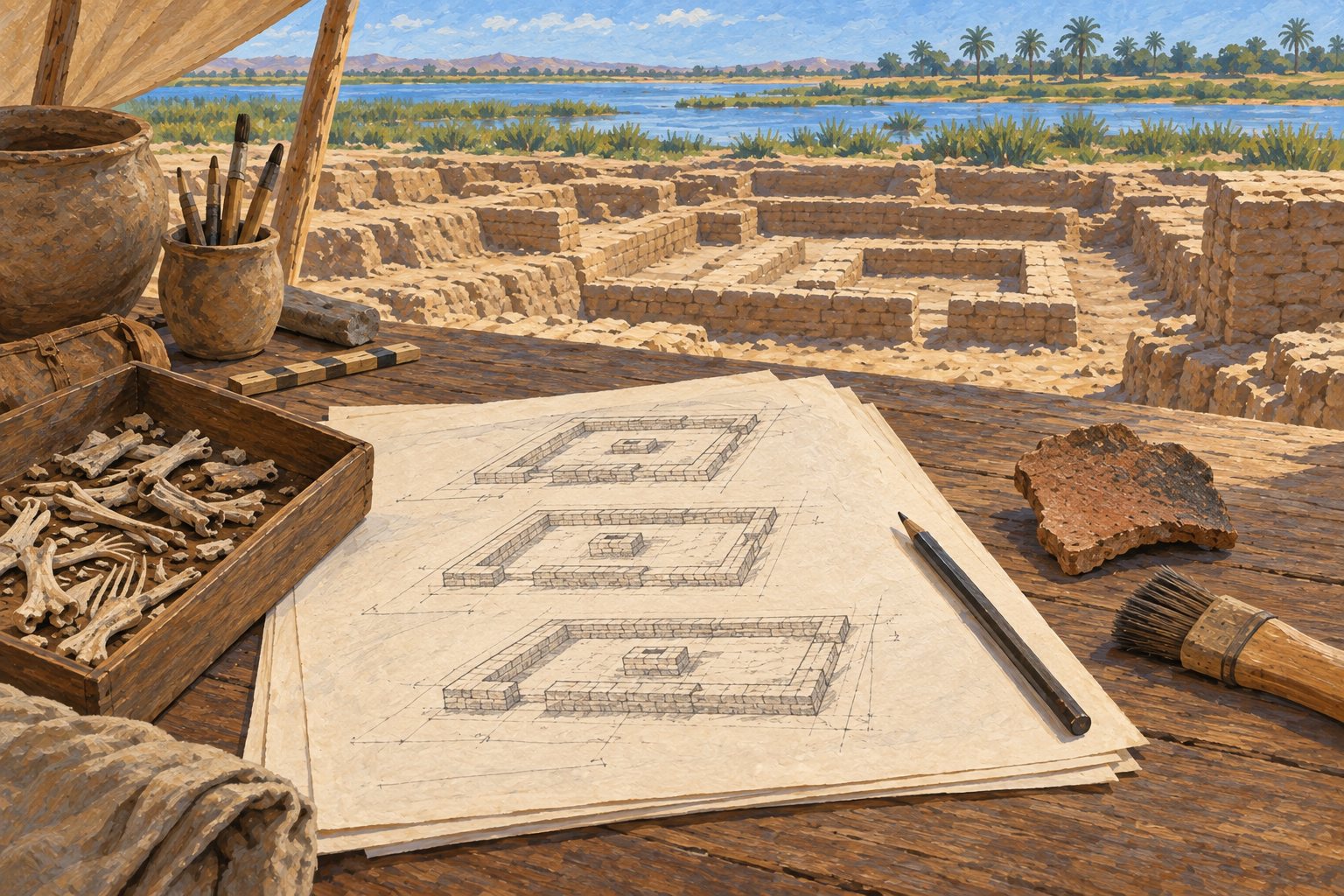
Two thousand years before any god’s name can be read, belief is attested at Eridu by architecture and ash — a sequence of shrines rebuilt on the same footprint from the sixth millennium into the fourth, their floors and altars littered with the fish bones of offerings — which makes the volume’s baseline point physically: attestation comes first, and everything the later tradition says about beginnings is a claim made afterwards, from a distance the chapter measures.
Explore the illustrations5 scenes · Shrine foundations at Eridu
Shrine foundations at Eridu. Two thousand years before any god’s name can be read, belief is attested at Eridu by architecture and ash — a sequence of shrines rebuilt on the same footprint from the sixth millennium into the fourth, their floors and altars littered with the fish bones of offerings — which makes the volume’s baseline point physically: attestation comes first, and everything the later tradition says about beginnings is a claim made afterwards, from a distance the chapter measures.
How it was transmitted
The Tablet House
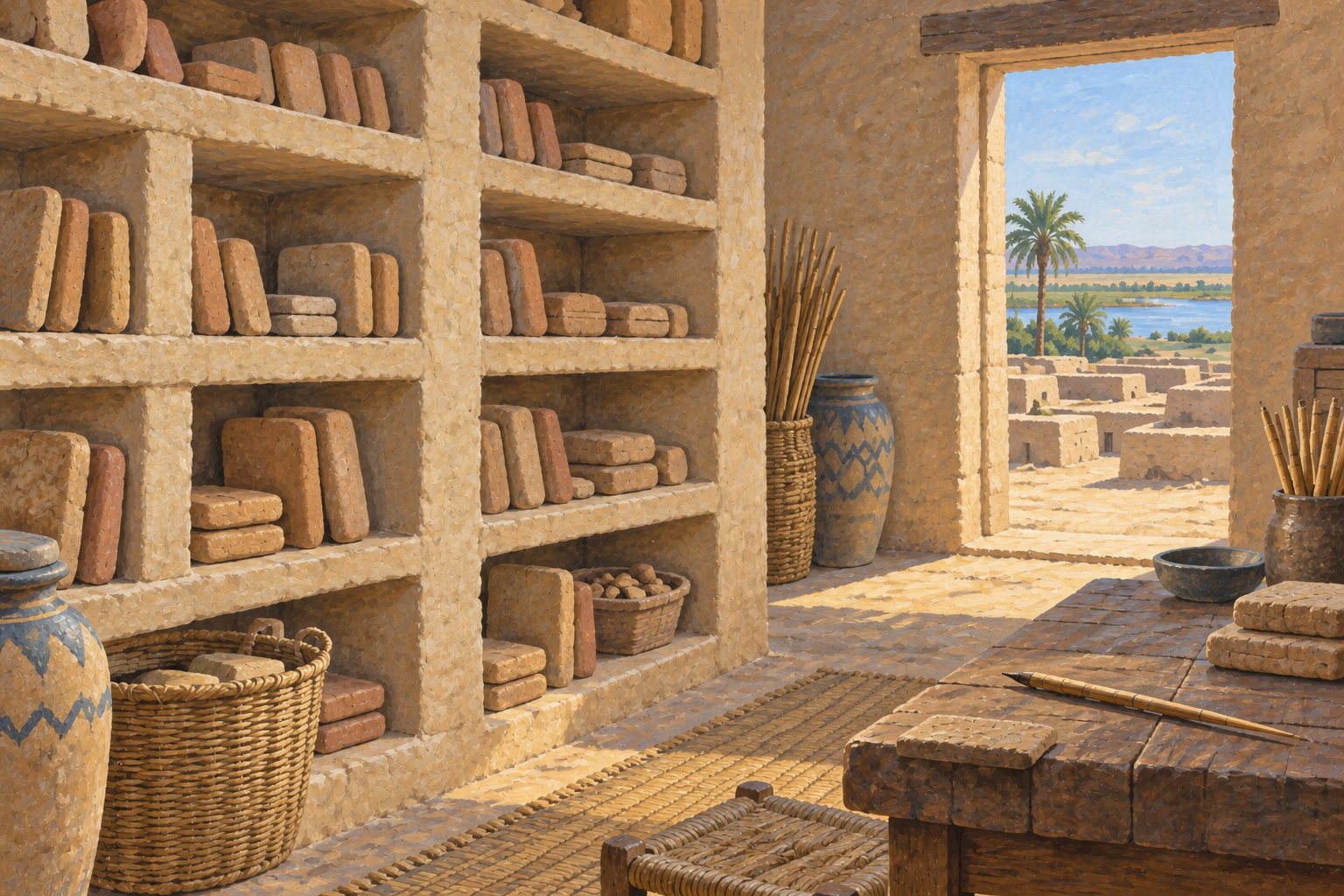
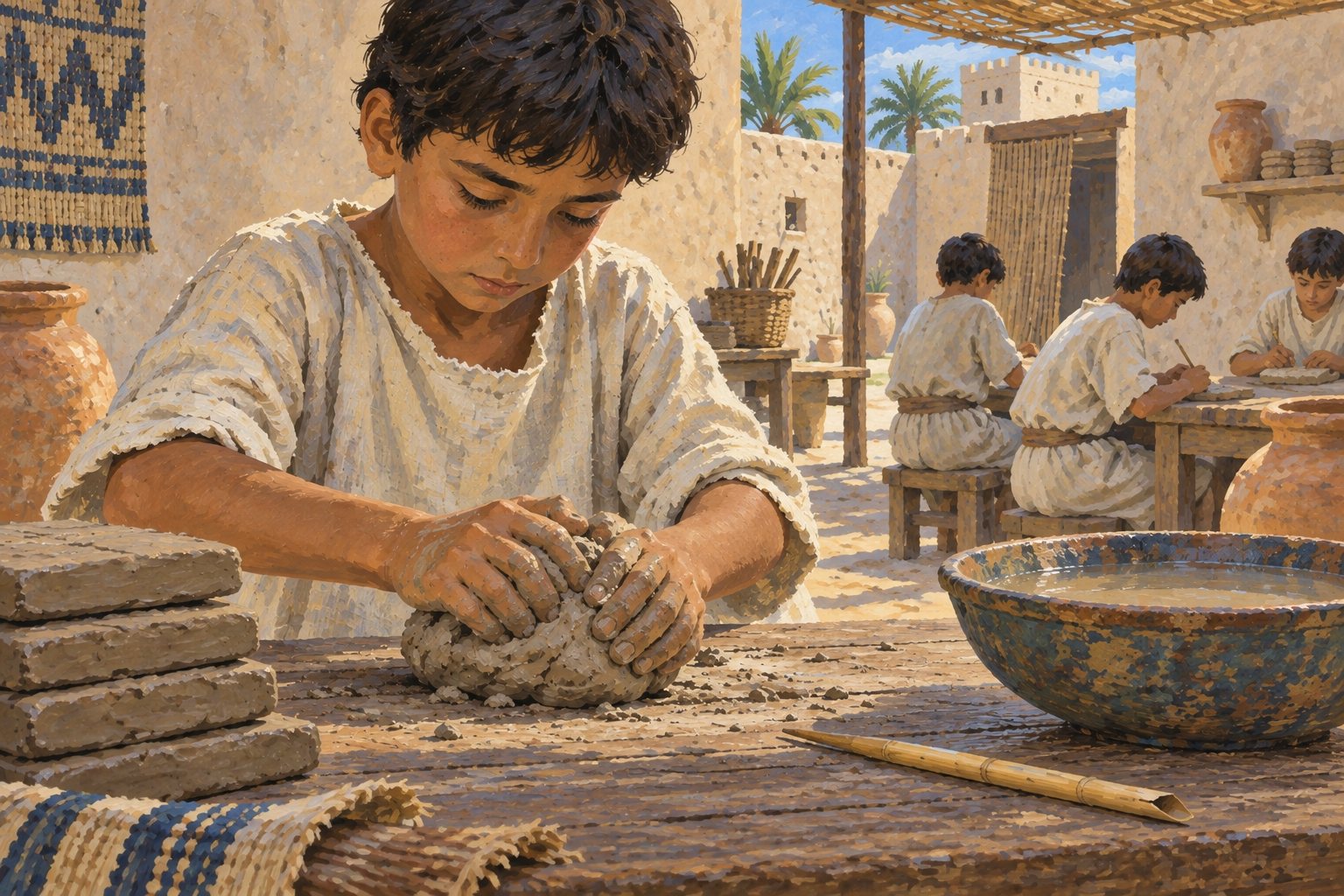
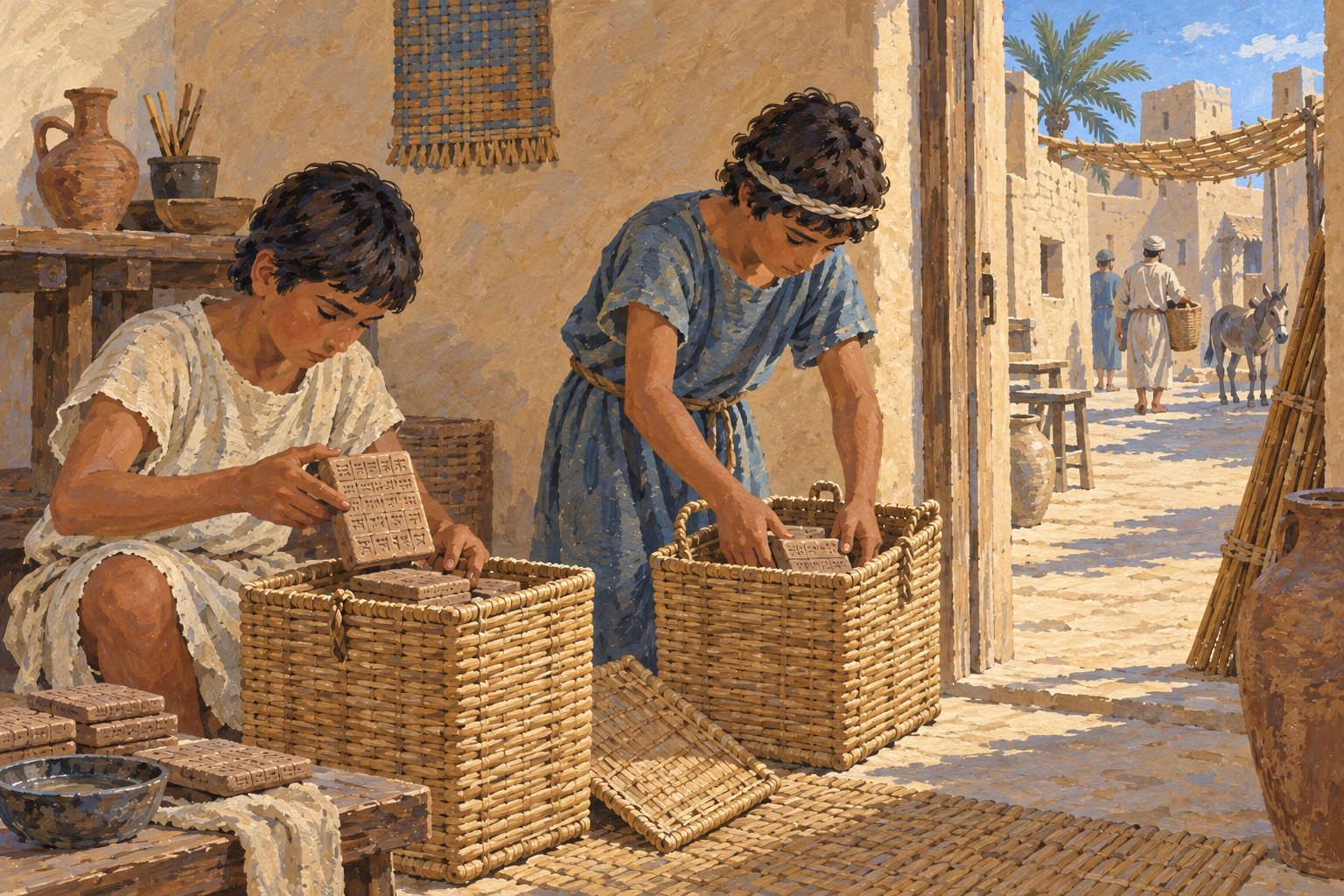
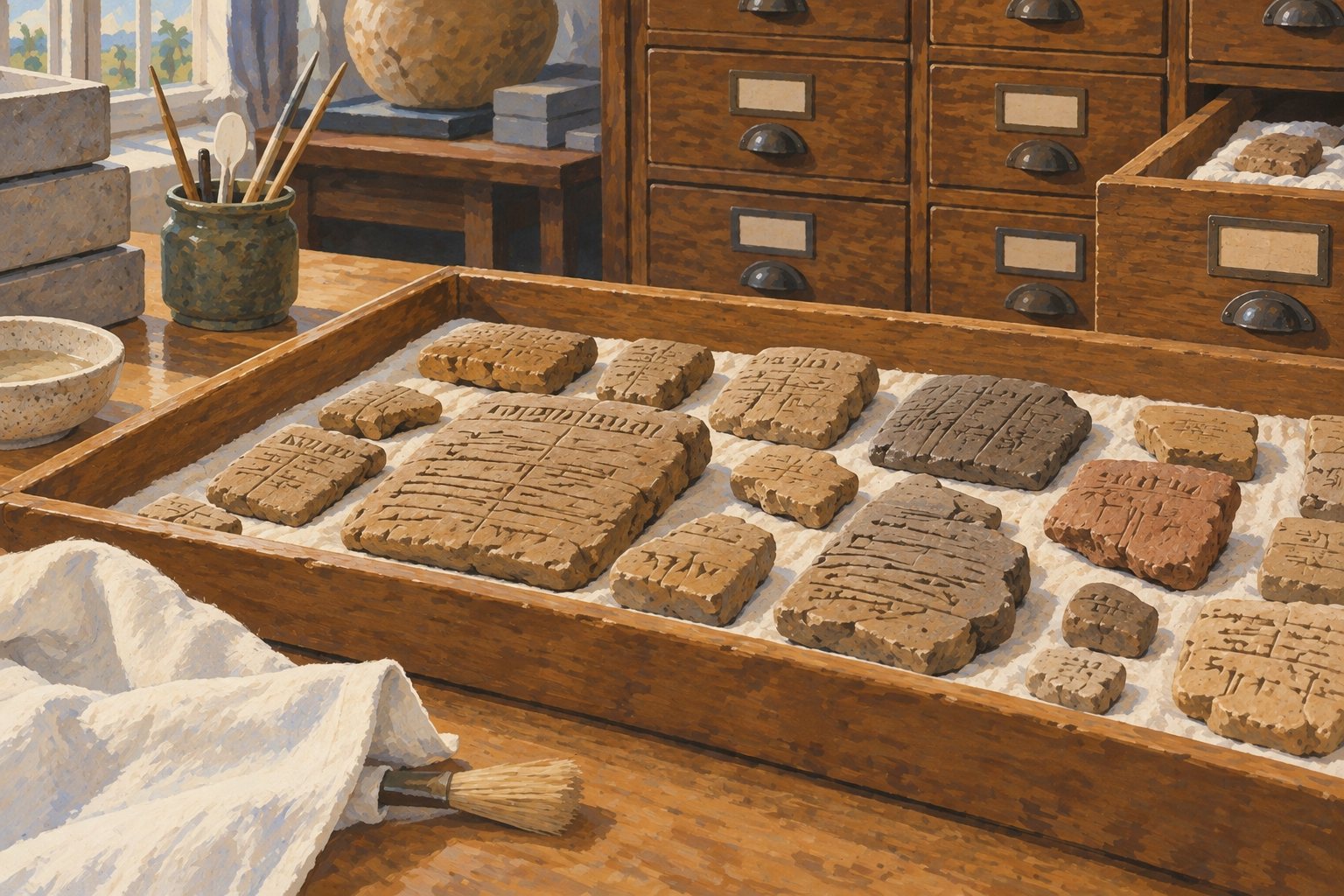
The replication machine of this tradition was the edubba, the “tablet house” — in the one excavated case a private home of a few small rooms, where a dozen boys at a time copied a fixed curriculum onto recycled clay — and the machine’s smallness is the finding: no ministry and no priesthood ran it, yet its output was standardised across cities.
The List of Everything
The curriculum was lists — sign drills, then thematic lists of trees, professions, gods, stones and fish, copied in a fixed sequence for centuries — so a student at Nippur and a student at Ur internalised the same textual canon without any authority ever decreeing one, and the measure of the machine’s fidelity is the Standard Professions List, transmitted essentially verbatim from the archaic period deep into the second millennium, long after many of its job titles had gone dead.
Explore the illustrations3 scenes · Inside the tablet house
Inside the tablet house. The replication machine of this tradition was the edubba, the “tablet house” — in the one excavated case a private home of a few small rooms, where a dozen boys at a time copied a fixed curriculum onto recycled clay — and the machine’s smallness is the finding: no ministry and no priesthood ran it, yet its output was standardised across cities.
Texts and authority
The Canon That Never Closed
Mesopotamia had everything a canon needs — fixed series with numbered tablets, catalogues, attributed authors, collation, even a native catalogue assigning texts to gods, sages and men — everything except an institution with the authority to say “this and no more”; closing a canon is a political capability, not a literary one, and a land of rival cities, rival dynasties and family scribal firms never produced the politics, so the corpus stayed curated, versioned and open for twenty-five centuries.
Theology by List
The native genre of theology was the list: from the god lists of Fara around 2600 BCE to the great series An = Anum — seven tablets and roughly two thousand entries, the pantheon organised into households with spouses, children, viziers and staff — gods were catalogued, equated, merged and demoted the way ledgers are reconciled, which is theology done by the same craft that ran the storehouse, in a genre that can always take another entry and so can never close.
Institutions and resources
The Estate of the God
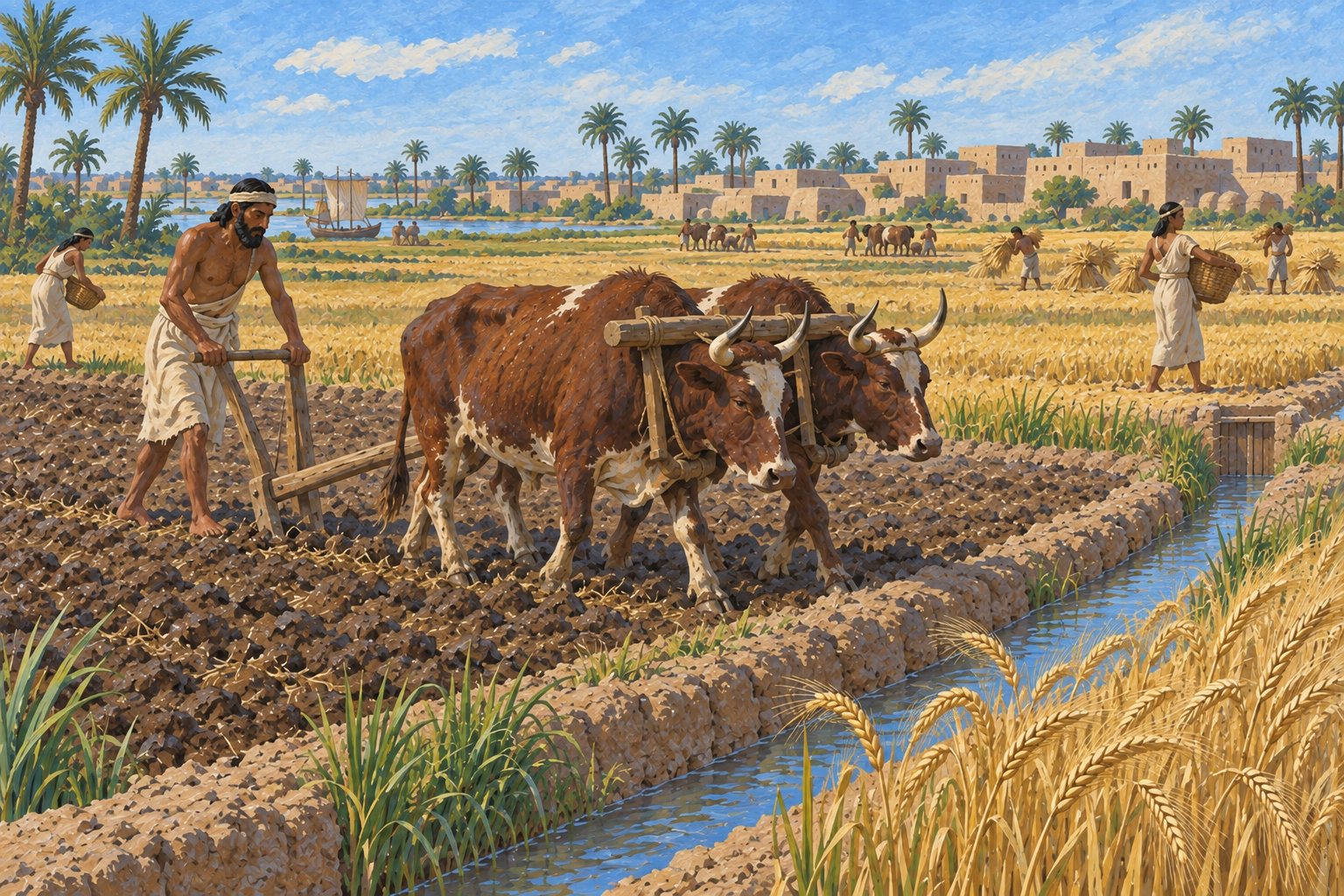
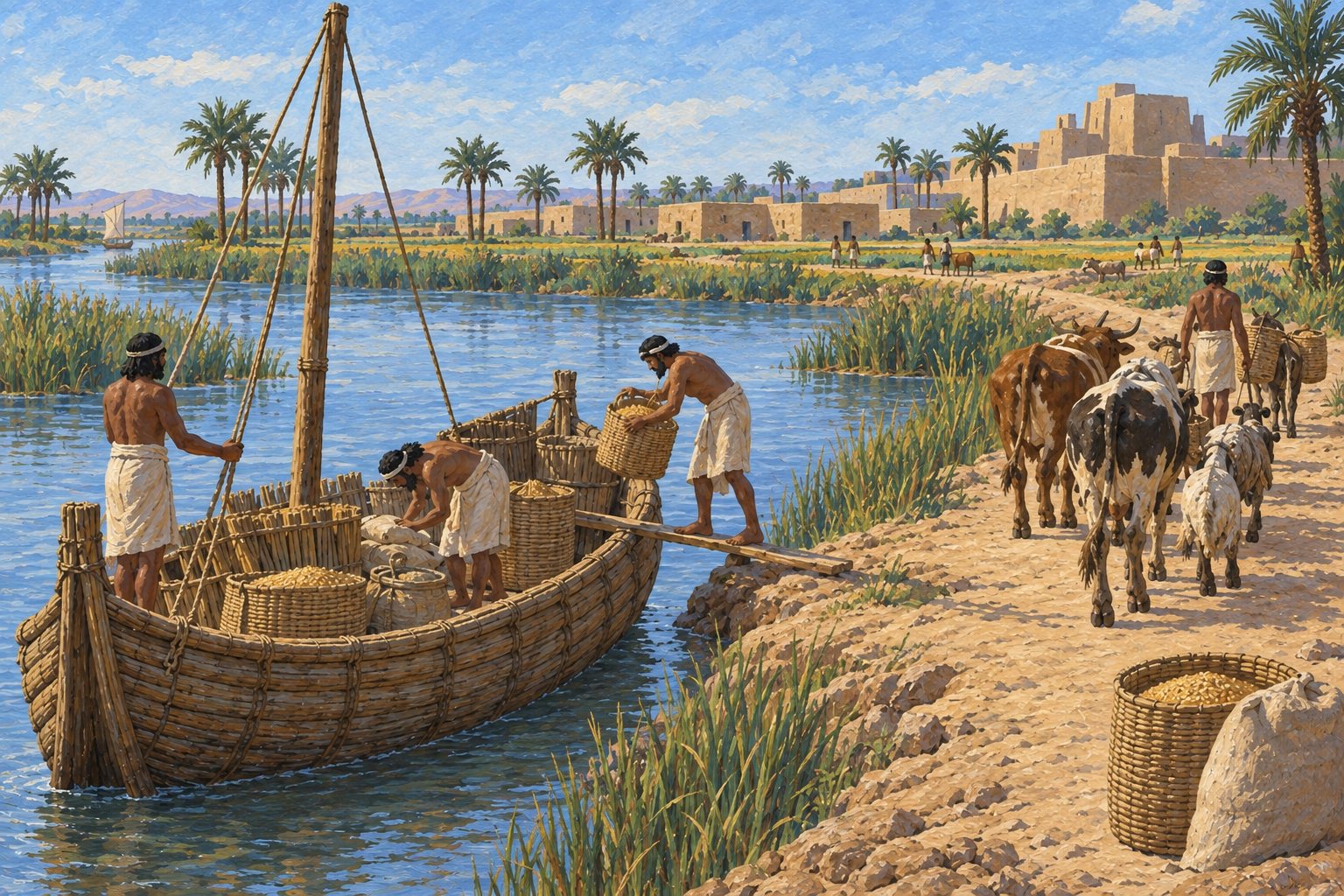
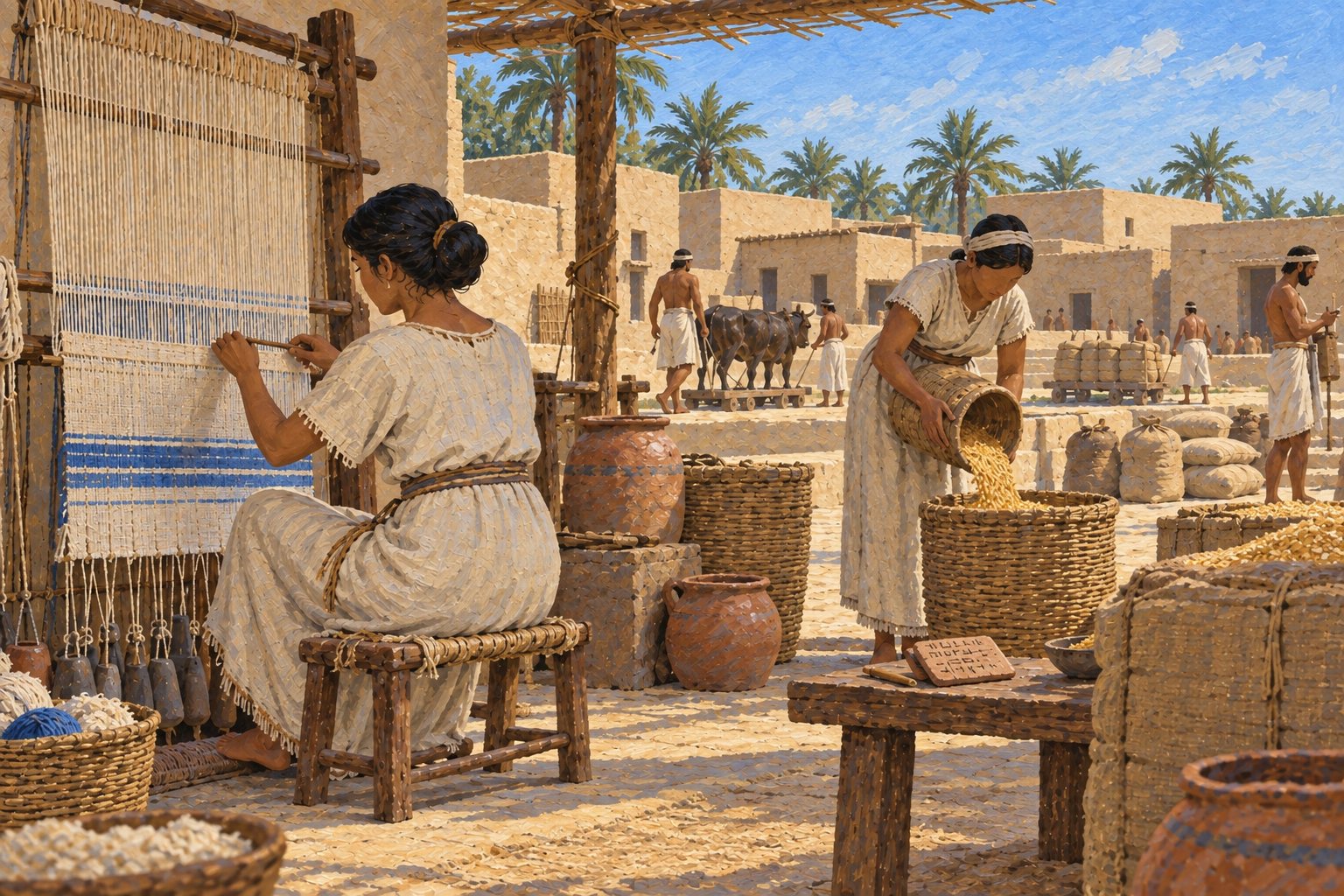
The earliest well-documented religious institution on earth is a payroll: the mid-third-millennium archive of the household of the goddess Bau at Girsu — on the conventional count some seventeen hundred tablets of fields, plough-teams, herds and boats, with ration lists that name weavers, orphans and widows — and the first great modern generalisation built on it, that the temple owned everything, turned out to be wrong, which this series treats as a finding about method: an archive is a sample, not an economy.
The Posted Rates
Temples were grain-stores and lenders, and the price of credit was so conventional it was legislated — 20 per cent on silver, 33⅓ per cent on barley, rates posted in the Laws of Eshnunna and repeated in Hammurabi’s code — and the differential is the sociology, on the standard reading, which the chapter reports rather than owns: silver moved between merchants, barley fed the hungry until harvest, and the loan likelier to fail carried the higher rate.
Explore the illustrations5 scenes · Rations from the estate
Rations from the estate. The earliest well-documented religious institution on earth is a payroll: the mid-third-millennium archive of the household of the goddess Bau at Girsu — on the conventional count some seventeen hundred tablets of fields, plough-teams, herds and boats, with ration lists that name weavers, orphans and widows — and the first great modern generalisation built on it, that the temple owned everything, turned out to be wrong, which this series treats as a finding about method: an archive is a sample, not an economy.
Changes and divisions
The King Who Loved the Moon
The last native king of Babylon, Nabonidus (556–539), moved the moon god Sin toward the summit of the pantheon — rebuilding Sin’s temple at Harran, crediting Sin with his kingship, and reviving at Ur, after centuries of lapse, the very priestess-office Enheduanna had held, installing his own daughter in it — a reordering that the tradition’s open canon could not forbid and only a rival king could stop; and nearly everything narrative we know about it comes from his enemies’ documents or his own, with no neutral text between them.
Ten Years Without the Festival
The state cult had a single point of failure — the New Year festival required the king’s own hand on Bel in Babylon on fixed days — and for about ten years Nabonidus was at the Arabian oasis of Tayma while the chronicle logged the outage in a repeating formula: the king did not come, Nabu did not come, Bel did not go out, the festival was omitted.
Limits of the evidence
These limits are stated in the book before its argument.
- When any of it began, or from what The oldest evidence is architecture and offering debris — a stack of shrines at Eridu with fish bones on the floors — with no readable name of any god. The c.3500 of the title page is where the material record thickens, not a founding; there is no founder, no founding event, and no founding date, and the volume’s front matter prints the attestation-versus-tradition distinction that fact forces (per the series chronology’s standing flag on this volume).
- What anyone believed The corpus is the output of temple and school scribes. It documents what institutions wrote, paid for and copied — not what a farmer at Nippur held true. Private religion is glimpsed obliquely, in personal names and letters, and the volume says “glimpsed” when it means glimpsed.
- That Enheduanna composed the hymns that bear her name A carved disk and household seals establish, from her own lifetime, that she existed and held the office. The hymns naming her as their compiler survive only in school copies five centuries younger, and the attribution is contested. The record shows the priestess; the tradition supplies the author.
Sources and reading
This article brings together the series’ existing overview and chapter summaries. The linked book page provides the full outline and bibliography.
- Calcite disk of Enheduanna, Penn Museum, from Woolley’s giparu at Urconventionally c. 2300 BCE; found 1927. her name, office and filiation on a lifetime object
- Cylinder seals of Enheduanna’s household staff, UrSargonic. contemporaneous administrative corroboration of her household
- Sumerian Temple Hymns, Old Babylonian school copies, ETCSL compositecopies c. 1800–1600 BCE. the compiler line naming Enheduanna
- nin-me-šara, Old Babylonian school copies; Hallo and van Dijk, The Exaltation of Inannacopies Old Babylonian; ed. 1968. the first-person signature; the live authorship debate
- Safar, Mustafa and Lloyd, Eriduexcavations 1946–49; report 1981. seventeen superimposed shrines and the fish-bone floors
- Sumerian King List, Ashmolean WB 444Old Babylonian, year 11 of Sin-Magir. “kingship was at Eridu” as later tradition, not as a date
- Thureau-Dangin, Rituels accadiens1921. Seleucid daily meals of Anu; the Akitu slap and confession
- A. Leo Oppenheim, Ancient Mesopotamia1964. care and feeding of the gods; the “stream of tradition”
Illustrations are newly generated interpretations of themes in the book. They are not surviving artifacts, historical photographs or evidence for the events described.