14 illustrations · 1:34
Watch & listen.
Follow the images with a narrated journey through the book.



Overview
- Coverage
- 1208 BCE onward
- Earliest secure evidence
- 1208 BCE
- Transmission
- scribes who count letters and log their own errors
That is this volume’s argument, and the object that carries it is a small circle over a word.
The coverage period and the earliest secure evidence are different dates. A tradition’s own account of its beginnings may differ from both.
Historical setting
A People, Not a Place
Secure attestation begins with an enemy’s boast — Merneptah’s victory stele of about 1208 BCE lists “Israel” among the defeated, written with the hieroglyphic marker for a people rather than for a city or a land — so the first documented fact about Israel is that it existed as a people before any state, temple or book can be shown, which is where this volume starts and why.
The Villages in the Hills
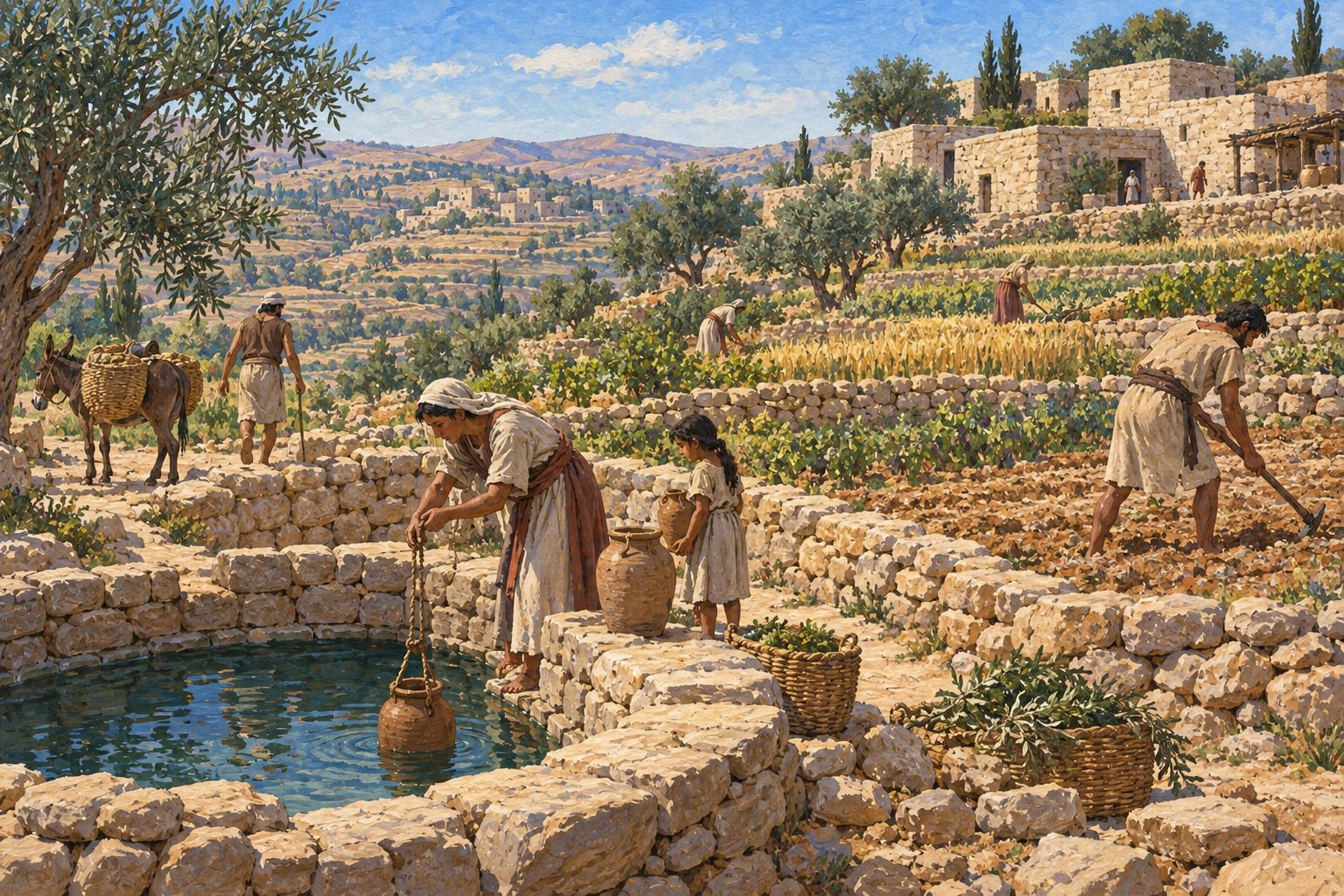
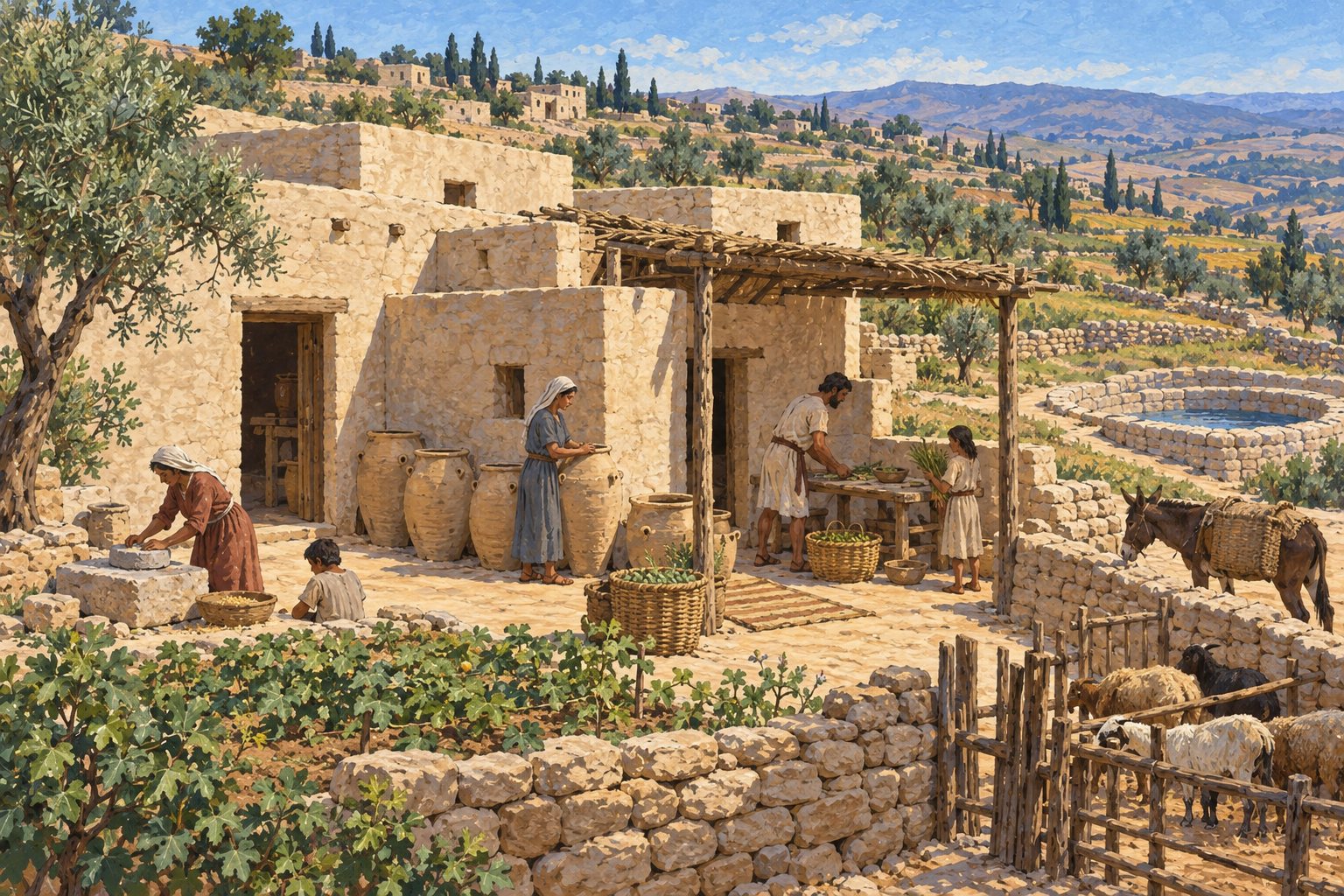
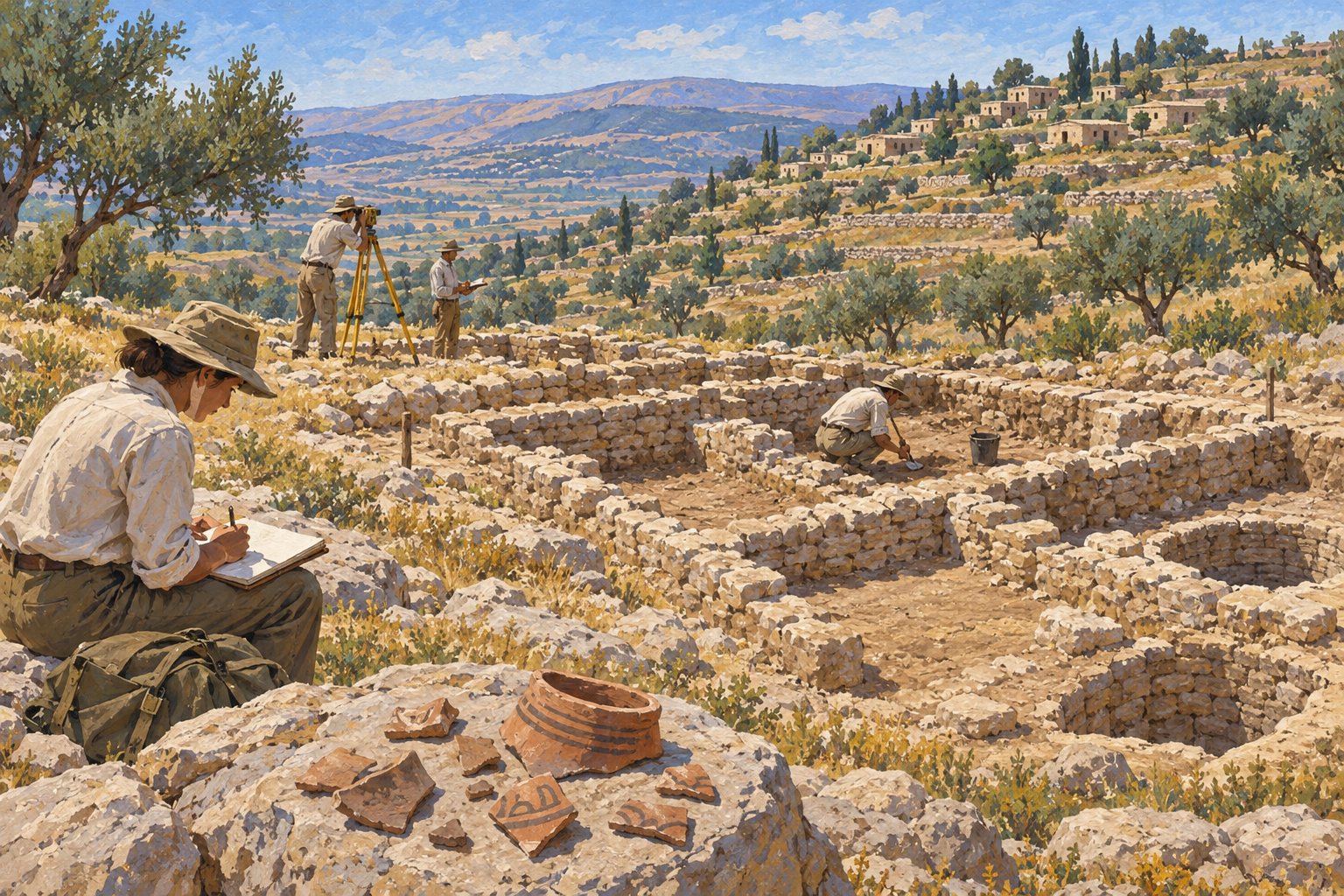
Around 1200 BCE the surveys show hundreds of new small farming villages appearing in the central highlands of Canaan — four-room houses, collared-rim jars, terraces and cisterns — while the tradition tells a conquest from outside; the chapter reports the settlement record and the conquest narrative side by side as answers to different questions, and adjudicates neither.
Explore the illustrations4 scenes · Highland village
Highland village. Around 1200 BCE the surveys show hundreds of new small farming villages appearing in the central highlands of Canaan — four-room houses, collared-rim jars, terraces and cisterns — while the tradition tells a conquest from outside; the chapter reports the settlement record and the conquest narrative side by side as answers to different questions, and adjudicates neither.
How it was transmitted
The Counters
The tractate Kiddushin preserves the tradition’s own name for its transmission workers — soferim, “counters,” because “they counted all the letters in the Torah,” with midpoints remembered to the letter and the word — and the same passage carries the admission that makes the machine credible rather than mythical: “they were expert in defective and plene spellings; we are not” — a transmission system honest enough to log the decay of its own expertise.
The Text Before the Machine
Two finds bracket the machine’s prehistory — the silver amulets of about 600 BCE, and the Qumran library four centuries on, where the biblical text exists in demonstrable plurality: a Jeremiah manuscript matching the shorter Greek edition shelved beside manuscripts matching the received one — so the standardised text the counters guarded is the survivor of a plural field, and the Great Isaiah Scroll, a thousand years older than the oldest complete Hebrew Bible codex, shows how well the survivor was then carried.
Explore the illustrations5 scenes · The kept pages
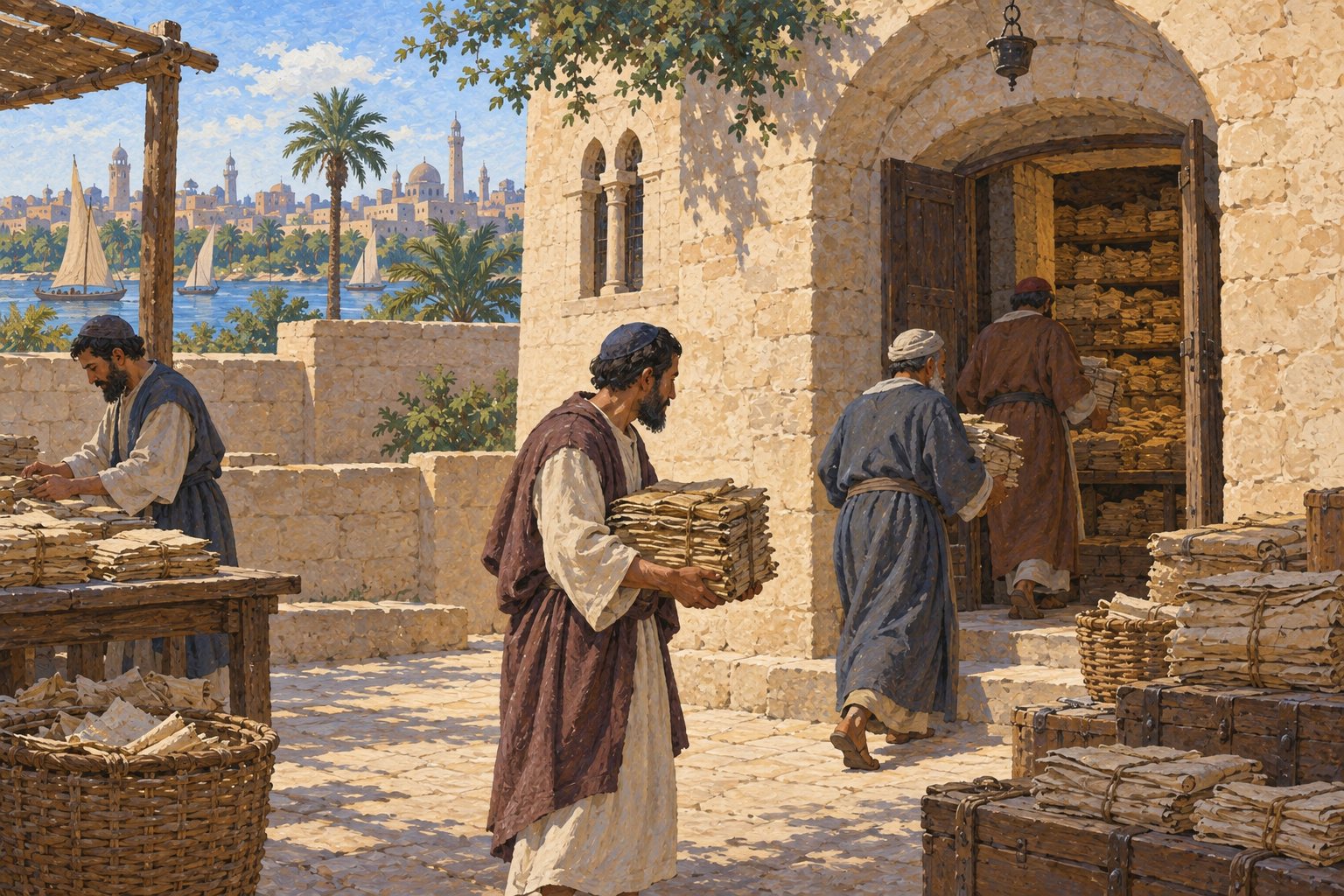
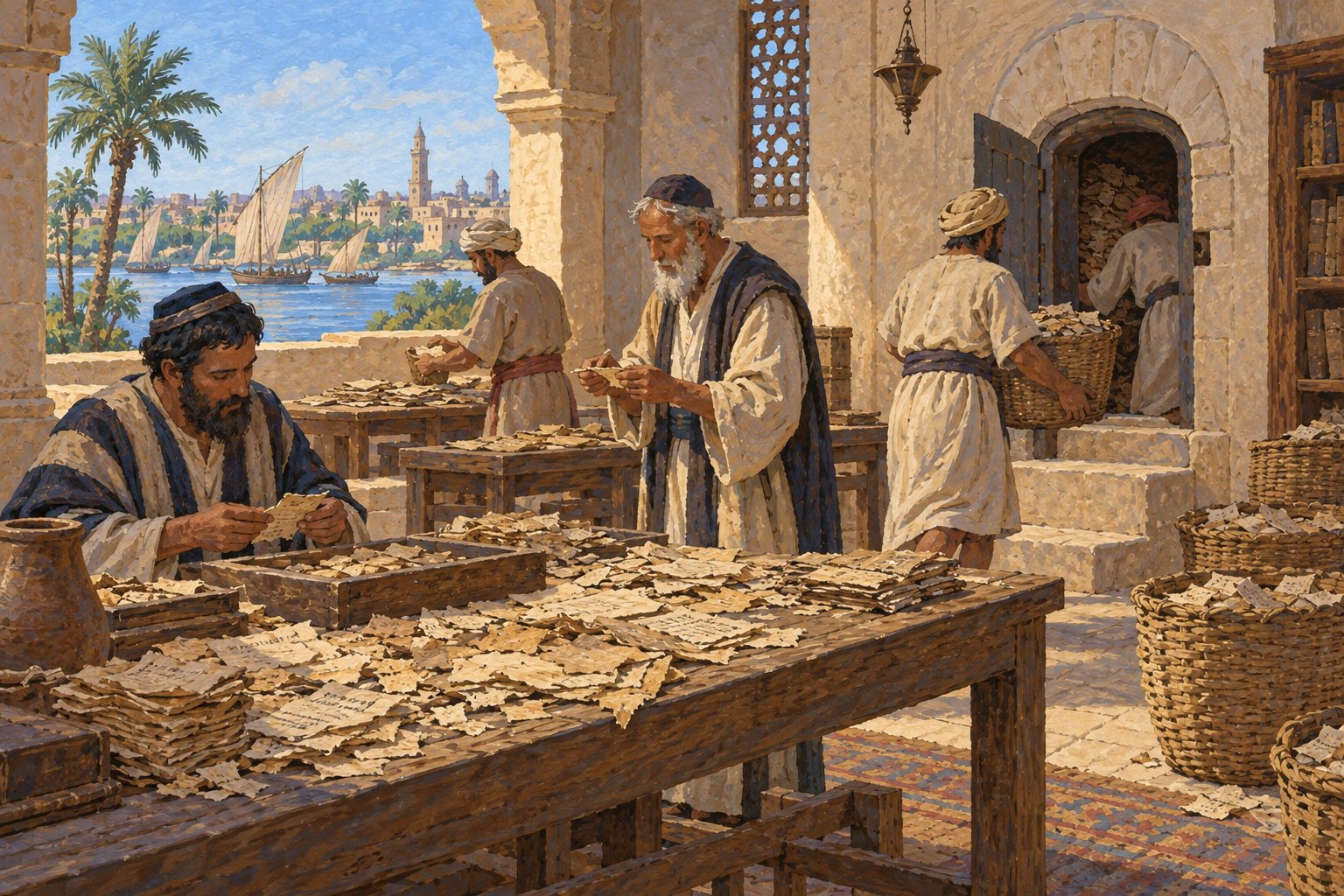
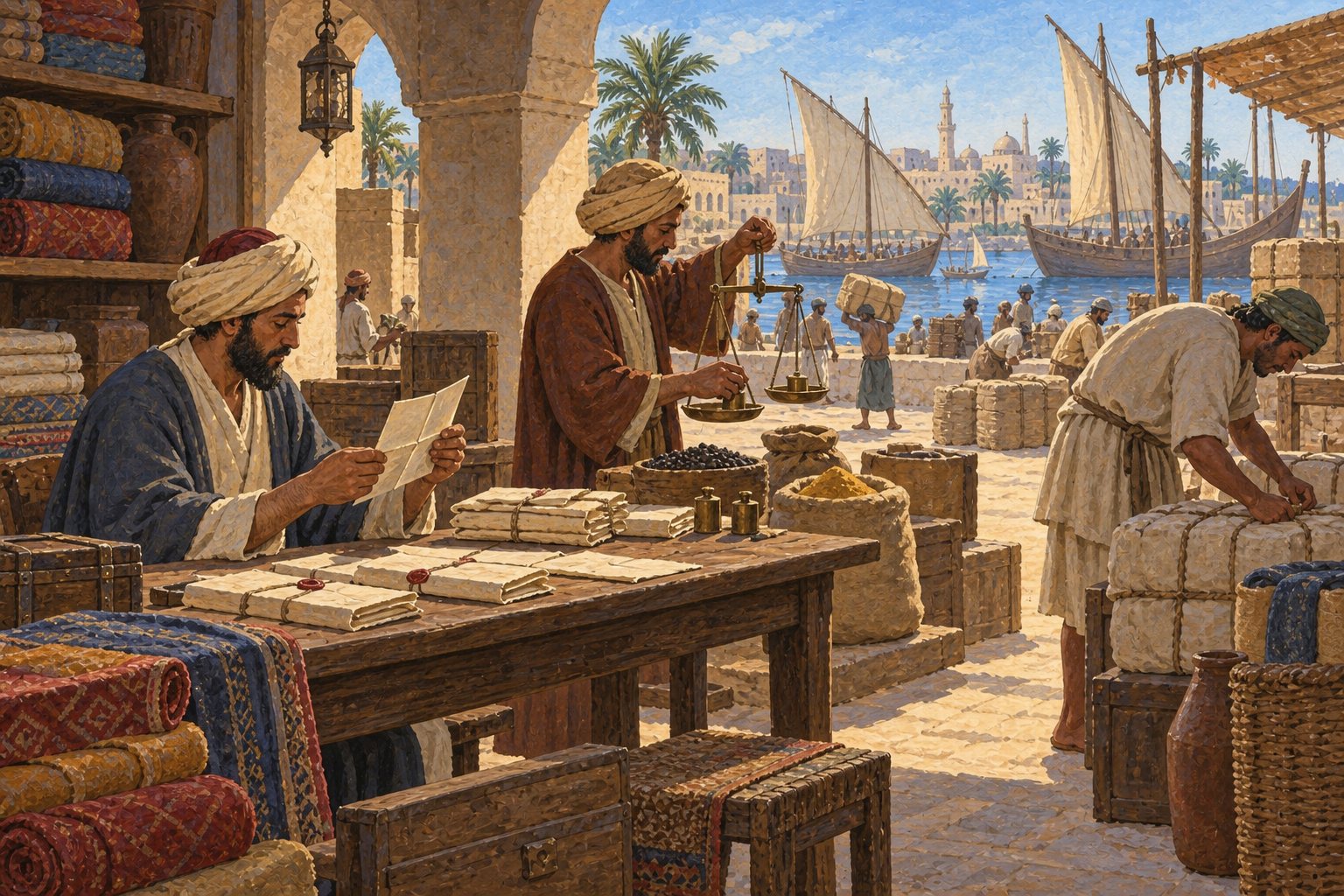
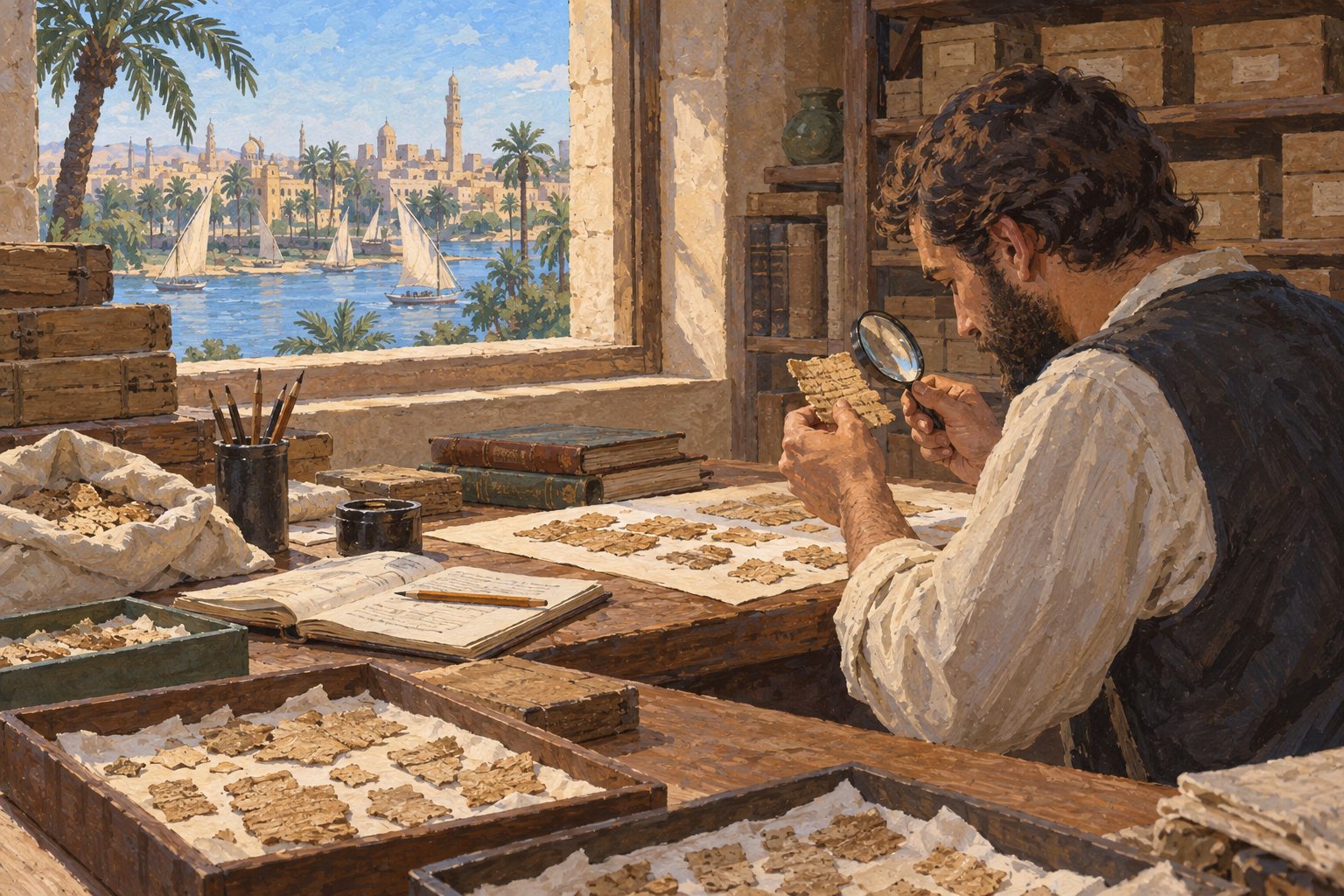
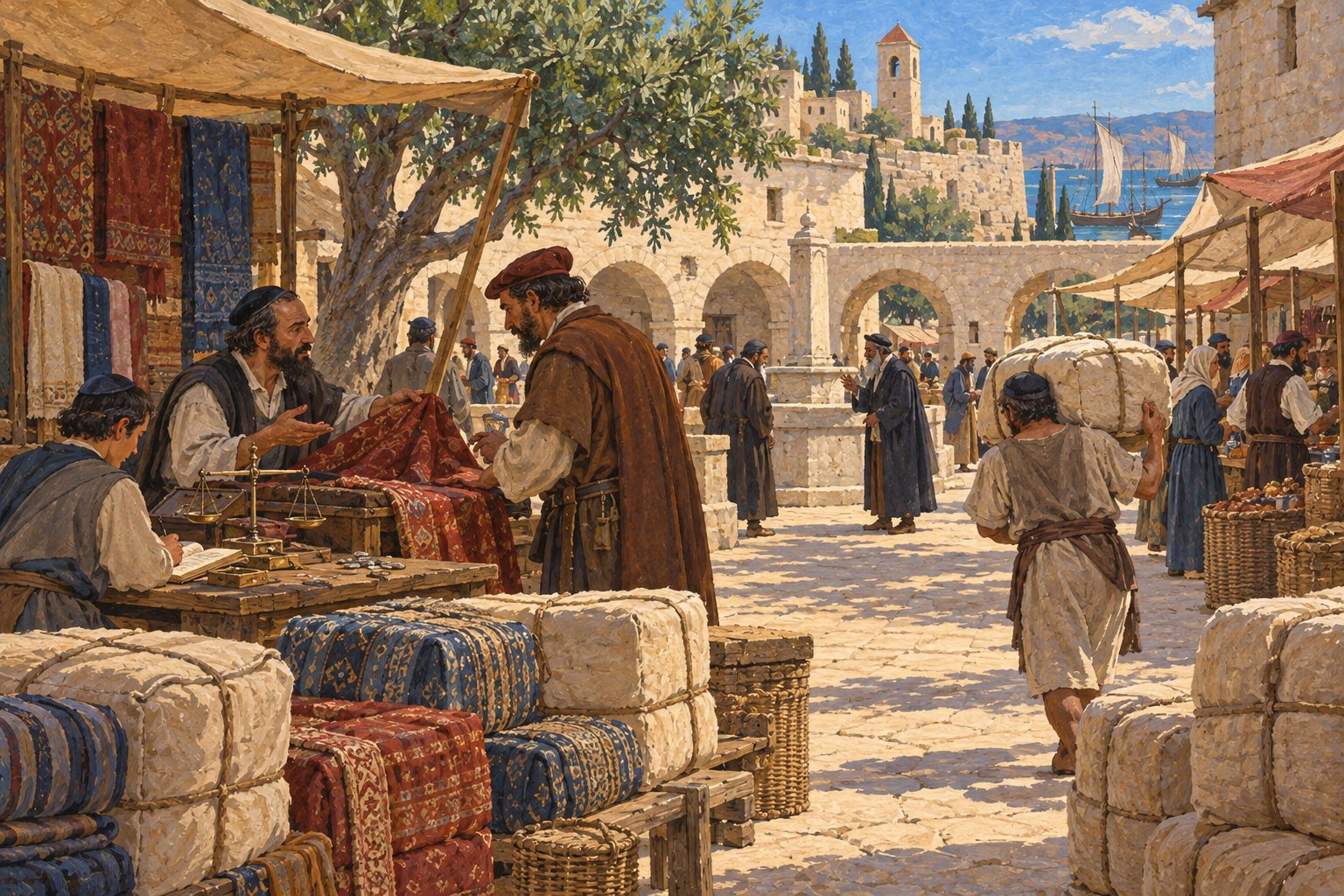
The kept pages. Because a page bearing the divine name may not be destroyed, the Ben Ezra Synagogue in Fustat fed its worn texts into a sealed chamber for the better part of a thousand years, and the result — some 400,000 fragments — is the accidental archive of this volume: not only Bibles but marriage contracts, court records, children’s exercises and merchants’ letters, from which whole centuries of Mediterranean life, including the medieval India trade, have been reconstructed merchant by merchant.
Texts and authority
The Council That Cannot Be Found
The Hebrew canon has no documented closing — no council minutes, no decree, no date — and the “Council of Yavneh” that a great many popular books cite as the moment of closure is a nineteenth-century scholarly construct that its own field has largely withdrawn; what the sources actually show is rabbis still disputing two books after the supposed closing, so closure has to be inferred from citation habits, which is a different kind of fact, and the chapter says so plainly.
What the Greek Kept
The Bible went into Greek in Alexandria from the third century BCE — the tradition’s own account of how is the Letter of Aristeas’s story of seventy-two translators, a founding legend the chapter labels as one — and the Greek canon’s different, larger contents are evidence of a third shelf still open when the translating happened; the Septuagint then became the scripture of the early church, which means the most consequential fork in this volume was made by a reading public, not a council.
Institutions and resources
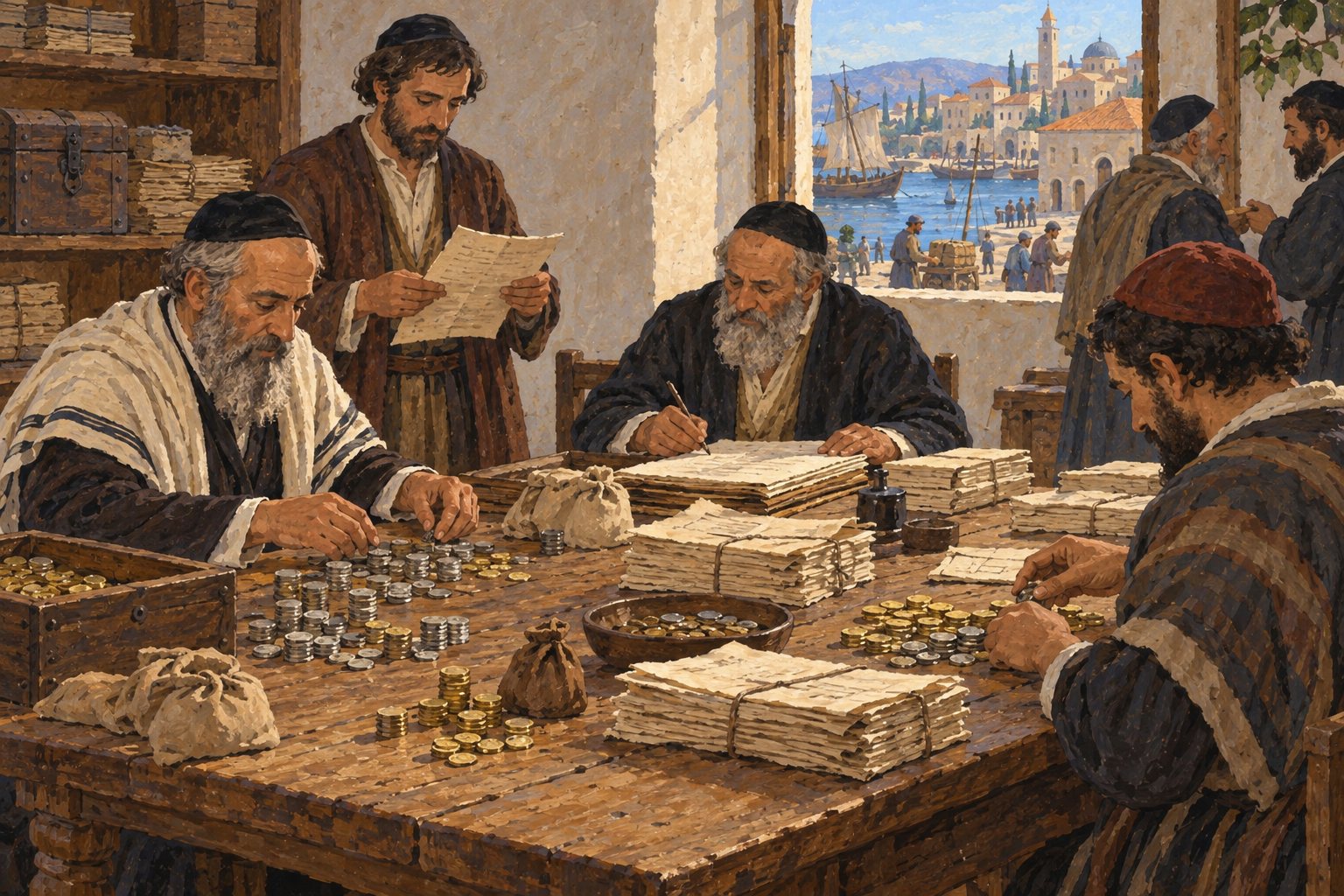
The Half-Shekel
The Torah sets a flat poll-tax for the sanctuary — half a shekel, the same for rich and poor — and by the first century it ran as an international remittance system: an annual half-shekel from adult Jewish men across the known world, changed into Tyrian silver at posted rates, convoyed to Jerusalem under escort, with a Mishnah tractate as its administrative manual — and its hostile contemporary witness is a Roman defence lawyer, arguing for the governor who impounded the transfers.
The Bank on the Mountain
The Temple was also a deposit bank — holding, one account says, the savings of widows and orphans, enough to draw a Seleucid seizure attempt and, a century later, Crassus’s actual one — and an inscribed royal order published in 2007, appointing an overseer of the sanctuaries of Coele-Syria and Phoenicia, shows the administrative machinery behind the famous story: empires audited temples, and the Temple’s wealth is documented mostly through the record of people trying to take it.
Explore the illustrations5 scenes · The communal fund
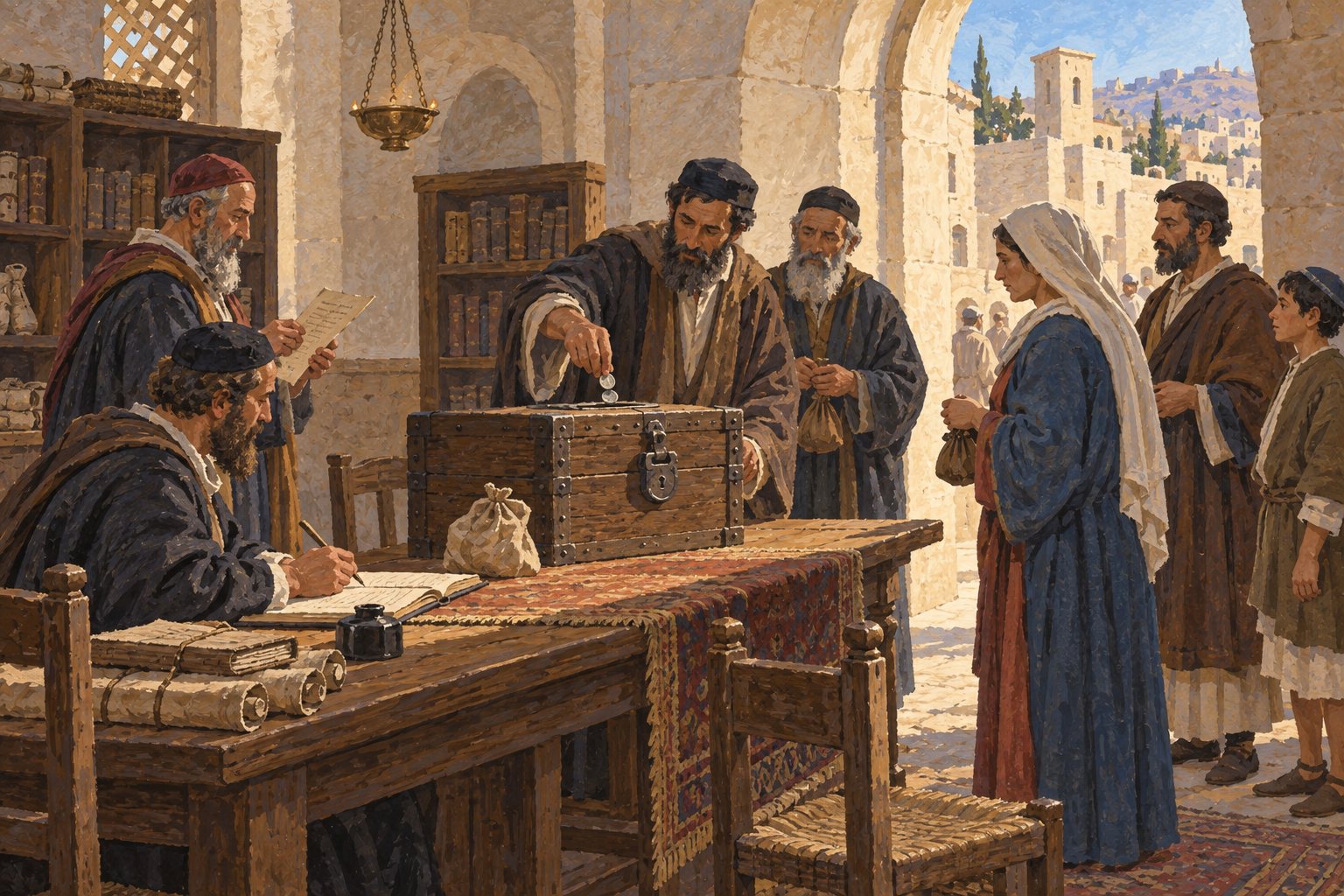
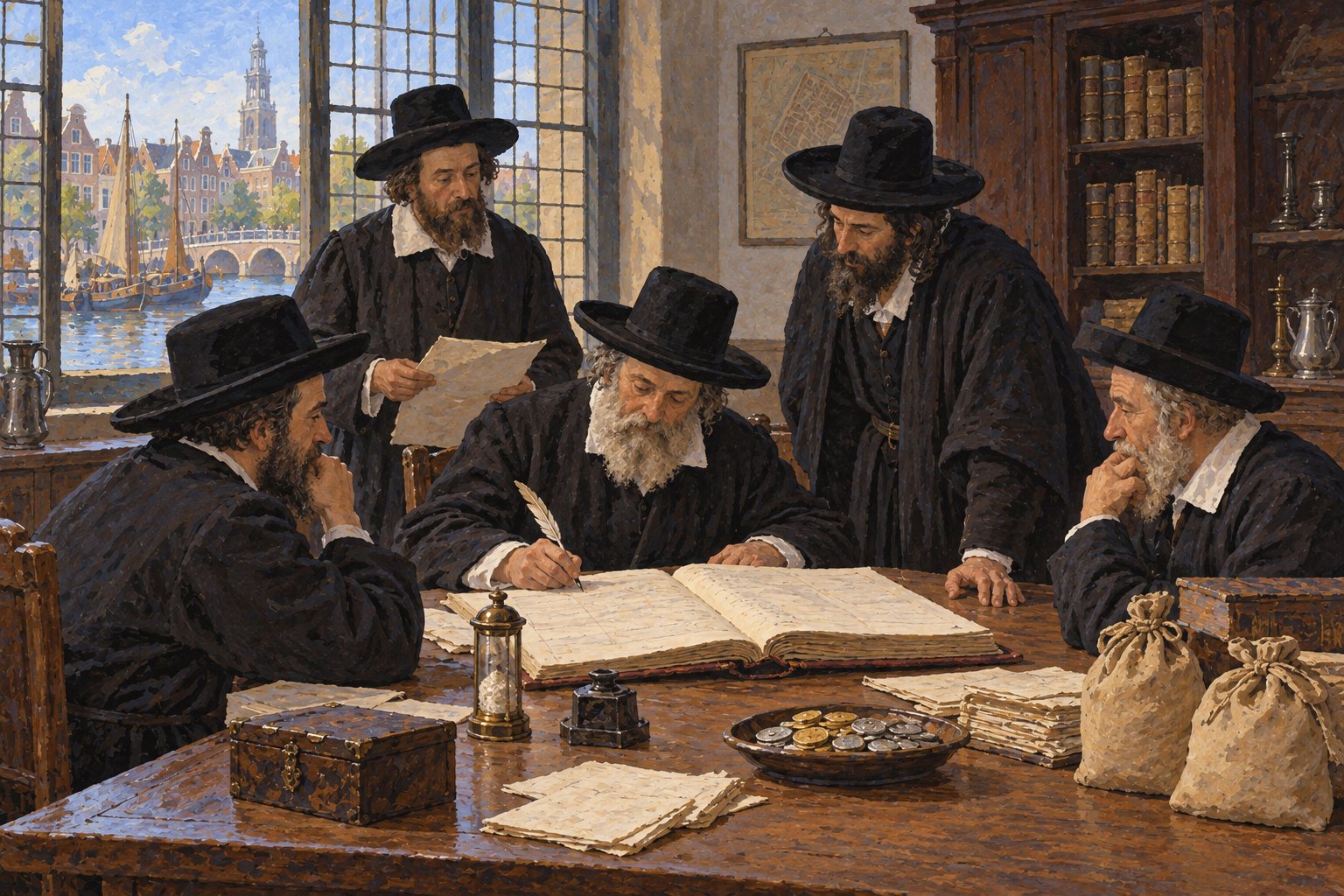
The communal fund. Stateless communities re-created public finance at congregation scale — the kehillah assessed and collected taxes, ran charity funds whose distribution lists survive in the Geniza by the hundred, and enforced payment with the herem, a ban that was economic before it was spiritual, since a banned merchant could not trade, sue or marry inside the only jurisdiction that would have him — and the instrument’s most famous single use, on a lens-grinder in Amsterdam in 1656, survives verbatim in the congregation’s own minute-book.
Changes and divisions
The Arch in Rome
The rupture of 70 CE is carved on a Roman arch — the menorah and the Temple table on the shoulders of the triumph — and what burned was not only a building but the party whose authority ran through the building: the priesthood and its sacrificial system ended, the tax changed address, and of the sects the first-century sources describe, the survivors were the two that could pack their authority and carry it — the rabbis with a portable law, and a Jewish messianic movement whose story is the Early Christianity volume’s to tell.
The Scripturalists
The deepest schism in post-Temple Judaism was fought over the machine itself — the Karaites, visible from the ninth century, accepted the written Torah and rejected the oral one, which made them a movement against the second canon — and for two centuries they were not a fringe but a rival establishment endowing scribes and grammarians, so the Masoretic machine of Tiberias worked in a world where the Bible-only party was strong, a connection the scholarship debates and this chapter reports without joining.
Limits of the evidence
These limits are stated in the book before its argument.
- Anything before 1208 BCE from contemporaneous evidence The patriarchs, the sojourn in Egypt, the exodus and the conquest are the tradition’s account of its own origin; no contemporaneous record outside the Bible names any of them, and the volume states that absence as an absence — never as a refutation. This is the volume’s signature limit and it is stated in Movement One, not saved for a coda. Both of this volume’s live traps sit here: writing the biblical narrative as history is a gate failure, and writing the scholarly reconstruction as debunking is the same failure in the other direction.
- The united monarchy beyond a dynastic name The Tel Dan stele shows that a “house of David” was worth boasting of destroying about a century and a half after David’s conventional dates; the extent and splendour of the kingdom the tradition describes is contested — the low-chronology fight is named, with its parties — and cannot be established from the surviving record.
- Who composed the biblical books, or when The compositional models (the documentary hypothesis and its successors) are scholarly reconstructions, themselves contested among specialists, and are printed only as such.
Sources and reading
This article brings together the series’ existing overview and chapter summaries. The linked book page provides the full outline and bibliography.
- Merneptah stele, Cairo JE 31408, in Petrie and Spiegelberg, Six Temples at Thebes1208 BCE; pub. 1897. Israel listed as a people, not a land
- Michael G. Hasel, “Israel in the Merneptah Stela,” BASOR 2961994. the foreign-people determinative
- Israel Finkelstein, The Archaeology of the Israelite Settlement1988. highland village surveys
- Kathleen Kenyon, Jericho excavations1952–58. the walled city gone before the Late Bronze
- Finkelstein and Silberman, The Bible Unearthed2001. highland villagers as locals
- William G. Dever, Who Were the Early Israelites and Where Did They Come From?2003. a component that entered from elsewhere
- Kiddushin 30a, SoncinoBavli. the counters, the midpoints, and the lost-expertise admission
- Nash Papyrus, Cambridge Or.2332nd c. BCE; acquired 1903. Decalogue plus Shema from the trade
Illustrations are newly generated interpretations of themes in the book. They are not surviving artifacts, historical photographs or evidence for the events described.