21 illustrations · 2:41
Watch & listen.
Follow the images with a narrated journey through the book.



Overview
- Coverage
- c.1500–present
- Earliest secure evidence
- 18th c.
- Transmission
- the mass-produced saint
The saint in the chromolithograph is the machine: a mass-produced image that let a public altar look like a Catholic one. The language of the songs is a canon without a closing. A genealogy of hands is the isnad this series already taught the reader to recognise, transmitting a competence rather than a report.
The coverage period and the earliest secure evidence are different dates. A tradition’s own account of its beginnings may differ from both.
From the Belief System account of The African Diaspora Religions
Historical setting
The Trade, Counted
The founding fact of these religions is a forced migration whose paperwork survives — roughly 12.5 million people embarked and 10.7 million landed over three and a half centuries, in the standard estimates — and because the trade was a business, its ledgers, port books and insurance records make the migration recoverable voyage by voyage, so the map of the religions can be read off the map of the shipping.
Why Yoruba Here, Fon There
The denominational map of the Black Atlantic is a shipping schedule: Saint-Domingue’s imports ended with the revolution of 1791, before Oyo collapsed, so Haiti’s liturgy is dominated by Fon and Kongo material — Rada from the port of Allada, the Kongo-inflected rites conventionally grouped as Petwo — while Cuba’s and Bahia’s imports peaked in the illegal decades after 1800, exactly when the Oyo empire’s wars were feeding Yoruba captives to the coast, which is why Lucumí rules Havana, Nagô rules Salvador, and the smaller nations — Arará, Congo, Mina, the Muslim Malês whose 1835 Bahia revolt left trial records full of Arabic amulets — persist as parallel liturgies inside the same cities, with cousins across the water in Jamaica’s Myal and Obeah, Trinidad’s orisha religion, Suriname’s Winti and Maranhão’s Tambor de Mina.
Explore the illustrations7 scenes · A House for Assembly
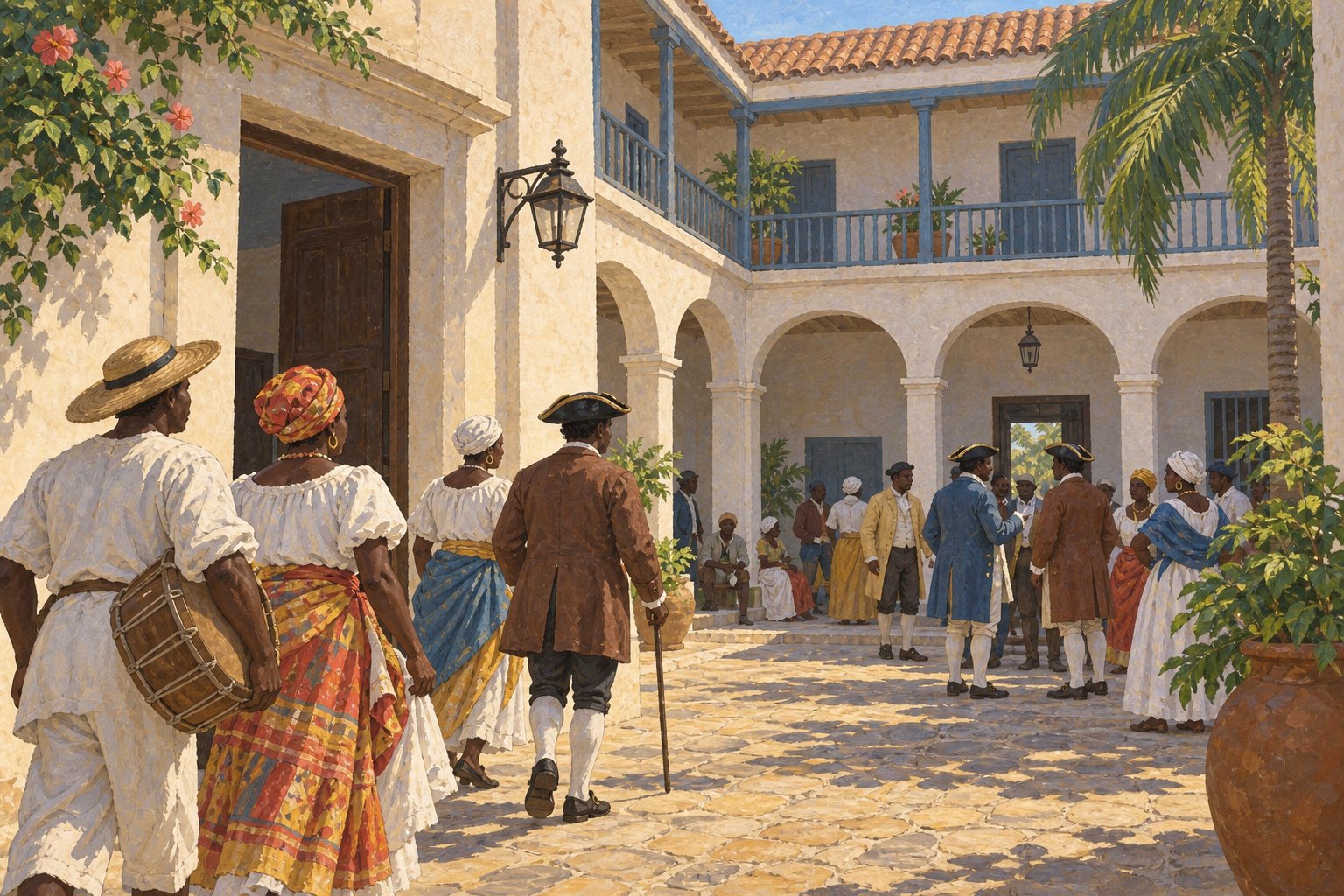
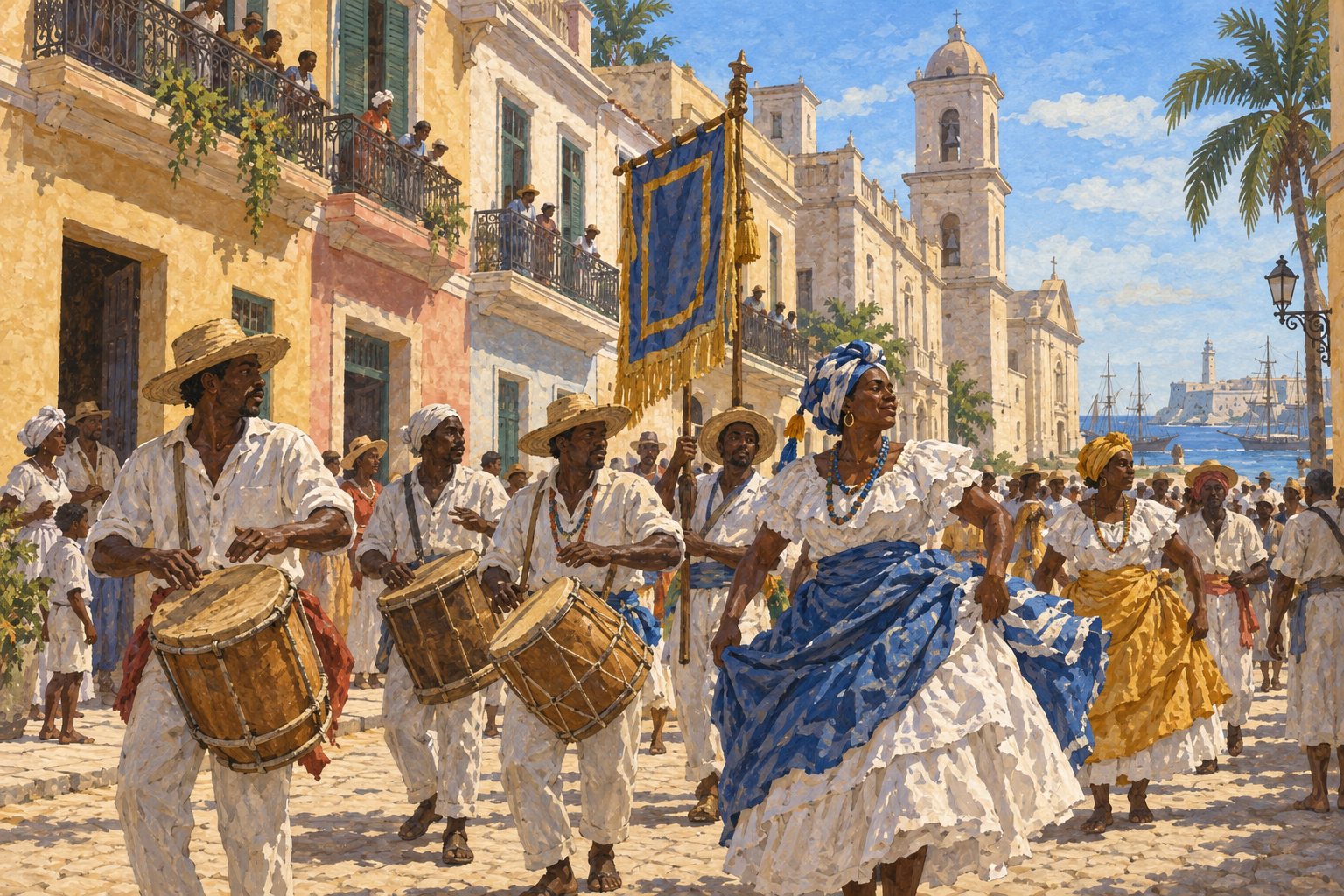
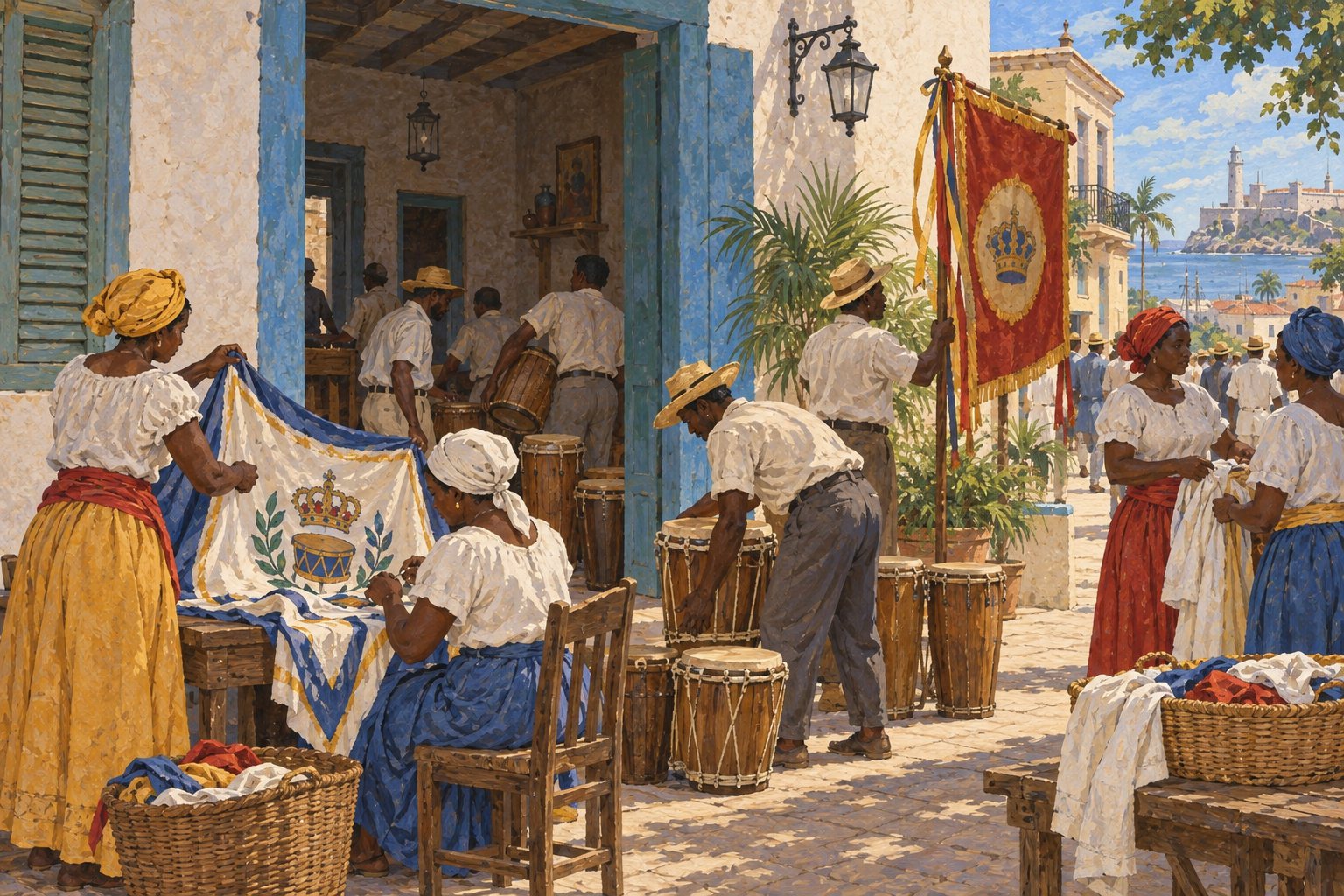
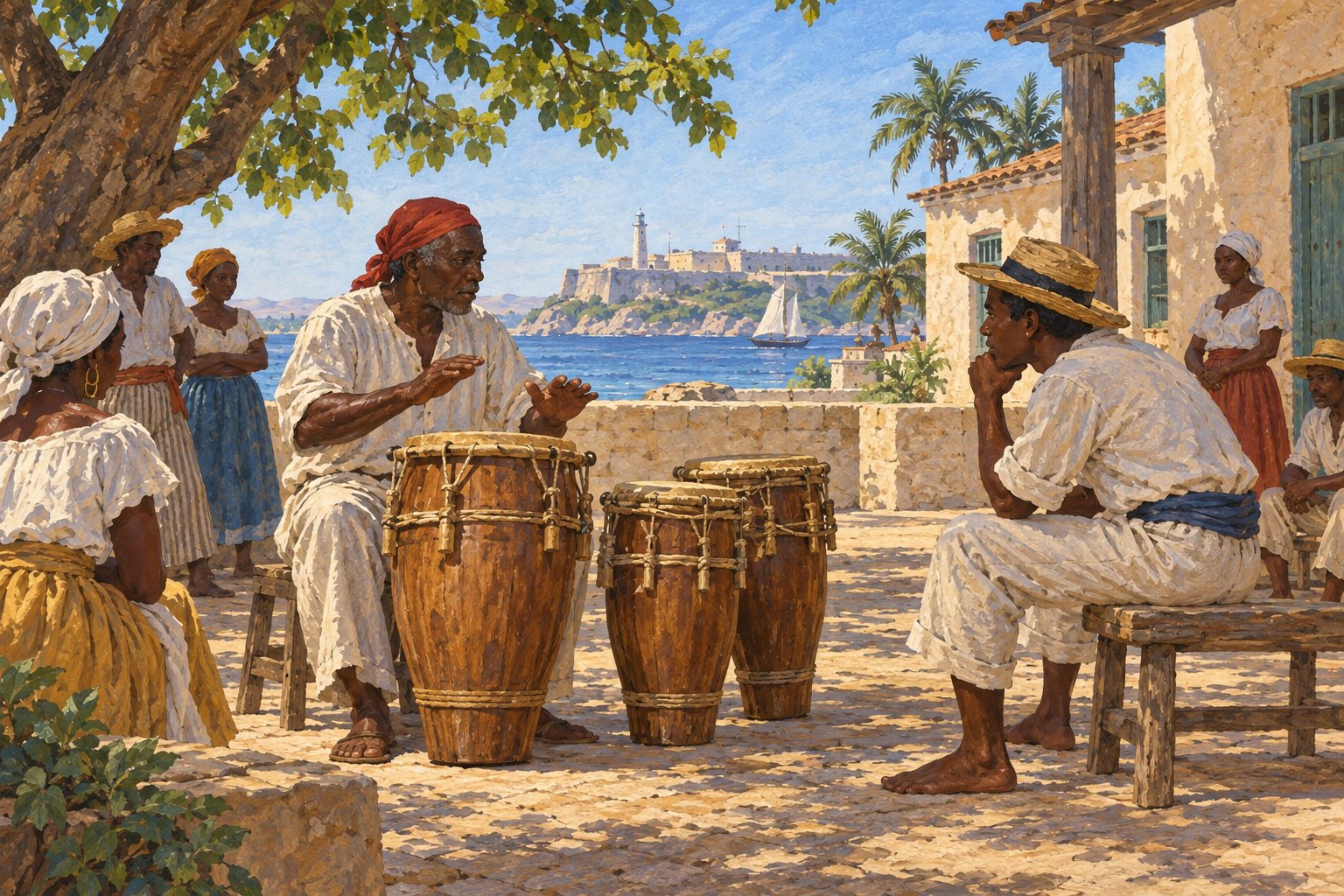
A House for Assembly. The second machine is a corporation: the cabildo de nación, a mutual-aid confraternity of Africans of one “nation,” descended from Seville’s black cofradías and recognised in colonial law — which gave an illegal religion what illegality most denies it: a treasury funded by dues, a house held in its name, a right to assemble on licensed days, elected kings and queens, and one day a year, Día de Reyes, when the nations processed through Havana in regalia with their drums, in public, legally; the record shows a bishop counting 21 cabildos in Havana in 1755 and resolving to catechise them, and the tradition holds that named nineteenth-century cabildos stand at the head of living orisha lineages — a claim the surviving cabildo papers can carry only partway, and the chapter says how far.
How it was transmitted
The Saint in the Chromolithograph
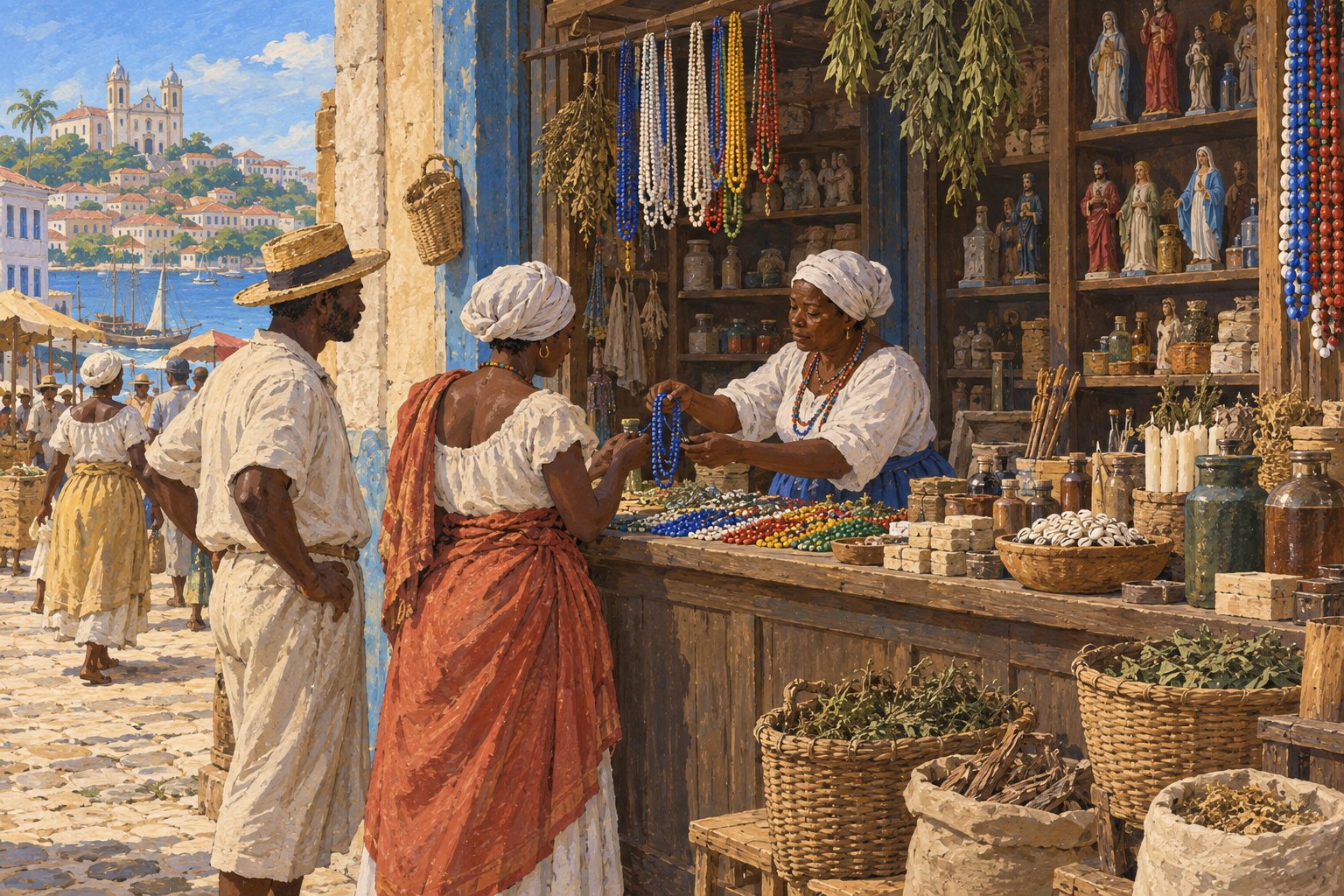
The first machine is a mass-produced European devotional commodity — the cheap nineteenth-century chromolithograph and the plaster statue — adopted as the visual interface of the orisha: Saint Barbara’s sword and tower read as Changó, Lazarus’s sores and dogs as Babalú-Ayé, the dark-faced Virgin of Regla over Havana bay as Yemayá; the image is a bilingual sign, Catholic to the inspector and orisha to the initiated, and the correspondences differ from city to city — Bahia’s tables do not match Havana’s, Port-au-Prince’s match neither — which is the evidence that the interface was assembled locally, repeatedly, from whatever the print-sellers stocked; and whether the saint was a mask, a translation or a genuine second belonging is exactly what the tradition itself would split over, so this chapter describes the machine unsentimentally and leaves the verdict to the people who owned it.
A Legal Address: Havana
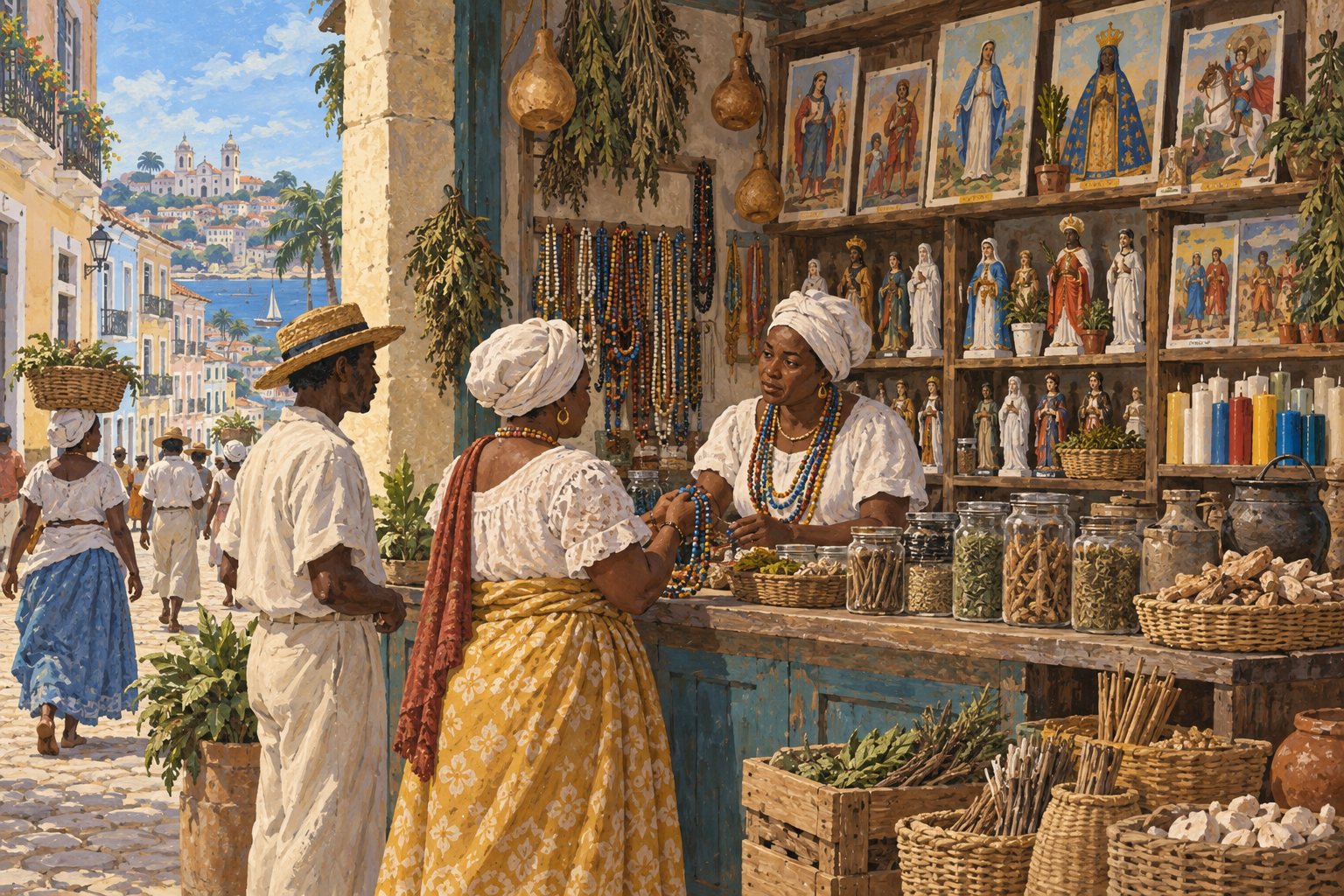
The second machine is a corporation: the cabildo de nación, a mutual-aid confraternity of Africans of one “nation,” descended from Seville’s black cofradías and recognised in colonial law — which gave an illegal religion what illegality most denies it: a treasury funded by dues, a house held in its name, a right to assemble on licensed days, elected kings and queens, and one day a year, Día de Reyes, when the nations processed through Havana in regalia with their drums, in public, legally; the record shows a bishop counting 21 cabildos in Havana in 1755 and resolving to catechise them, and the tradition holds that named nineteenth-century cabildos stand at the head of living orisha lineages — a claim the surviving cabildo papers can carry only partway, and the chapter says how far.
Explore the illustrations7 scenes · Learning by Hand and Ear
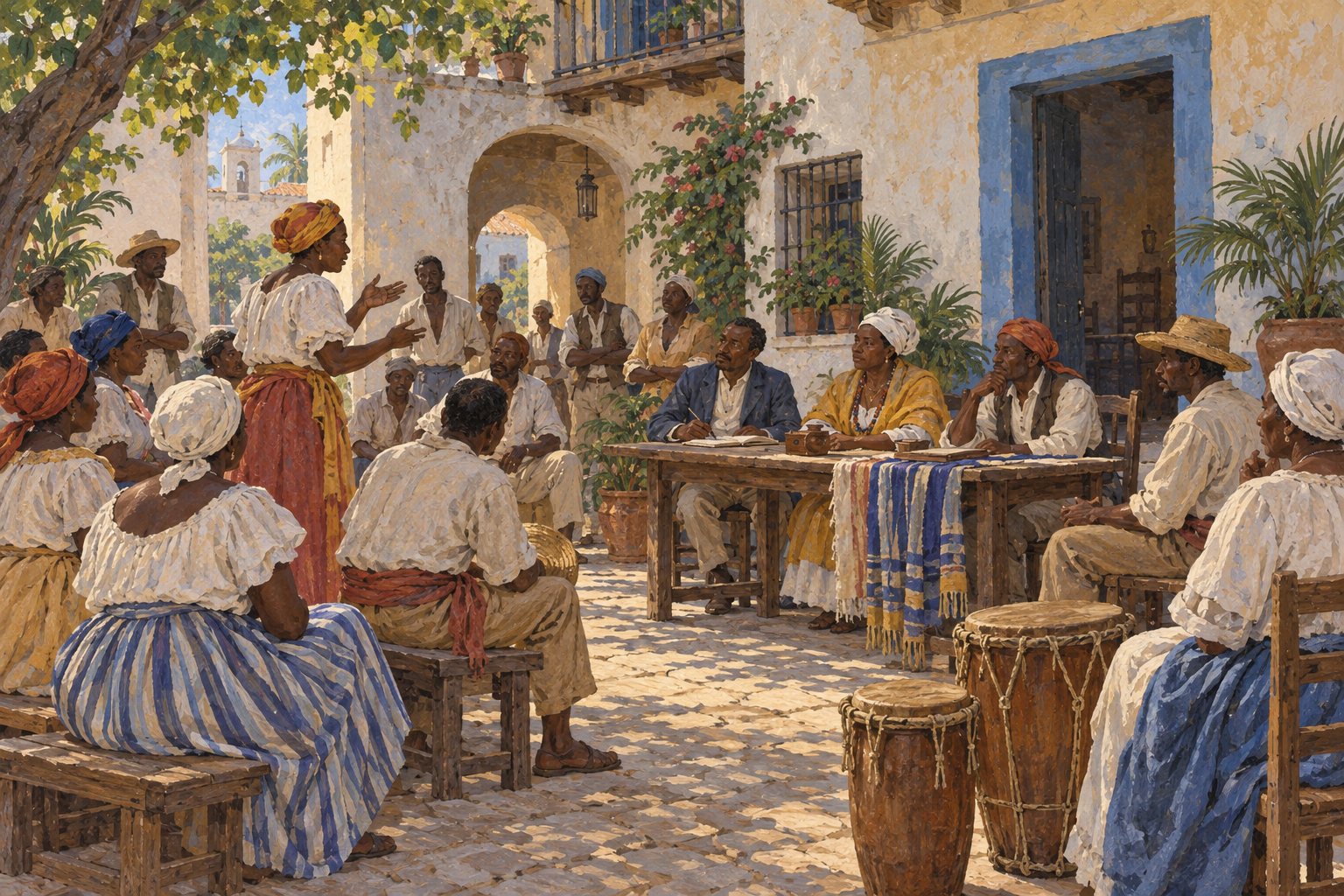
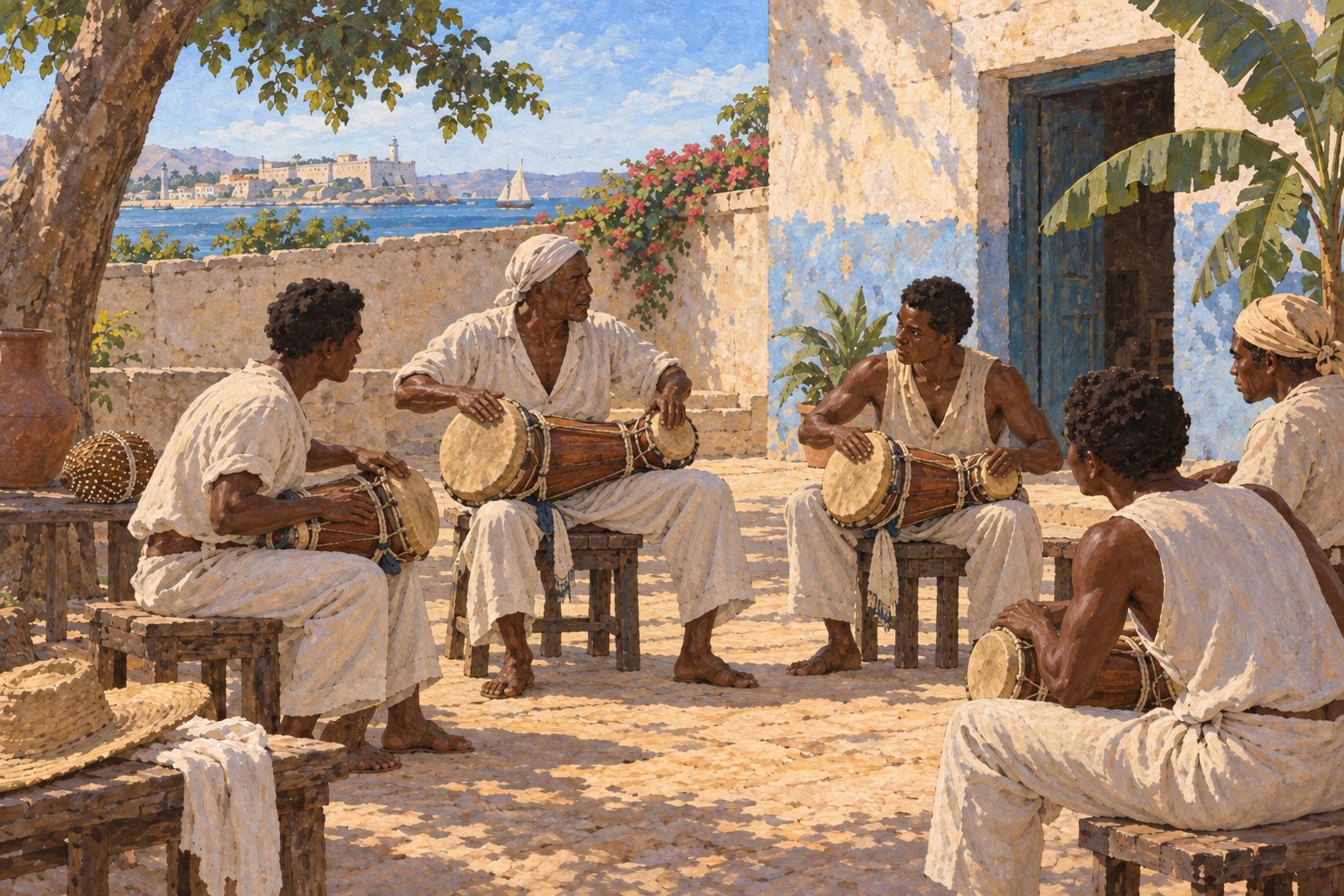
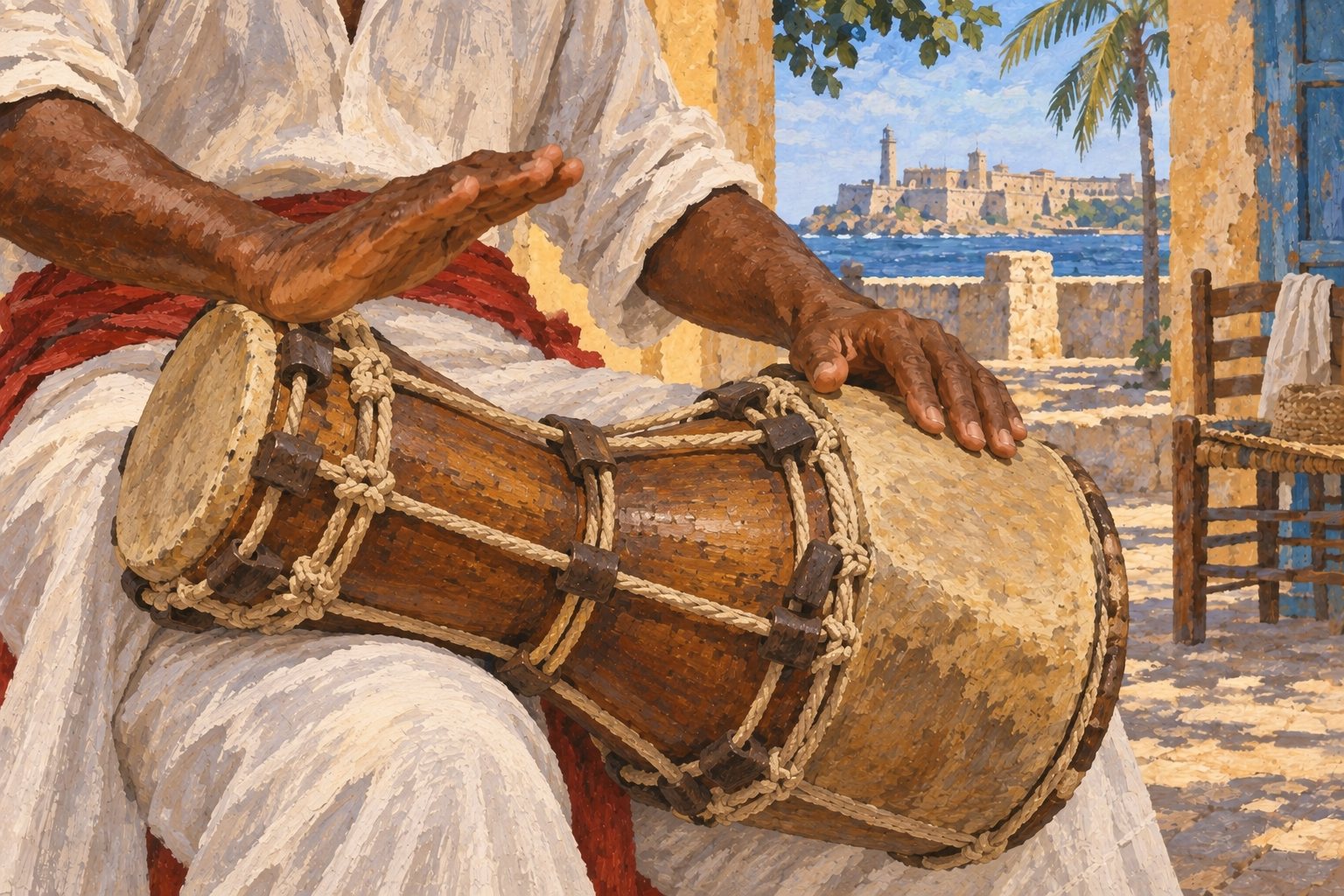
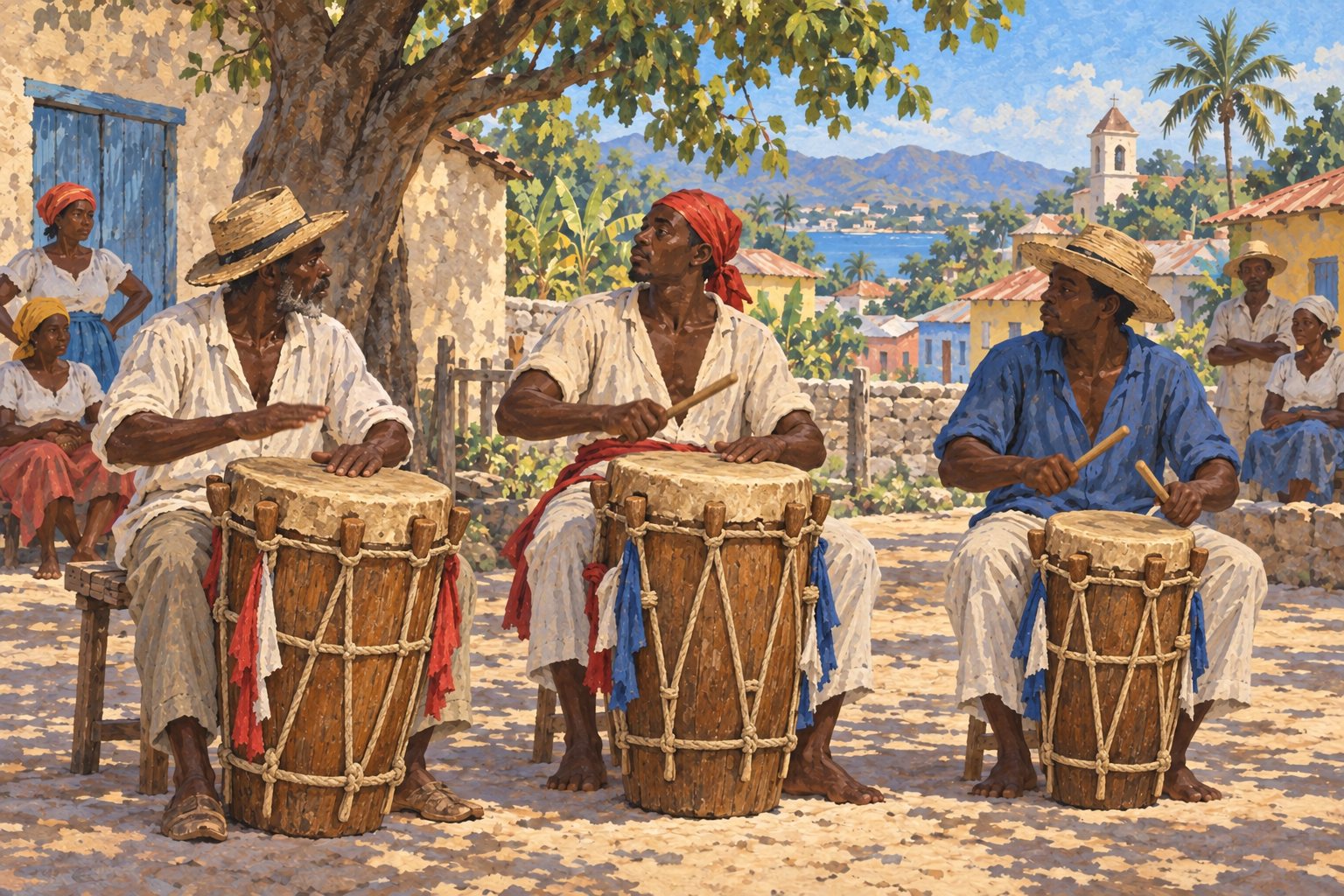
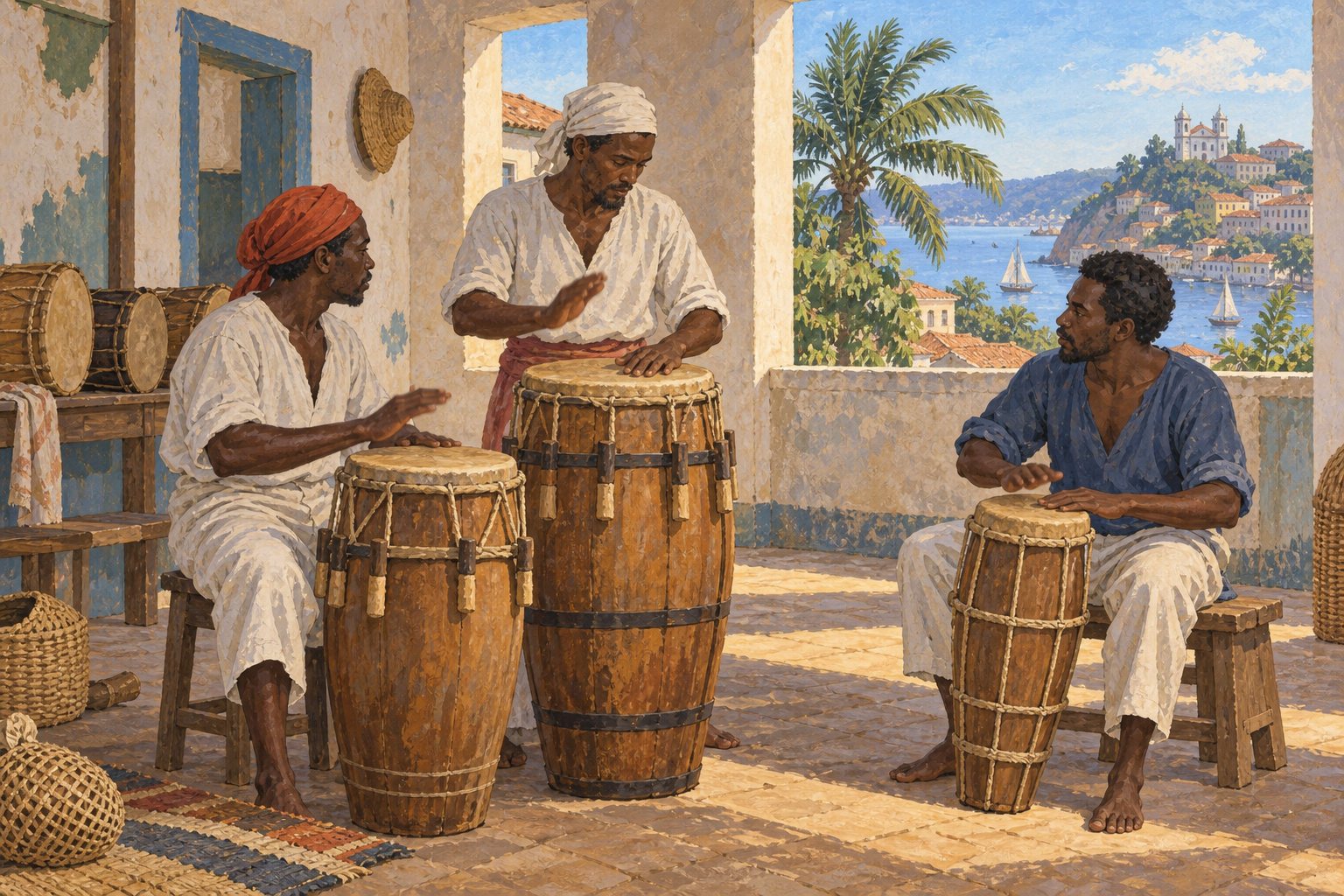
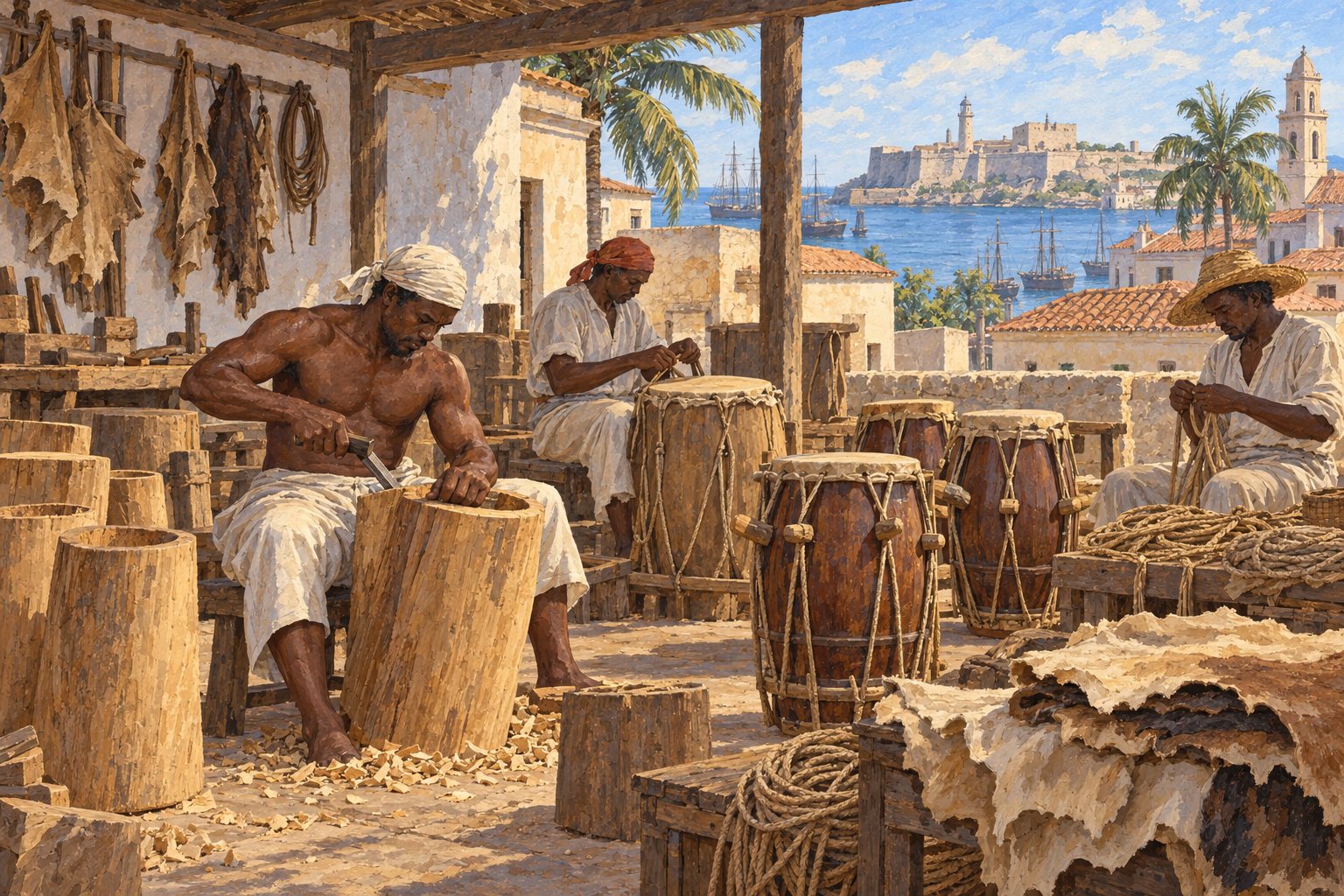
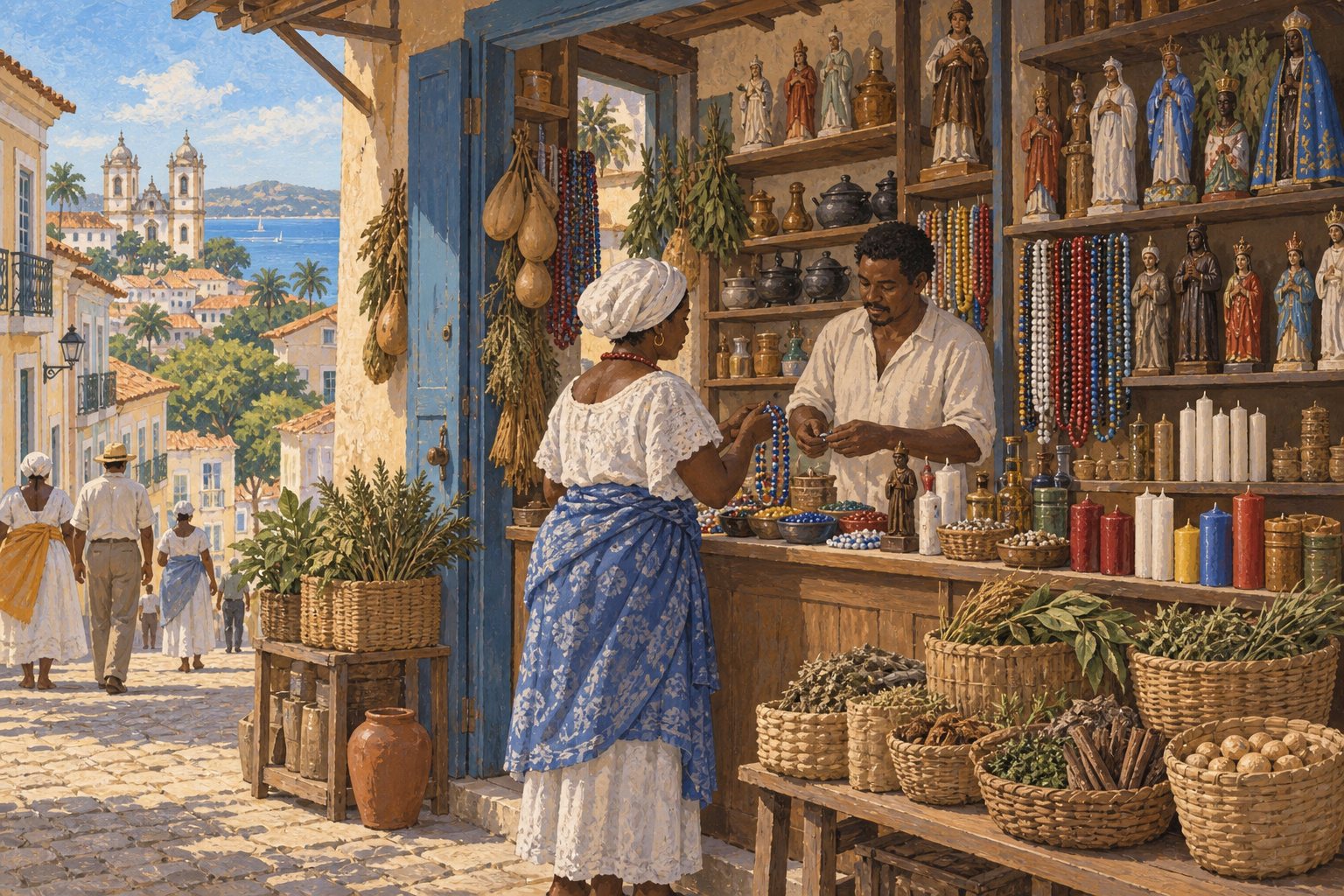
Learning by Hand and Ear. The third machine is a rhythmic repertoire in which specific patterns summon specific orisha — the Cuban batá’s toques, played in the fixed salute sequence of the oru; Haiti’s three-drum Rada battery; Candomblé’s rum, rumpi and lê under a sworn alabê — a corpus transmitted entirely by hand and ear, with no notation at any point in its history, carried inside consecrated instruments that are themselves initiated (the tradition, as collected by Ortiz from elder drummers, credits two named makers with building Cuba’s first consecrated batá around the 1830s), which means the legislators who confiscated drums had understood the machine correctly: the drum is not accompaniment, it is transmission — and what the consecration of a drum involves is initiation-bound, so this chapter describes the repertoire’s public face and declines the rest, and says so.
Texts and authority
A Canon With No Text
Nothing in these religions was ever in a position to be closed — no book, no council, no office with authority beyond its own lineage — and yet the traditions are not formless: what replaces the canon is a fixed repertoire (the songs, the toques, the sequence of a ceremony), a liturgical language, and the initiation itself, and the Cuban name for the religion says so — Regla de Ocha, the rule of the orisha: the canon is a rule of conduct-of-ceremony rather than a shelf of texts; the nearest thing to scripture, the initiate’s handwritten libreta, proves the point by refusing to be one — private, copied hand to hand, unpublishable, and worthless without the elder who explains it.
The Language of the Songs
The song corpus is carried in liturgical languages most singers no longer speak conversationally — Lucumí in Cuba and Nagô in Bahia are liturgical Yoruba; Haitian ceremonies carry langaj, ritual speech the tradition holds to be African — and the songs are the tradition’s memory palace: praise names, genealogies, ritual instruction and myth, held in fixed melodic-textual units, corrected in performance by elders and lead singers the way any oral canon is corrected, with semantic drift and frozen phonology as the visible price of two centuries of transmission without a dictionary — a condition linguists can measure against Nigerian Yoruba, which makes the drift itself a dating instrument.
Institutions and resources
The Thinnest Ledger
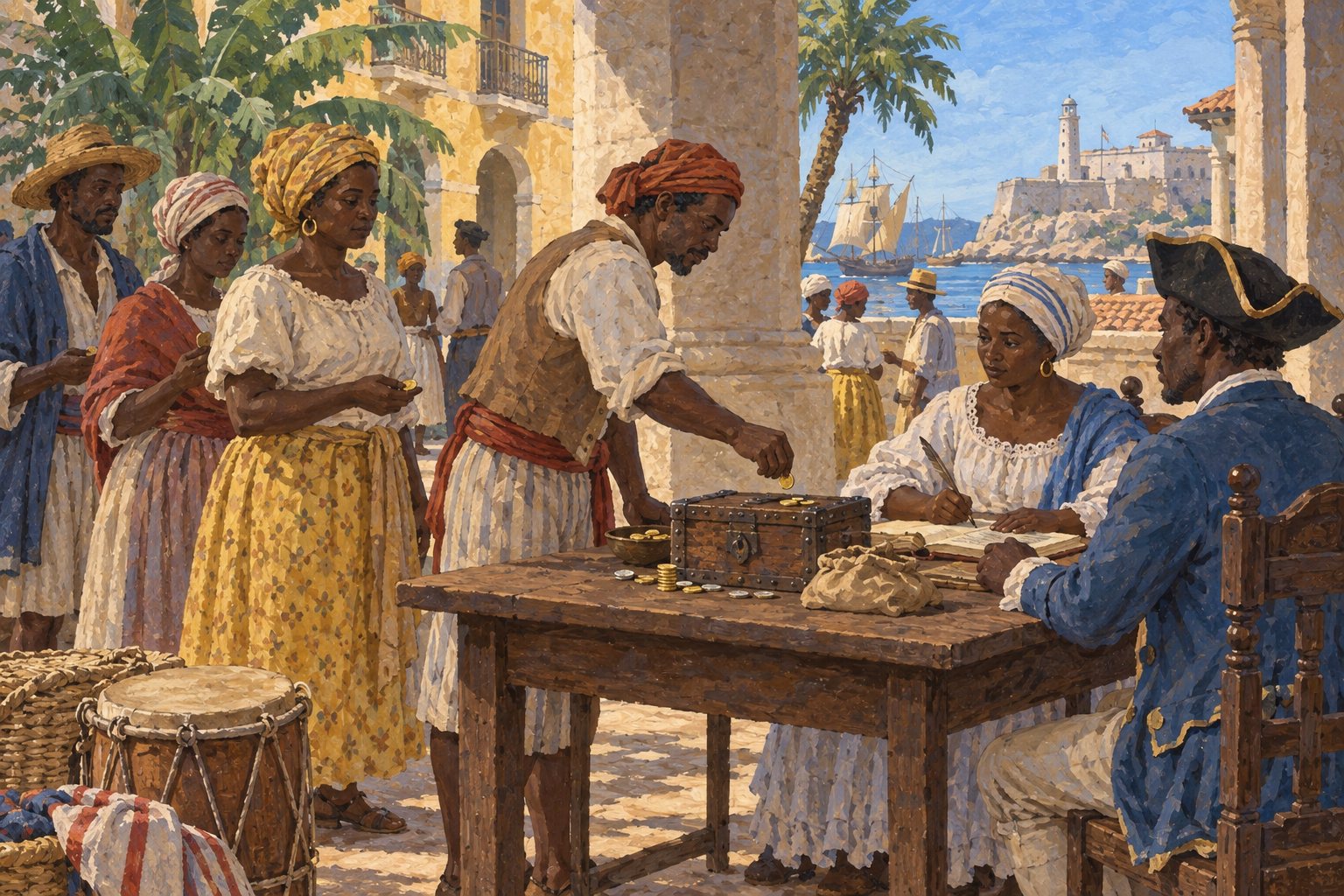
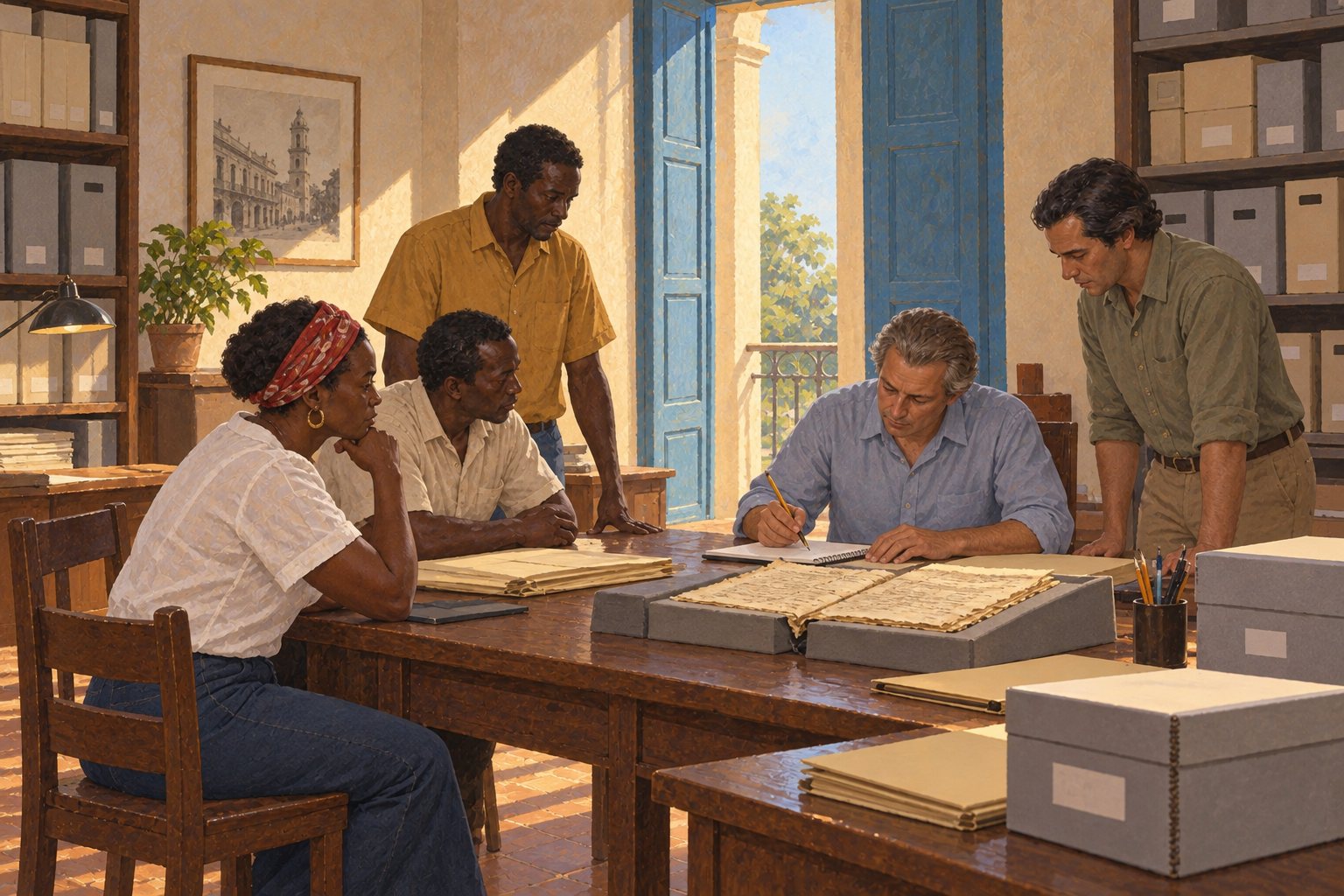
The honest position, stated at the top of the movement: a religion that was illegal for most of its history kept no books that could be seized, has no central treasury, and runs — like the homeland economy in the Ifá and the Yoruba World volume — on fee-for-service and redistribution rather than endowment, so there is no waqf deed or temple roll here and the volume does not pretend to one; what is documentable is narrower and stranger: cabildo dues and treasuries surface in colonial and notarial records because cabildos bought houses, lent to members and were litigated over, and the brotherhoods’ statutes fixed dues and burial benefits in writing — but the account books referenced in the Cuban literature had not been retrieved and verified when this outline was written, so the chapter prints the documented structure, prints UNVERIFIED where the figures should be, and treats the absence of a ledger as what it is: a fact about surviving under criminalisation, not a gap in the bookkeeping.
The Price of the Crown
The initiation economy is real, substantial and openly discussed by practitioners — the Cuban kariocha and its Brazilian and Haitian counterparts are, for most devotees, the largest religious outlay of their lives, and the tradition itemises where it goes: animals, cloth, beadwork, the drummers, the cooks, and the derechos, the ritual fees owed to every officiating elder — so the money flows along the same genealogy of hands that carries the canon, upward to elders as livelihood and laterally as feast, an economy of obligation rather than accumulation, in which the cost itself is openly described by practitioners as commitment and as the elders’ due; the chapter prints the structure from practitioners’ own published discussions and prints no figure without a named, dated source — the ranges that circulate online are UNVERIFIED and appear only as the fact that practitioners publicly debate them.
Explore the illustrations7 scenes · At the Botánica Counter
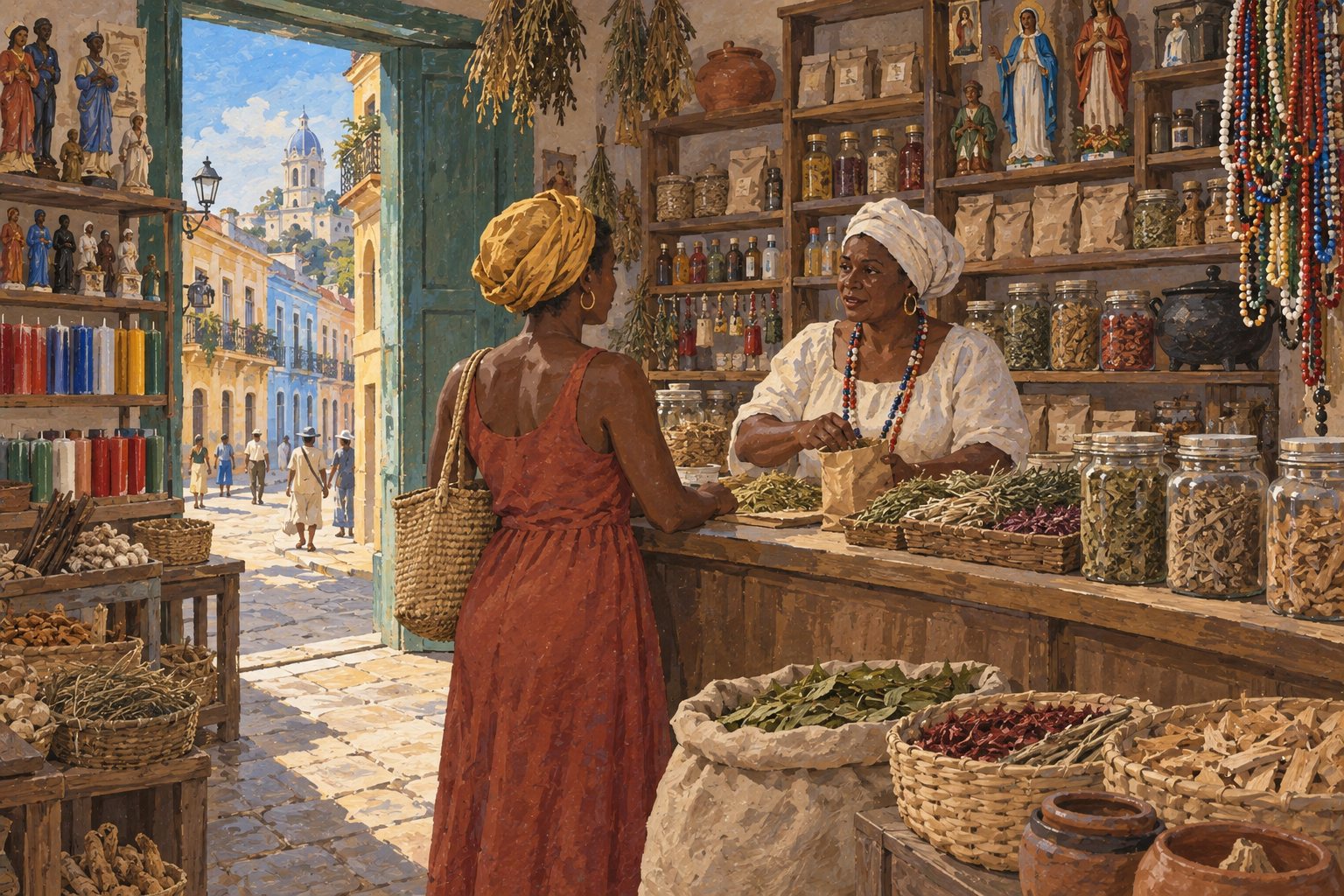
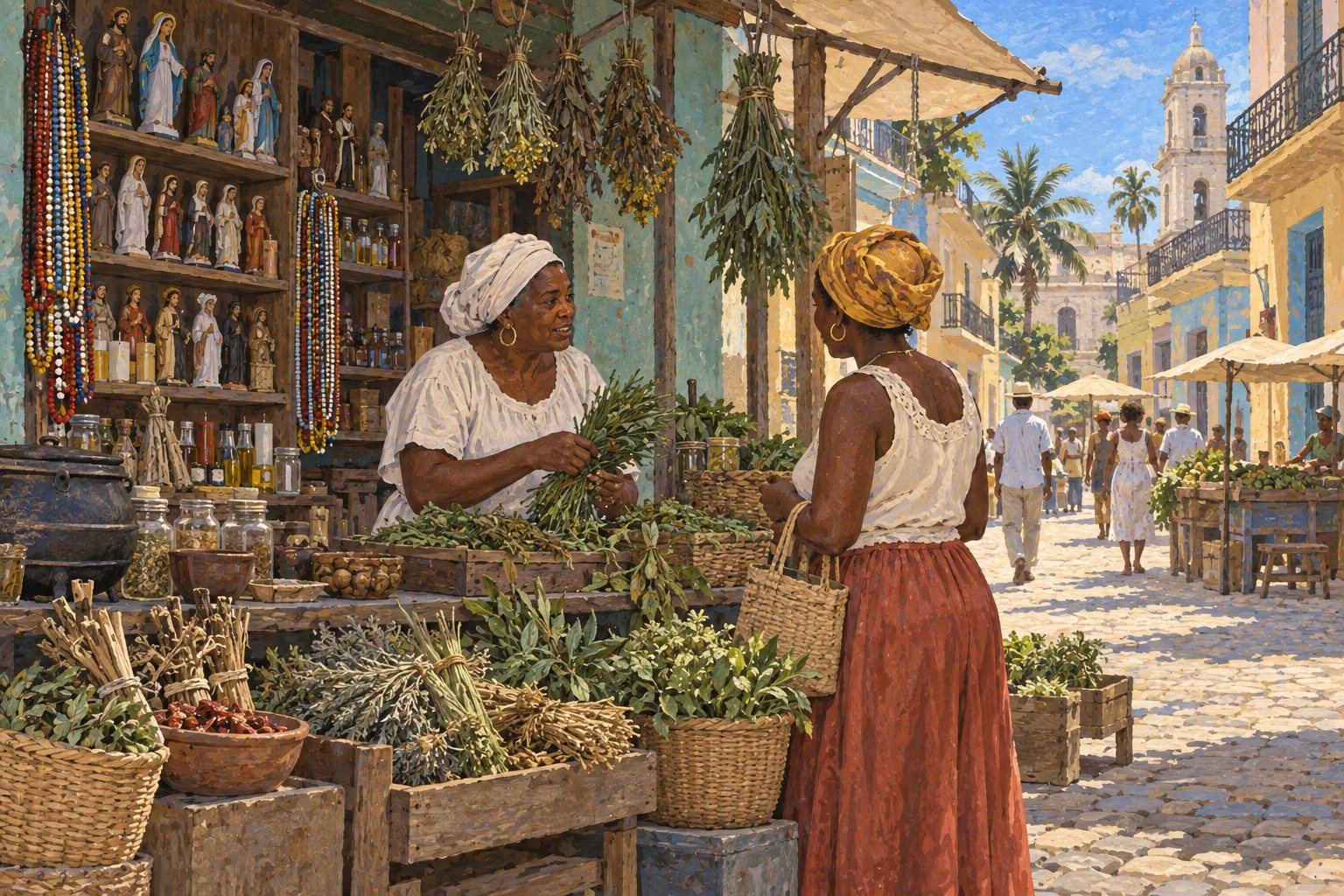
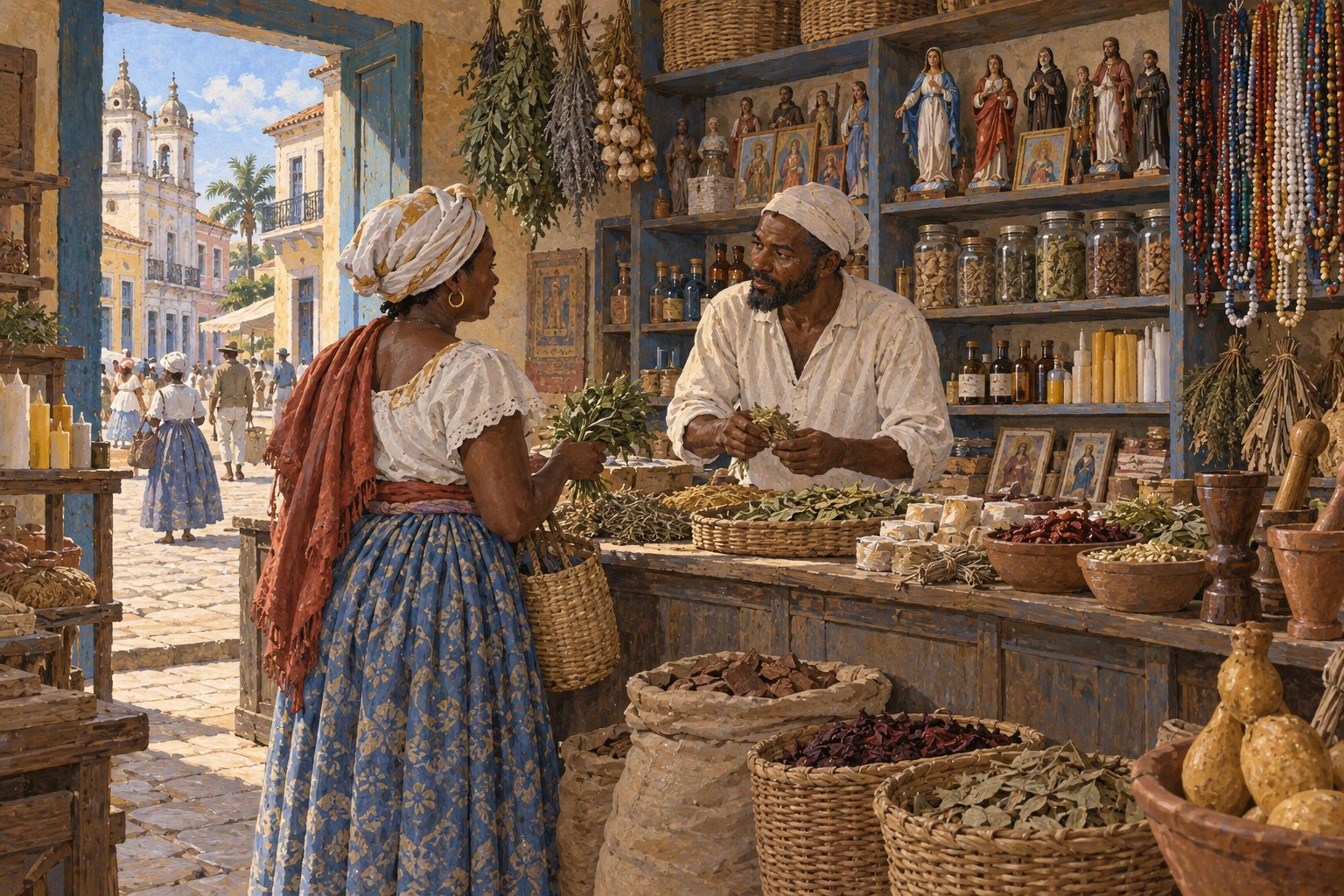
At the Botánica Counter. The botánica is the religion’s retail infrastructure — a storefront selling herbs, beads, cauldrons, the manuals of the last chapter and, still, the chromolithographs and plaster saints of Movement Two, the camouflage now a stock-keeping unit — and its counterparts line the streets of Salvador and Rio as casas de artigos religiosos and the markets of Havana as the yerberos’ stalls; the shop is where the religion’s economy becomes visible to any passer-by, which is precisely why it is the one part of the economy that can be described from open sources: the goods, their provenance (the same European and now Chinese devotional-image trade that always supplied them), and the shop’s role as referral node — the counter is where a customer becomes a client and a client becomes a godchild — while turnover figures are, as everywhere in this movement, UNVERIFIED.
Changes and divisions
Taking Off the Mask
In 1983, Mãe Stella de Oxóssi of Ilê Axé Opô Afonjá and four other senior Bahian mães-de-santo published a declaration repudiating syncretism — Candomblé, it said, is a religion in its own right and not a sect, a folklore or an appendage of Catholicism, and the Catholic images should go — which makes this the series’ clearest case of a split whose content is the removal of a disguise: the machine of Movement Two, the saint-as-container, publicly decommissioned by the highest authorities of the lineage system Movement Three described; and the aftermath is the finding — houses and festivals divided over it, the syncretic feasts of Salvador continue at full strength, and the argument between mask, translation and double belonging moved from the ethnographers’ pages into the tradition’s own public voice, where it remains, in the present tense.
Whose Hands May Make a Priest
The authority dispute that crosses the Atlantic: as travel reopened between the diaspora and Nigeria, two lineage systems that had each run two centuries on their own genealogy of hands met and disagreed about whose initiations are valid and who may perform them — in Cuba the old division of labour between the oriaté and the babalawo is itself contested ground; the re-Africanising current initiates in Nigeria and questions Cuban ramas; Cuban bodies answer that an unbroken American lineage outranks a reconnected African one; the annual Letra del Año readings issue from rival commissions in Havana and Miami, each publishing its own letter — and the flashpoint of women’s initiation to Ifá, the iyanifa question, is named here and handed by name to the Ifá and the Yoruba World volume, which owns the homeland half of the dispute; nothing in this chapter is adjudicated, because a book that never takes sides on truth claims does not take sides on jurisdiction either.
Limits of the evidence
These limits are stated in the book before its argument.
- What was practised in any particular place during the religion’s first two centuries Before the nineteenth century the record is almost entirely prosecutorial — edicts, interrogation transcripts, planters’ manuals, a colonial jurist’s description of a dance he was not invited to. The tradition’s own voice enters writing only with the ethnographies, and the earliest of those was written by a physician who classed what he saw as pathology. Both facts about the record are stated every time the record is used.
- Whether the ceremony at Bois Caïman took place as the tradition tells it The earliest surviving account is hostile, secondhand and published twenty-three years after the event; specialists disagree about how much of the story survives scrutiny, and the disagreement is named and reported, not settled.
- An unbroken institutional chain from any named African compound to any named American house The lineages are remembered genealogies, recited and defended by the houses themselves. What the record shows is when each house enters writing; the memory is the establishable fact, and that is the fact printed.
Sources and reading
This article brings together the series’ existing overview and chapter summaries. The linked book page provides the full outline and bibliography.
- Trans-Atlantic Slave Trade Database, slavevoyages.org, estimates interfacetotals pulled August 2026. standard estimates: some 12.5 million embarked, some 10.7 million landed
- David Eltis and David Richardson, Atlas of the Transatlantic Slave Trade2010. the compilers’ method, in their own description
- Robin Law, The Oyo Empire c.1600–c.18361977. collapse chronology that feeds the later Yoruba export
- Pierre Verger, Flux et reflux de la traite des nègres entre le golfe de Bénin et Bahia1968. the Bahia–Bight of Benin circuit; Casa das Minas as his contested hypothesis
- João José Reis on the 1835 Malê trial records and on Bahian funeralscited by argument. Arabic amulets in a prosecuted Muslim nation; irmandade burial
- Fernando Ortiz, “Los cabildos afrocubanos”1921. Morell de Santa Cruz’s 1755 count of twenty-one Havana cabildos
- Nina Rodrigues, O animismo fetichista dos negros bahianos1896–97. first printed saint–orisha table; first Nagô song transcriptions this book quotes
- Melville Herskovits, comparative table of African gods and Catholic saints1937. one grid that shows how badly one view fits Haiti, Cuba and Brazil
Illustrations are newly generated interpretations of themes in the book. They are not surviving artifacts, historical photographs or evidence for the events described.