19 illustrations · 2:18
Watch & listen.
Follow the images with a narrated journey through the book.





Overview
- Coverage
- 1828 onward
- Earliest secure evidence
- 1828
- Transmission
- the reform society and the printing press
Rammohan Roy’s trust deed is a conveyance. The Arya Samaj industrialises the franchise. The Gita Press, conventionally dated 1923, turns devotional publishing into heavy industry. The Gita in English is a reception history, not a second revelation. Dayananda’s Vedas-only rule is a membership condition.
The coverage period and the earliest secure evidence are different dates. A tradition’s own account of its beginnings may differ from both.
Historical setting
The Word
The English single noun “Hinduism” is barely older than this volume’s span — the “-ism” appears in colonial correspondence in the late eighteenth century, and its first recorded use by an Indian is conventionally placed with Rammohan Roy in the 1810s (UNVERIFIED; it is the series’ own flagged research item and is checked before print) — and what that fact means is a live scholarly fight the chapter reports without joining: one side holds that the unified single-noun category was substantially made in the colonial encounter, the other that a self-aware unity predates it by centuries; both sides are named, and the chapter states the volume’s governing distinction on page one — the argument is about the packaging, and the practices inside it are ancient.
The Ground the Word Covered
What a surveyor of 1800 actually found was not a membership religion but an ecology — jāti and sampradāya, pilgrimage circuits and festival calendars, monastic maths with their own succession records, household rite and temple rite — plural, old, and enrolled in nothing; this chapter fixes what the rest of the volume must not blur: none of what follows created these practices, it packaged them, and a reader who finishes the volume believing the practices are two centuries old has been failed by it.
Explore the illustrations6 scenes · Calcutta’s Learning Rooms
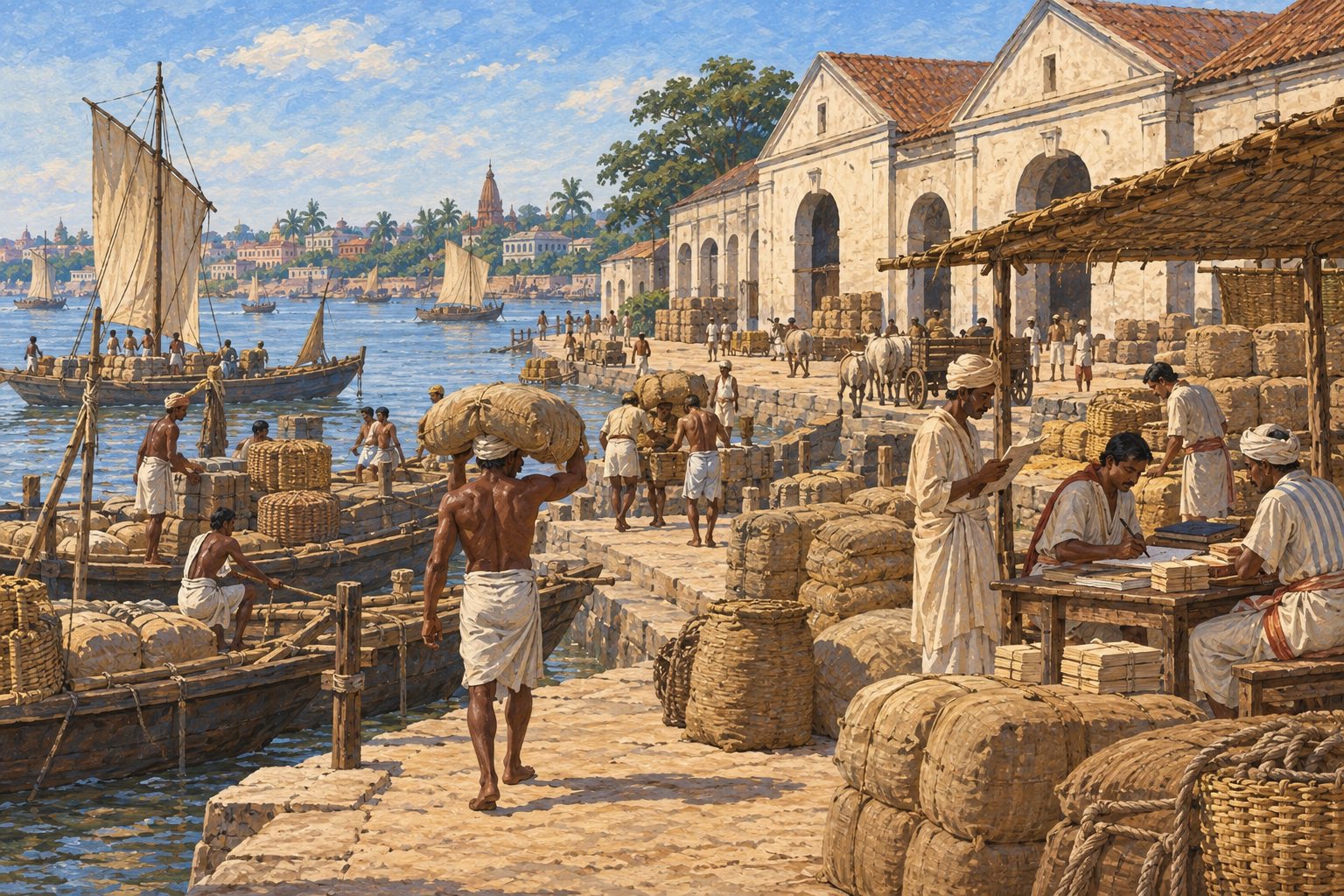
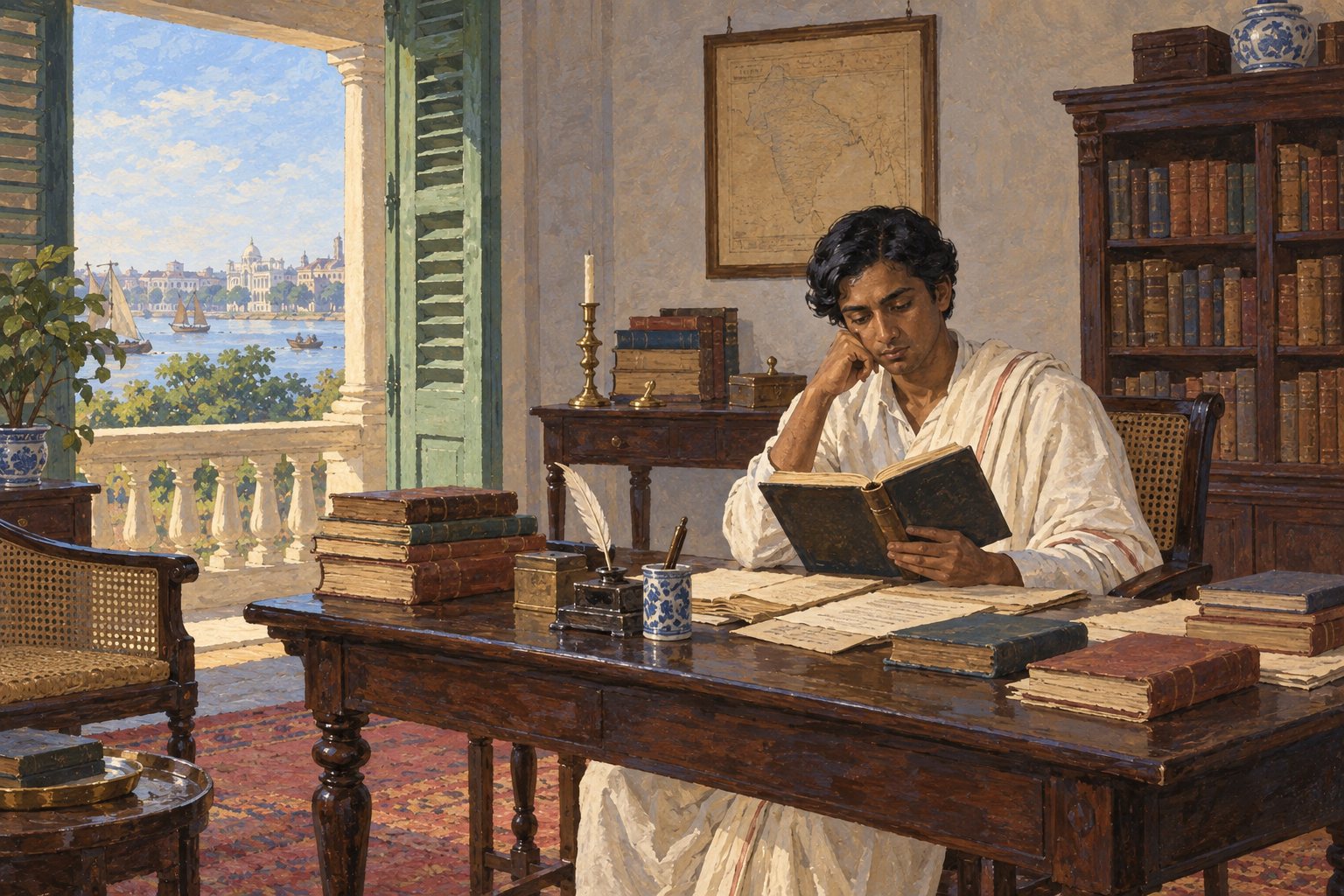
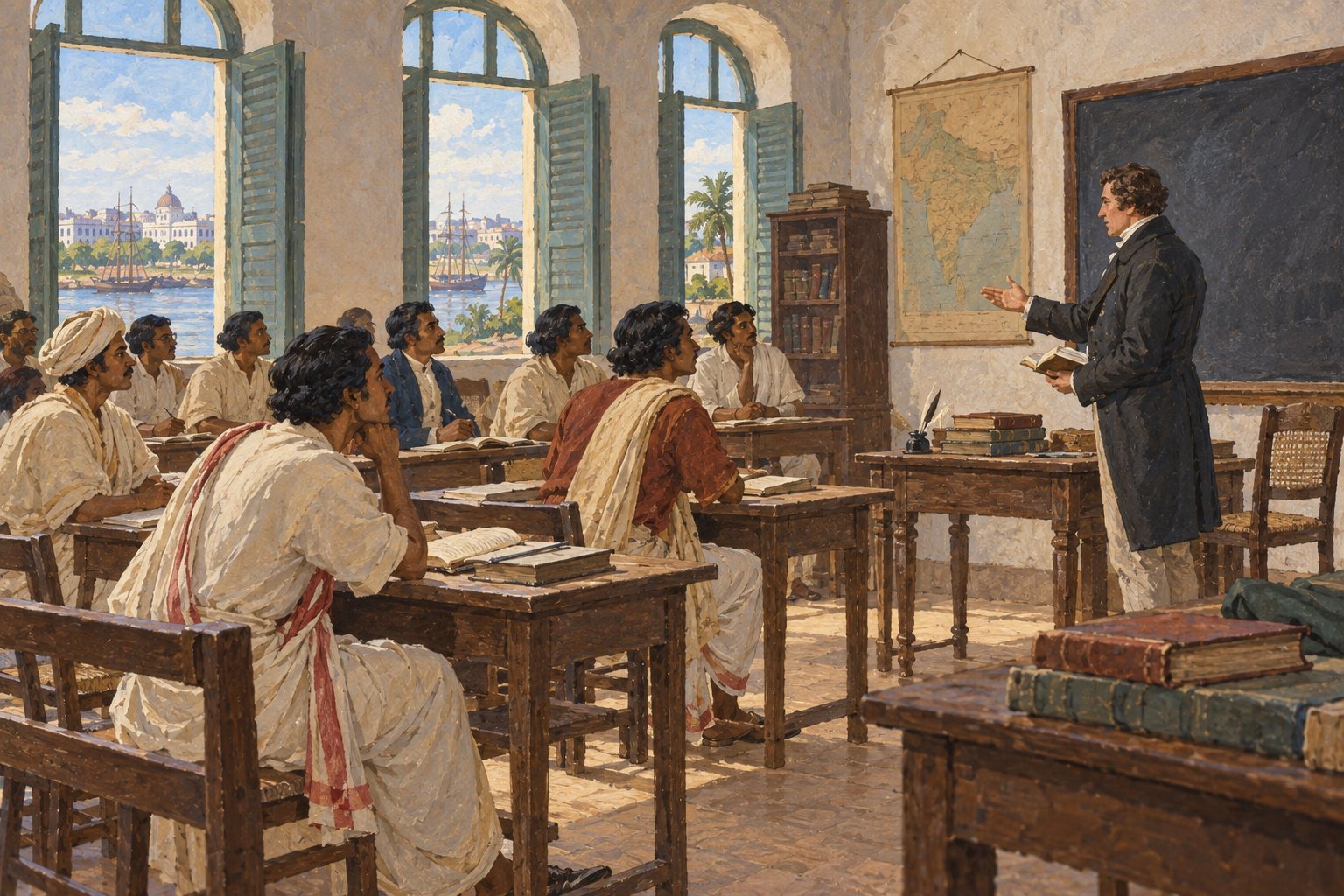
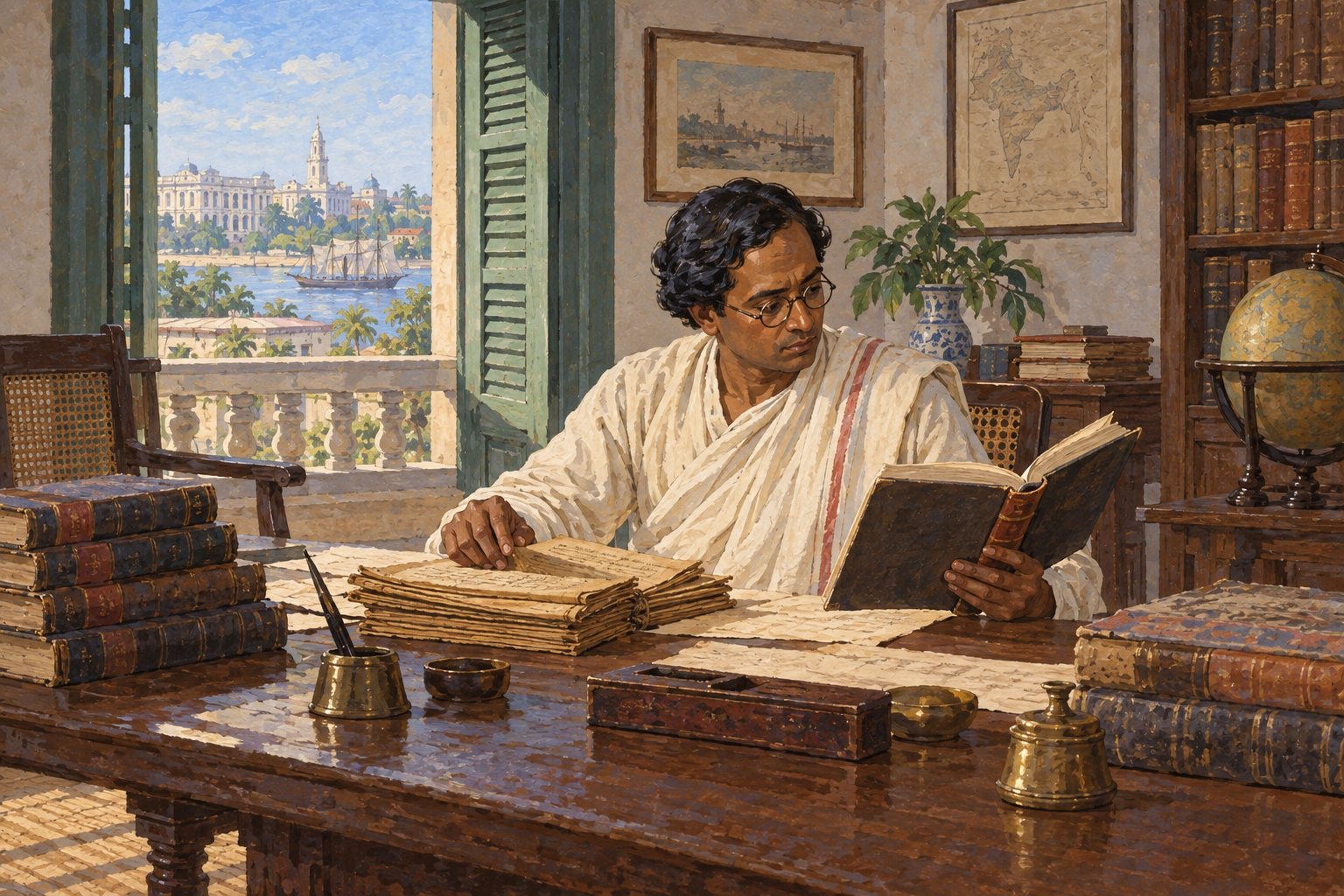
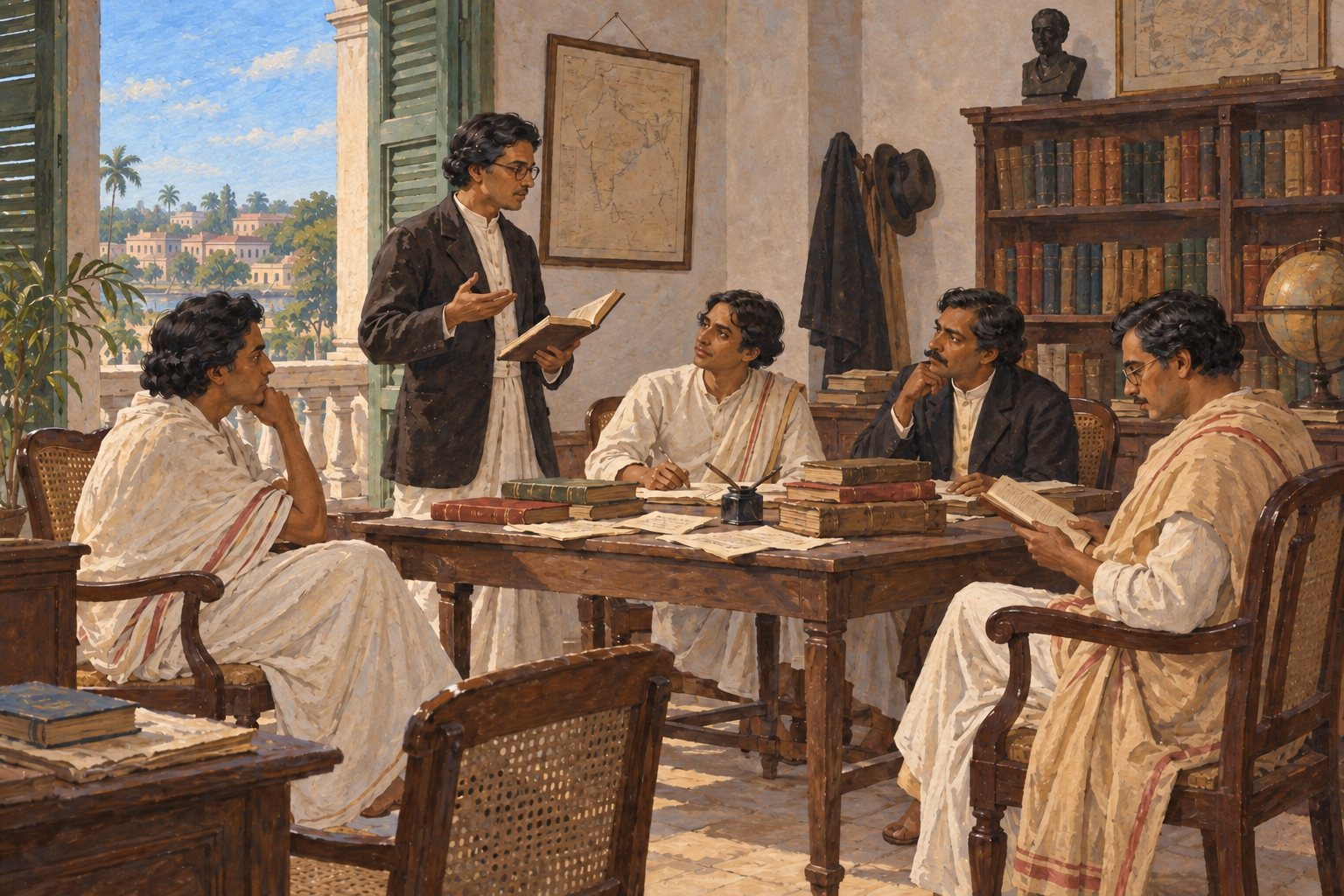
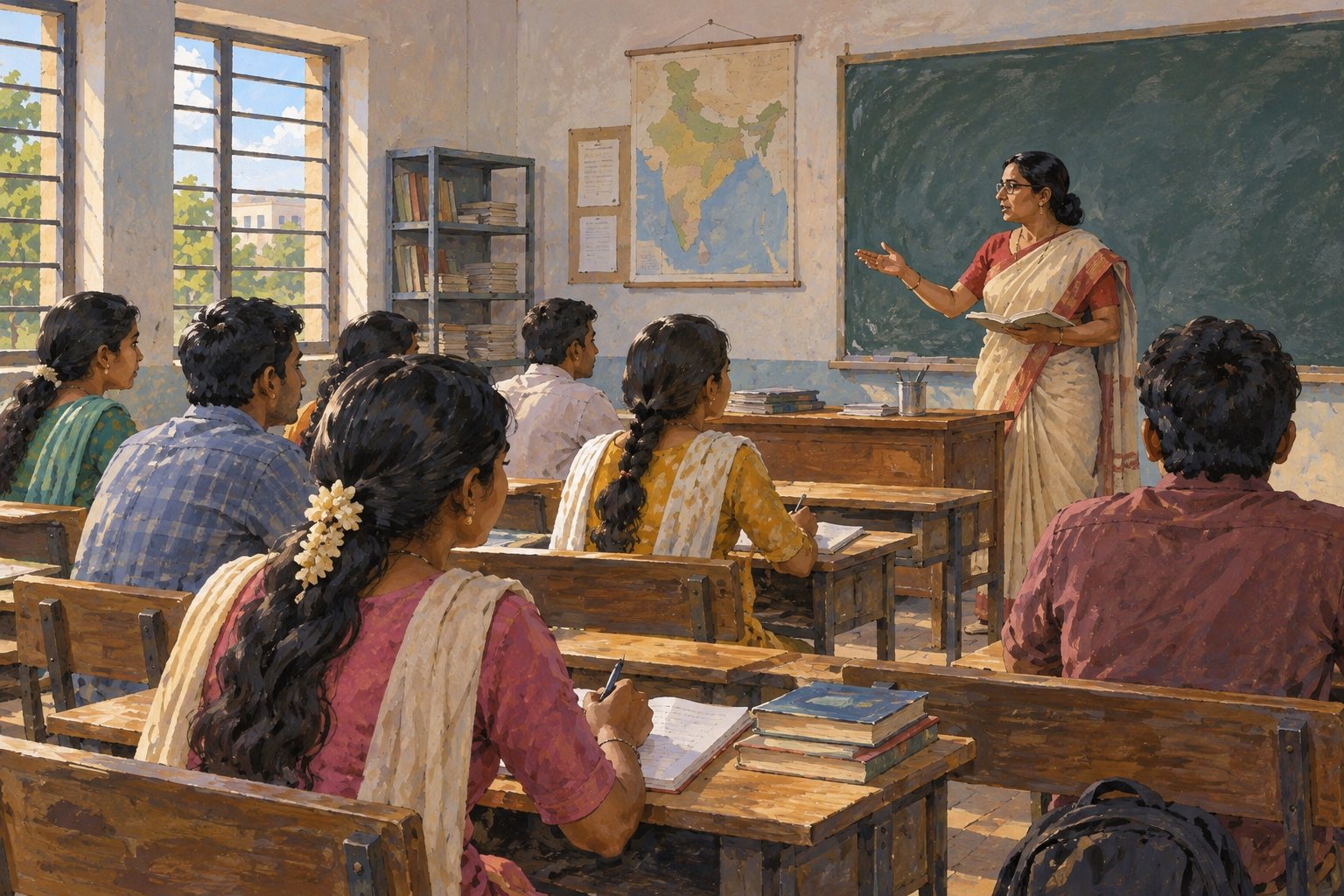
Calcutta’s Learning Rooms. The room is a company town: a trading corporation collecting Bengal’s land revenue after 1765, the Permanent Settlement of 1793 minting a rentier literate class with money and leisure, Fort William College (1800) and Hindu College (1817) teaching its sons English, and Macaulay’s Minute of 1835 proposing, in its own words, a class of persons “Indian in blood and colour, but English in taste, in opinions, in morals, and in intellect” — reform Hinduism is one of the things part of that class did with the equipment, and every founder in the next movement walks out of this room.
How it was transmitted
A Society With a Deed
Rammohan Roy’s Calcutta operation is the prototype: his own tract-and-counter-tract warfare in Bengali and English (the sati pamphlets of 1818–20, in his own English), his newspapers (Sambad Kaumudi, 1821; the Persian Mirat-ul-Akhbar, 1822), his 1823 memorial against press licensing — a religious reformer arguing press freedom as a religious necessity — and then the Brahmo Sabha (1828) with its trust deed of 1830: a religion reorganised as a subscription society with members, minutes, a conveyance and a press, the organisational form every successor in this volume copies.
The Samaj as Franchise
The Arya Samaj (Bombay 1875, Lahore 1877) industrialised the form: printed principles, enrolled members with a stated contribution of one per cent of income (the rule verified against the Samaj’s own published rules before print), salaried preachers, schools (DAV College 1886; Gurukul Kangri 1902), orphanages, and a tract press fighting Christians, Muslims, Sanatanists and — after the 1890s split between its College and Gurukul wings — each other; Dayananda’s Satyarth Prakash (1875, revised 1884), whose closing chapters attack every rival position including other Hindus', is the movement’s complete argument as one printed object.
Explore the illustrations7 scenes · Devotional Print at Scale
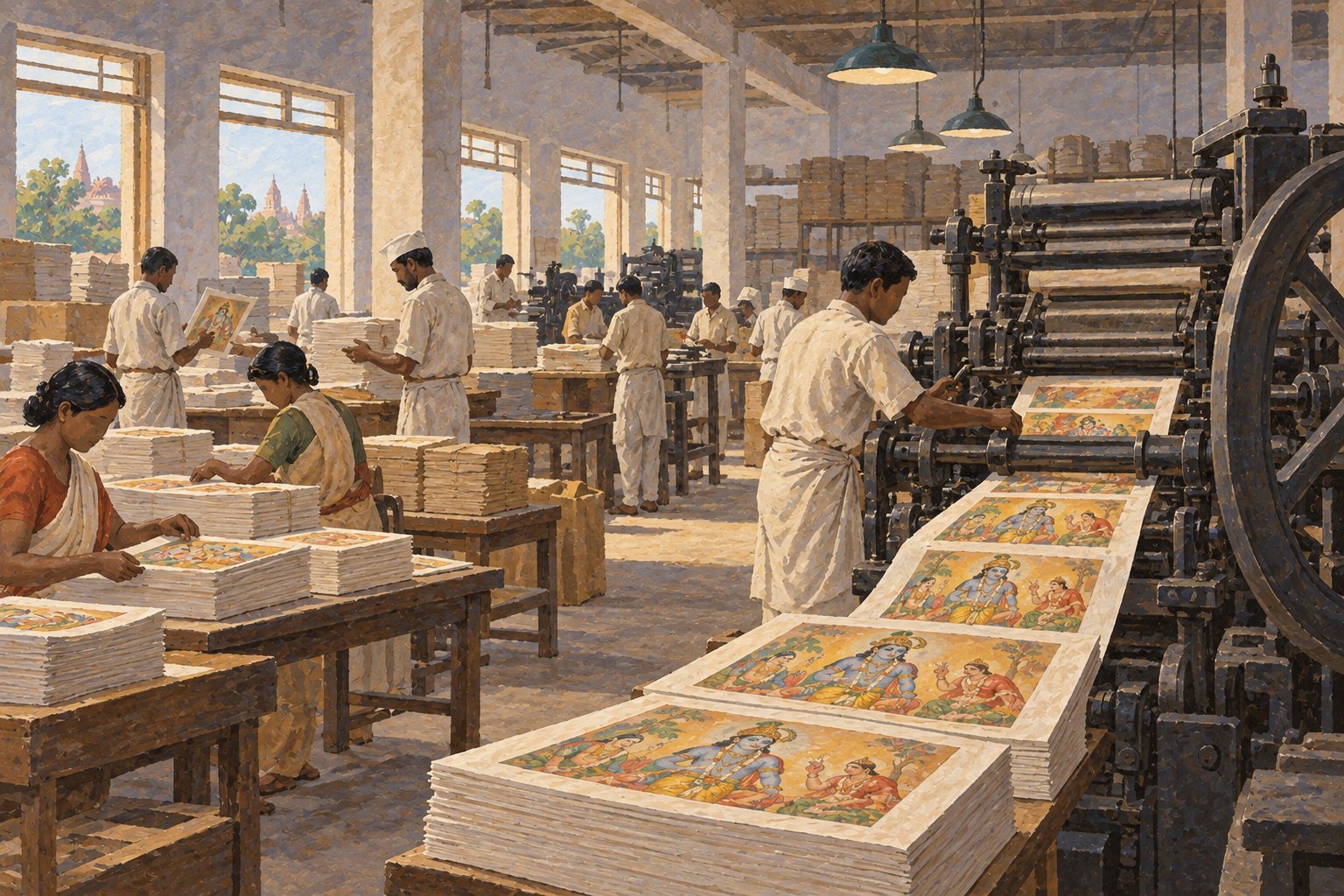
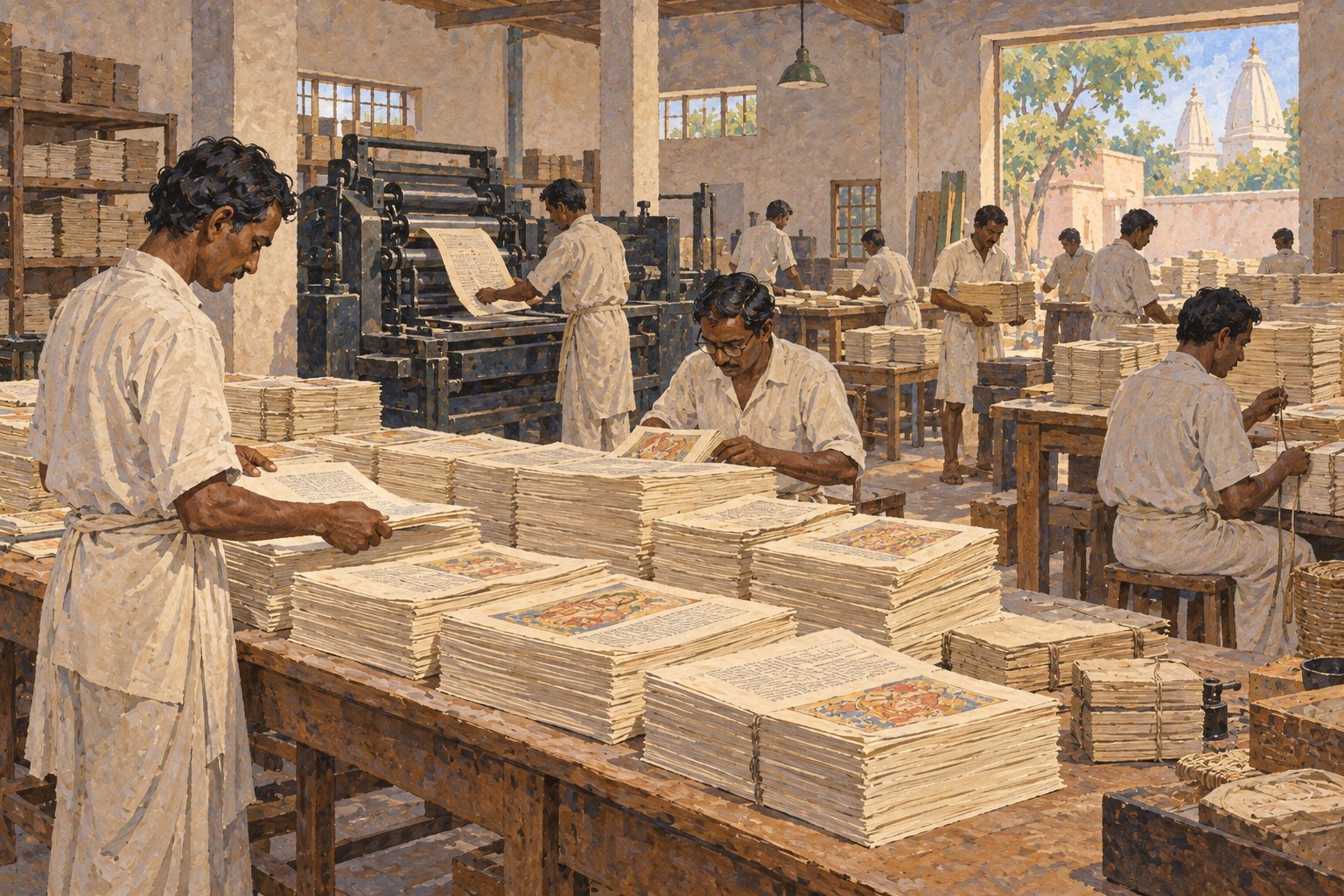
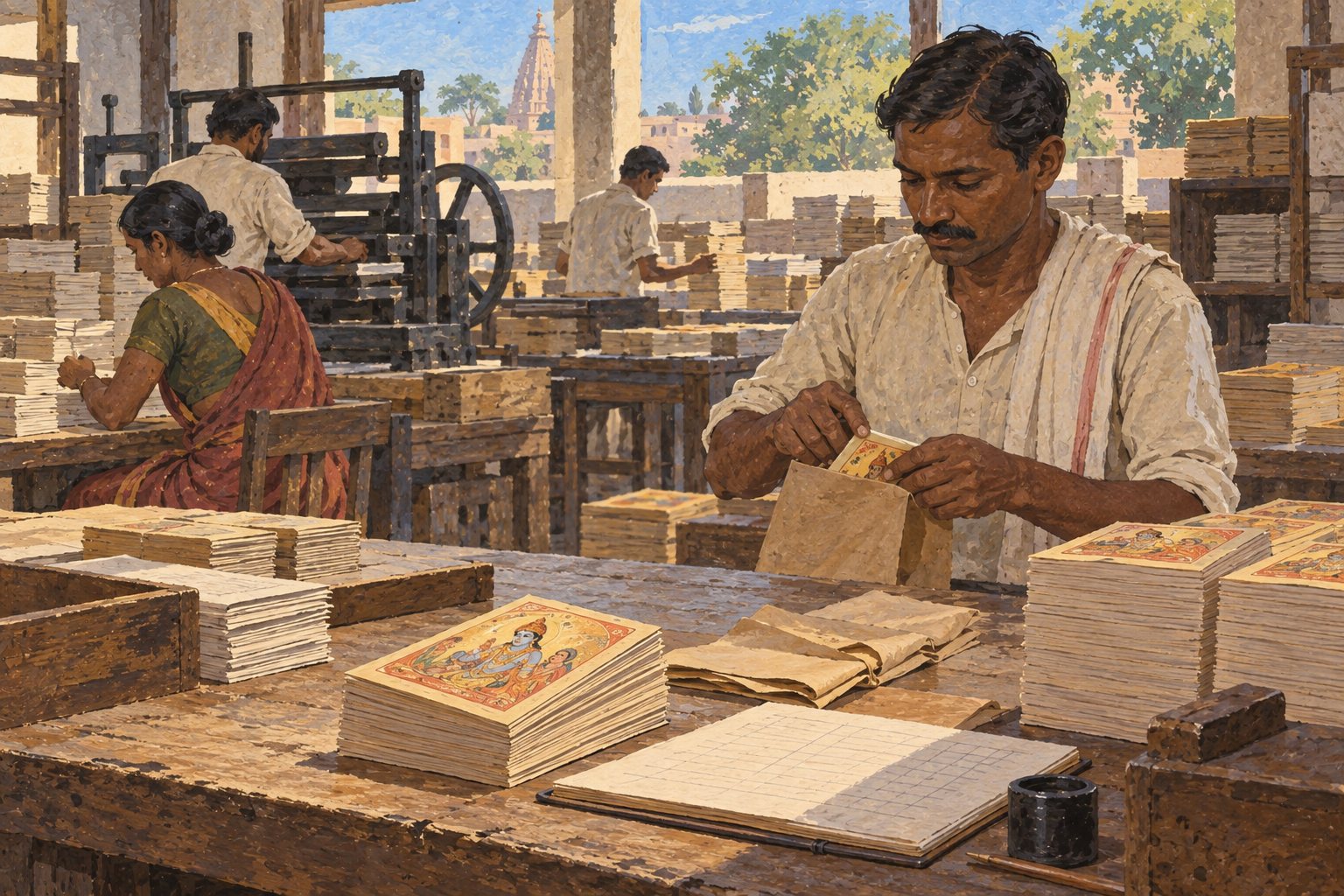
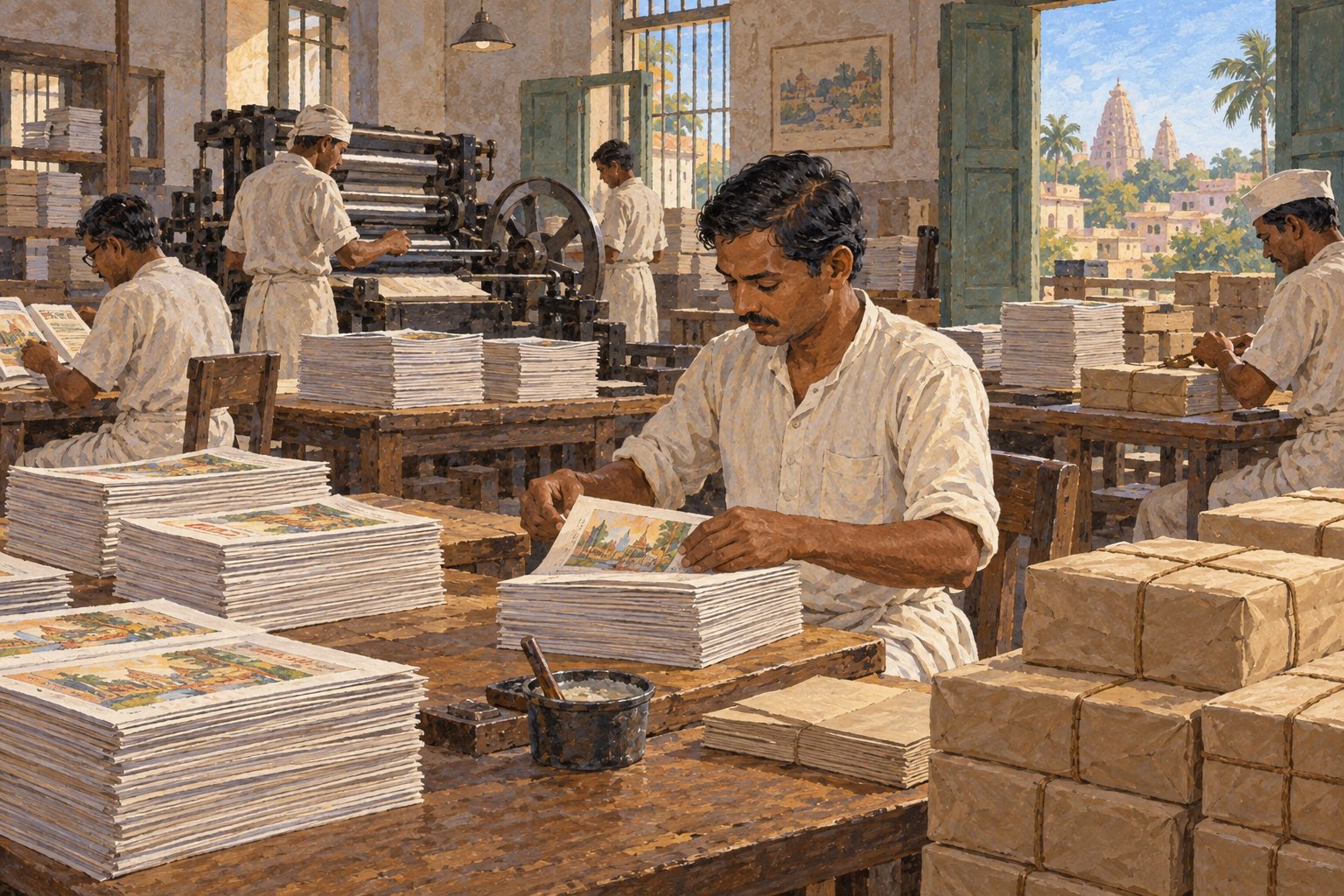
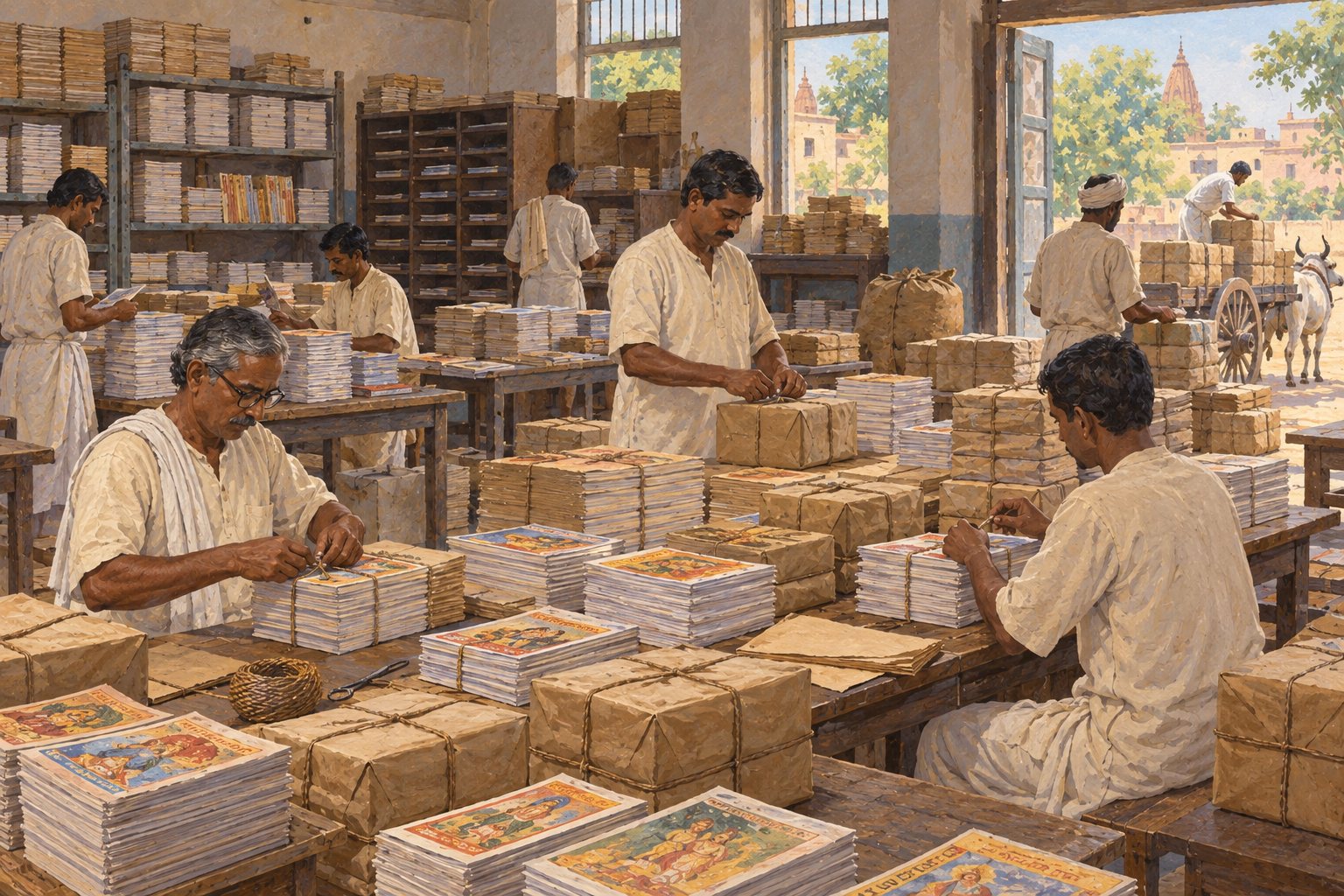
Devotional Print at Scale. The Gita Press (founded 1923; the monthly Kalyan from 1926) turned devotional publishing into heavy industry — no advertisements as stated house policy, prices subsidised below cost, the Gita and the Ramcharitmanas in cumulative editions the press itself counts in the hundreds of millions (the publisher’s own totals, UNVERIFIED until checked against its published figures and the scholarship; never printed as an audit) — and Kalyan's special numbers assembled doctrine, saints and campaigning into a mass-mailed Hindu public; the press’s documented campaigns (cow protection, opposition to the Hindu Code Bill) show the machine already doing political work, reported here as publishing history.
Texts and authority
A Canon Without a Closing
The movement’s argument up front: this tradition never closed a canon — no council, no list, a śruti–smṛti gradient rather than a boundary — so its modern canon event is selection, not closure: between 1785 and the mid-twentieth century a handful of named agents lifted one section of one epic from the middle of the tradition to the position of representative scripture, and the rest of the movement names them one by one; what selection cannot do — bind anyone — is stated at the start and paid off at the end, because it is the structural difference between this canon story and every other in the series.
The Gita in English
Charles Wilkins’s Bhagvat-Geeta (London, 1785) — the first Sanskrit book translated directly into English — was printed at the East India Company’s expense with Warren Hastings’s covering letter predicting the text would survive “when the British dominion in India shall have long ceased to exist” (the letter is public domain; wording verified before print), and it began the Gita’s independent career: Schlegel’s Latin (1823), the New England readings, and Edwin Arnold’s blank-verse Song Celestial (1885) — the version a London law student named Gandhi first read, with two theosophist friends, in about 1889, on his own later account and labelled as such.
Institutions and resources
The Department of Endowments
The volume’s money story opens on a paradox with a filing cabinet: in several Indian states the largest Hindu temples are administered by government departments, in a lineage running from the Company’s pilgrim taxes and its endowments regulations, through the Madras Hindu Religious Endowments Act of 1927, to the Hindu Religious and Charitable Endowments departments of the 1950s — Tamil Nadu’s department states that it administers on the order of forty thousand institutions (the department’s own figure, verify) — and the constitutional bargain was litigated at once: in the Shirur Mutt case (1954) the Supreme Court struck down parts of the 1951 Act and minted the “essential religious practices” test Indian religion law has run on since; the present-day campaign to move temples out of state administration, and the defence of the system, are reported as litigation and legislation with the claimants named and characterised no further.
The Hill That Publishes a Budget
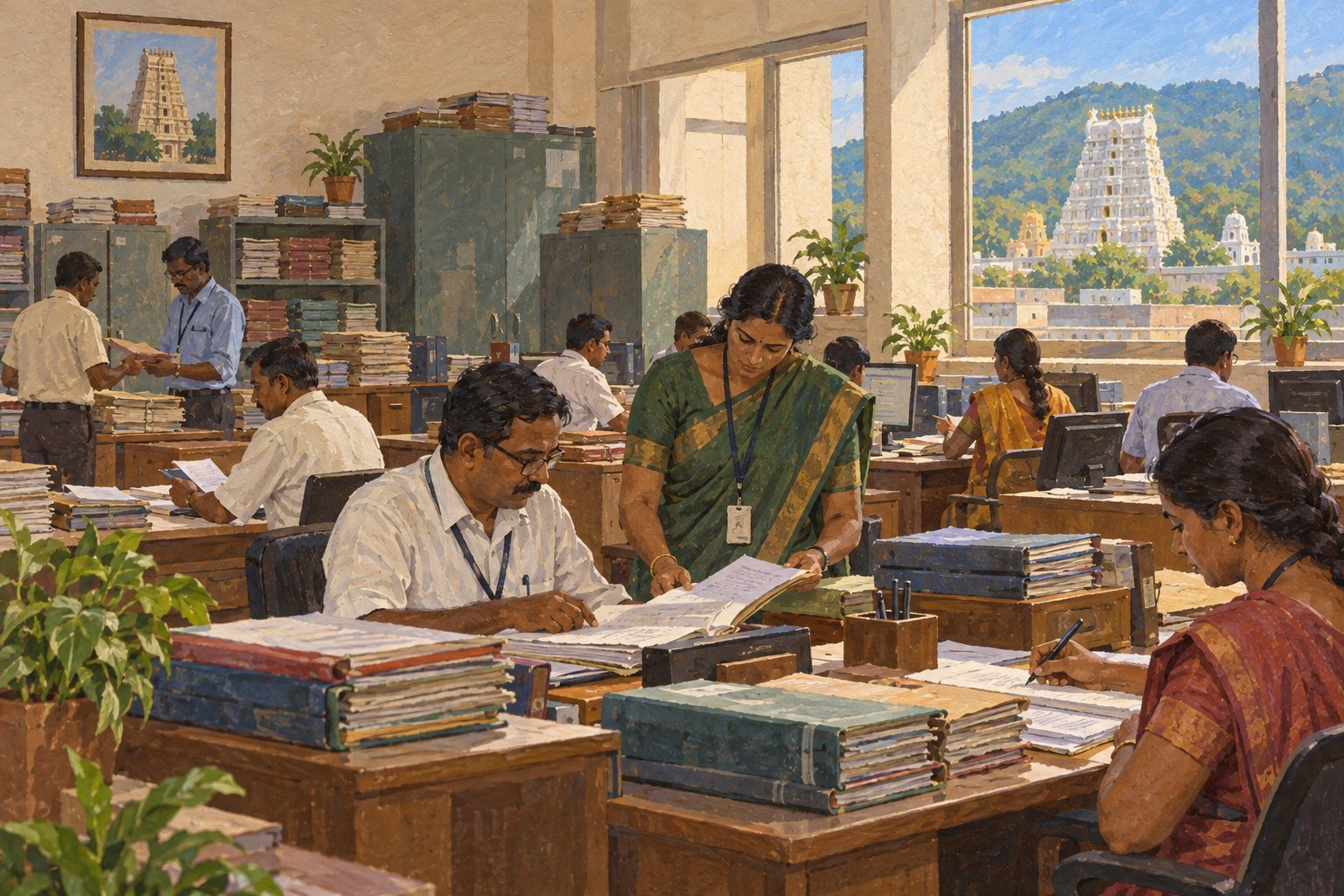
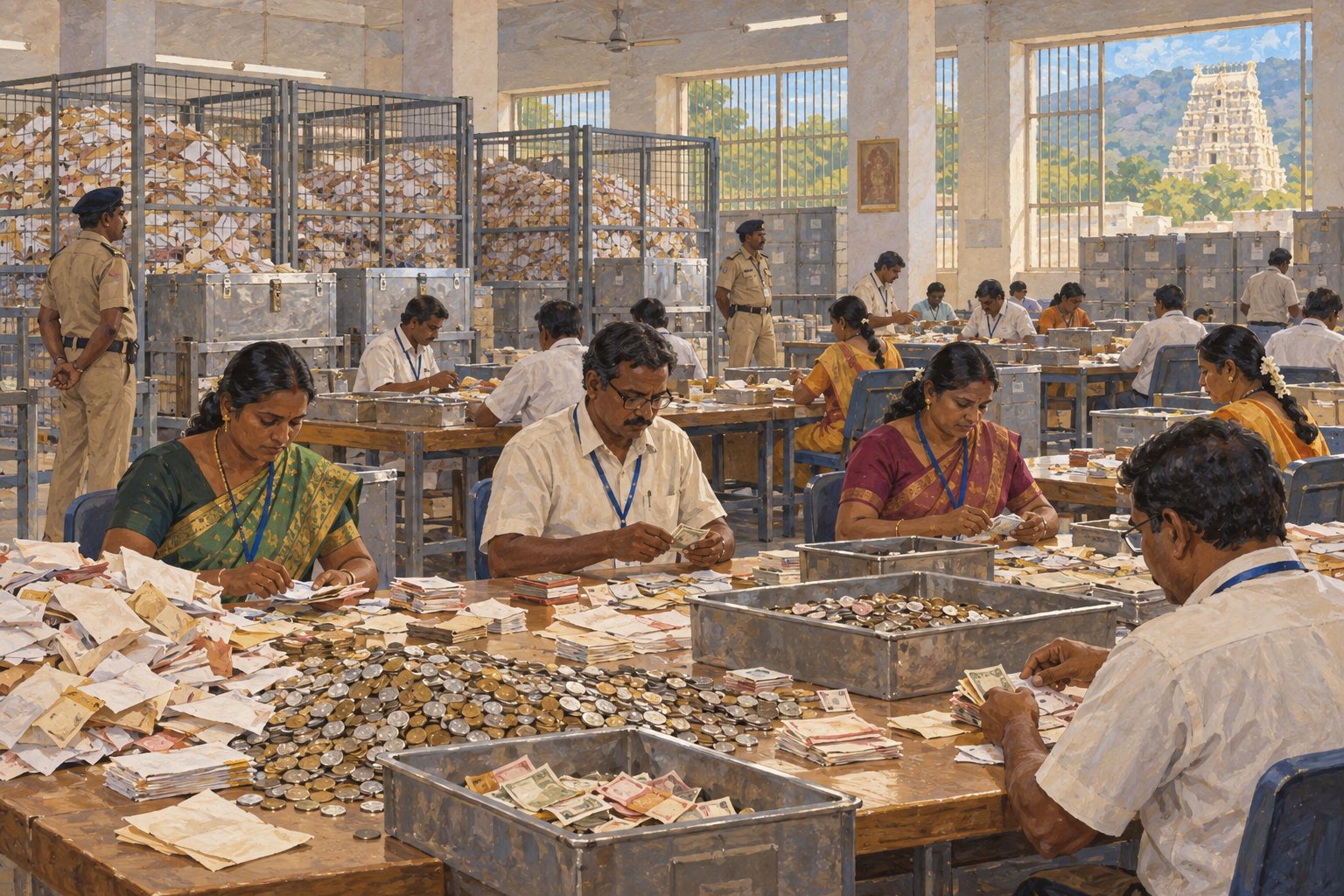
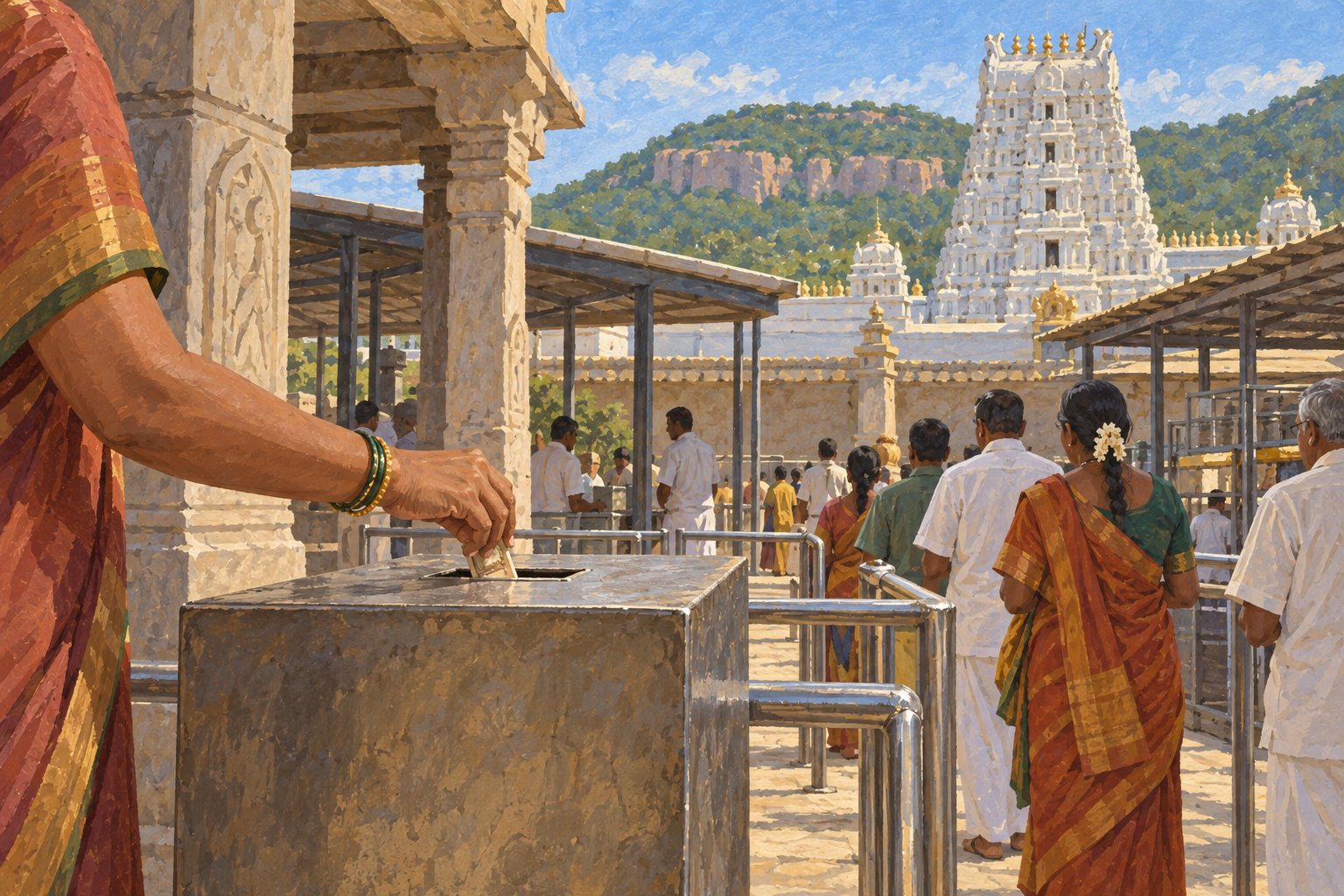
Tirumala Tirupati Devasthanams, the statutory trust that runs the Venkateswara temple at Tirupati, publishes an annual budget in the thousands of crores of rupees (the trust’s own budget documents; every figure fetched from them before print or written UNVERIFIED), takes offerings in a sealed hundi counted under supervision, auctions pilgrims’ tonsured hair by weight, and runs kitchens, colleges and a prasadam operation at industrial scale — the best-documented temple economy in the series precisely because a statute compels the documents; the chapter reads the budget the way the series reads an endowment deed, and closes on what the documents cannot show: what any pilgrim’s gift means to the giver cannot be established, and is not this book’s business.
Explore the illustrations6 scenes · A Temple Kitchen’s Work
A Temple Kitchen’s Work. Tirumala Tirupati Devasthanams, the statutory trust that runs the Venkateswara temple at Tirupati, publishes an annual budget in the thousands of crores of rupees (the trust’s own budget documents; every figure fetched from them before print or written UNVERIFIED), takes offerings in a sealed hundi counted under supervision, auctions pilgrims’ tonsured hair by weight, and runs kitchens, colleges and a prasadam operation at industrial scale — the best-documented temple economy in the series precisely because a statute compels the documents; the chapter reads the budget the way the series reads an endowment deed, and closes on what the documents cannot show: what any pilgrim’s gift means to the giver cannot be established, and is not this book’s business.
Changes and divisions
Legislating Dharma
The nineteenth-century split ran between reformers who would use the alien state’s law against inherited practice and an orthodoxy that petitioned the same state to stay out: sati (Regulation XVII of 1829 — Rammohan’s tracts for abolition, the Dharma Sabha’s appeal to the Privy Council against it, both sides’ petitions public domain and quoted); widow remarriage (Act XV of 1856, Vidyasagar arguing from the śāstras themselves, so that both sides claimed the texts); and the Age of Consent Act (1891), which Tilak opposed on the stated ground that the state had no right to legislate religion — the fight that made “may the state touch religion?” the tradition’s standing constitutional question, inherited by every chapter after this one.
The Gate of the Temple
Who may enter is the split at ground level: the Vaikom satyagraha (1924–25), Guruvayur (1931–32), Ambedkar’s campaigns at the Mahad tank (1927, where a copy of the Manusmriti was burned — a canon act inside a split act) and the Kalaram temple (1930); the Temple Entry Proclamation of Travancore (12 November 1936), a state document in the Maharaja’s name opening state temples to all Hindus, quoted from its own text; Madras legislating likewise in 1947; and the exit that judged the whole contest — Ambedkar’s 1935 announcement at Yeola that he would not die a Hindu, redeemed at Nagpur on 14 October 1956 when he took Buddhist refuge with a crowd the sources count in the hundreds of thousands, the figures printed as the range they are; the largest single documented departure in the volume, handed by name to the Buddhism volume’s tradition.
Limits of the evidence
These limits are stated in the book before its argument.
- Whether “Hinduism” was invented, discovered or merely renamed in the nineteenth century The history of the category can be documented — attestations, censuses, statutes; the verdict on it cannot. The volume reports the scholarly argument with its parties named, and states plainly that the argument concerns the category, not the antiquity or worth of the practices, which are older than every source this volume uses and belong to the Vedic World and Classical Hinduism volumes.
- Adherence before the census — and, strictly, after it The census counts choices made on a form under an enumerator’s rules, not belief; the census operation’s own 1911 circular dispute is the proof, and it is printed. There is no pre-1871 number that is anything but a guess.
- Any cumulative print run or television audience beyond the publisher’s and broadcaster’s own claims No independent audit of the Gita Press totals or the 1987–90 serial audiences exists. Such figures are printed as the institution’s claims, or as UNVERIFIED, never as measurements.
Sources and reading
This article brings together the series’ existing overview and chapter summaries. The linked book page provides the full outline and bibliography.
- Charles Grant’s letter of 17 September 1787, as Henry Morris printed it in The Life of Charles Grant; Geoffrey Oddie dating the spelling1787; printed 1904. first recorded “Hindooism” in colonial correspondence
- Wilfred Cantwell Smith, The Meaning and End of Religion1962. the construction thesis’s ancestor
- David Lorenzen, “Who Invented Hinduism?,” Comparative Studies in Society and History1999. a self-aware unity predating the English noun
- Brian Pennington, Was Hinduism Invented?, and Will Sweetman2005; Sweetman cited. middle positions: the category was worked on in public
- Rammohan Roy, English Works, the 1816 Hindooism sentence1816. first recorded Indian use of the noun
- Francis Buchanan, Bengal and Mysore surveys1800s–1810s. Company descriptions of an ecology, not a membership
- William Ward, Account of the Writings, Religion, and Manners of the Hindoos1811. hostile encyclopaedia, labelled as such
- Rammohan Roy, 1823 memorial against press licensing1823. press freedom argued as a religious necessity
Illustrations are newly generated interpretations of themes in the book. They are not surviving artifacts, historical photographs or evidence for the events described.