22 illustrations · 2:44
Watch & listen.
Follow the images with a narrated journey through the book.






Overview
- Coverage
- 1901–present
- Earliest secure evidence
- 1901
- Transmission
- a free newspaper, then a radio licence
Stone’s Folly, a Texas classroom, 312 Azusa Street, a colour line the papers could not stop sneering at: the first movement is a room. The second is a masthead that reads Subscription Free, and a list that leaves town. Missionary tongues, the wavelength, Angelus Temple, seed faith, court records: the money is public because the courts and the papers made it so.
The coverage period and the earliest secure evidence are different dates. A tradition’s own account of its beginnings may differ from both.
Historical setting
The Second Blessing
By 1900 a broad wing of American Protestantism — heir, through Methodism, to Wesley’s teaching that entire sanctification is a datable experience and not only a process — had organised its religious life around a felt, testifiable crisis moment, the “second blessing,” and its camp meetings, holiness papers and come-outer congregations were asking a concrete question: if the apostolic experience is repeatable, what is its unmistakable evidence? The question stands at the end of the revival century described in the volume on the nineteenth-century new religions, and a Kansas Bible school was about to answer it with a sign.
Zion City
The revival infrastructure was already industrial before Pentecostalism existed: healing homes, holiness periodicals, and above all John Alexander Dowie’s Zion City, Illinois — a theocratic company town founded in 1901 with its own bank, its own lace factory and real-estate covenants barring doctors, drugs and pork — which proved that a healing ministry could fund a city, and whose receivership and Dowie’s deposition in 1906, reported in the Chicago press and the court proceedings, supplied the new movement with trained personnel and a standing warning about one-man finance that it did not heed.
Explore the illustrations7 scenes · The Mission Meeting Room
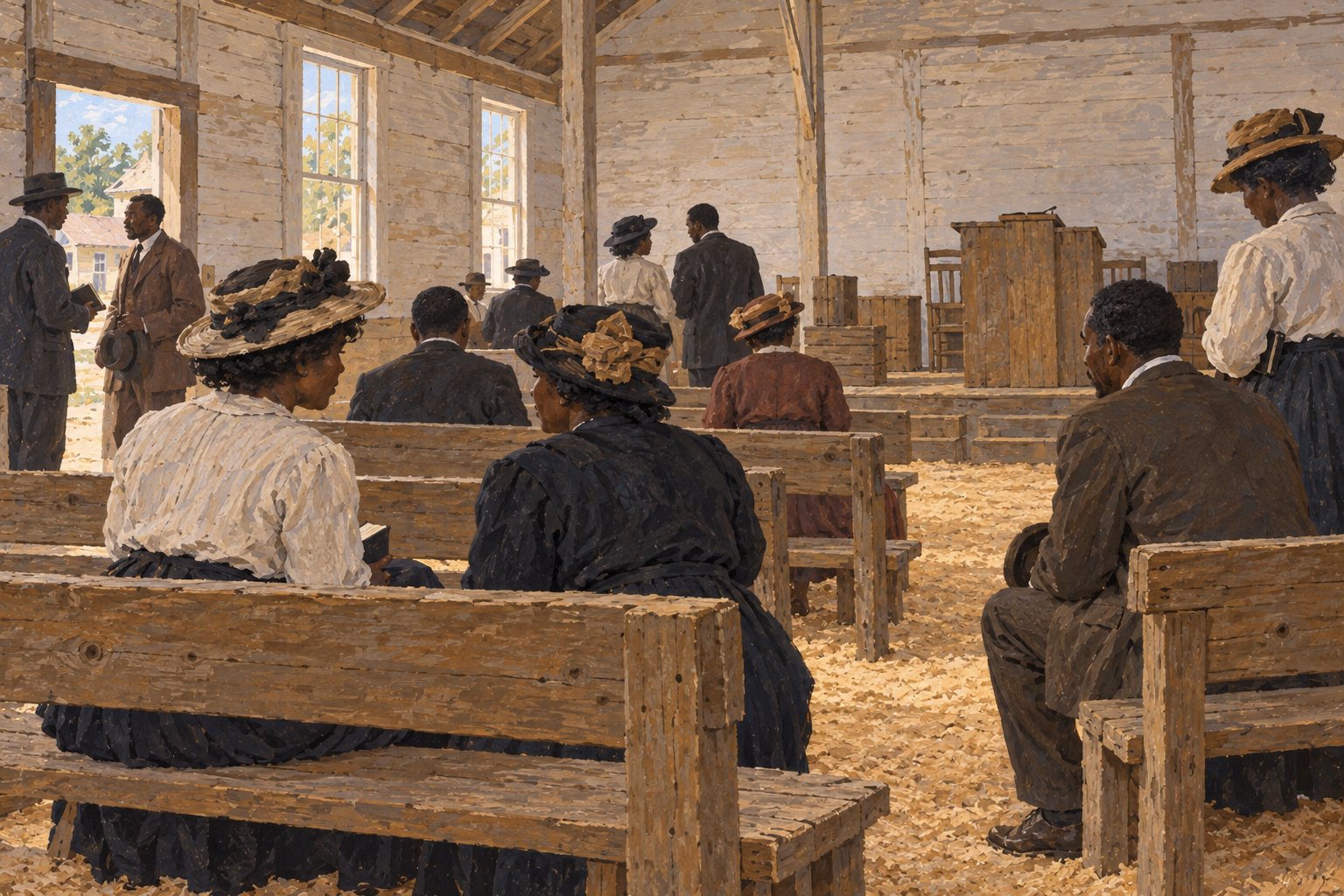
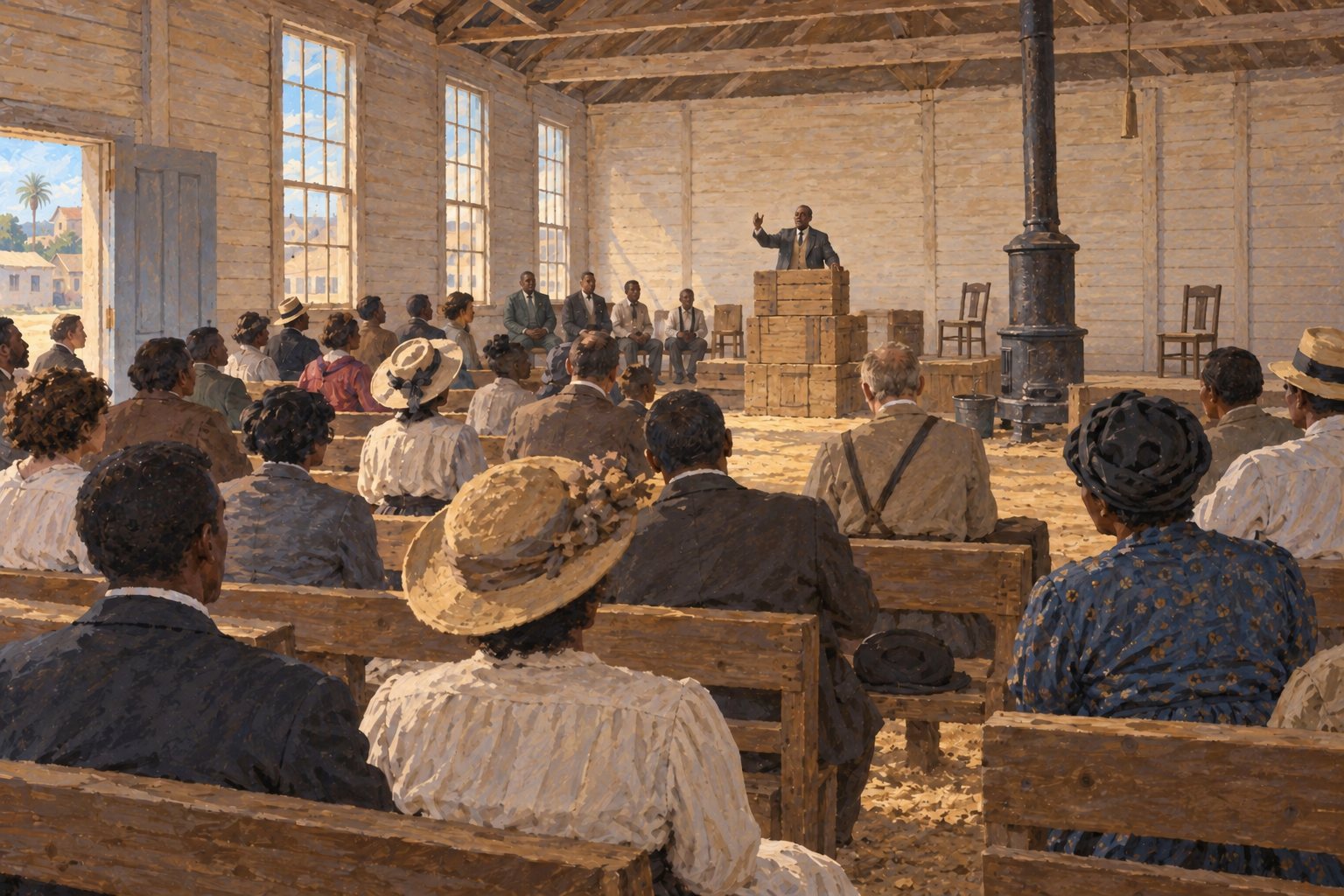
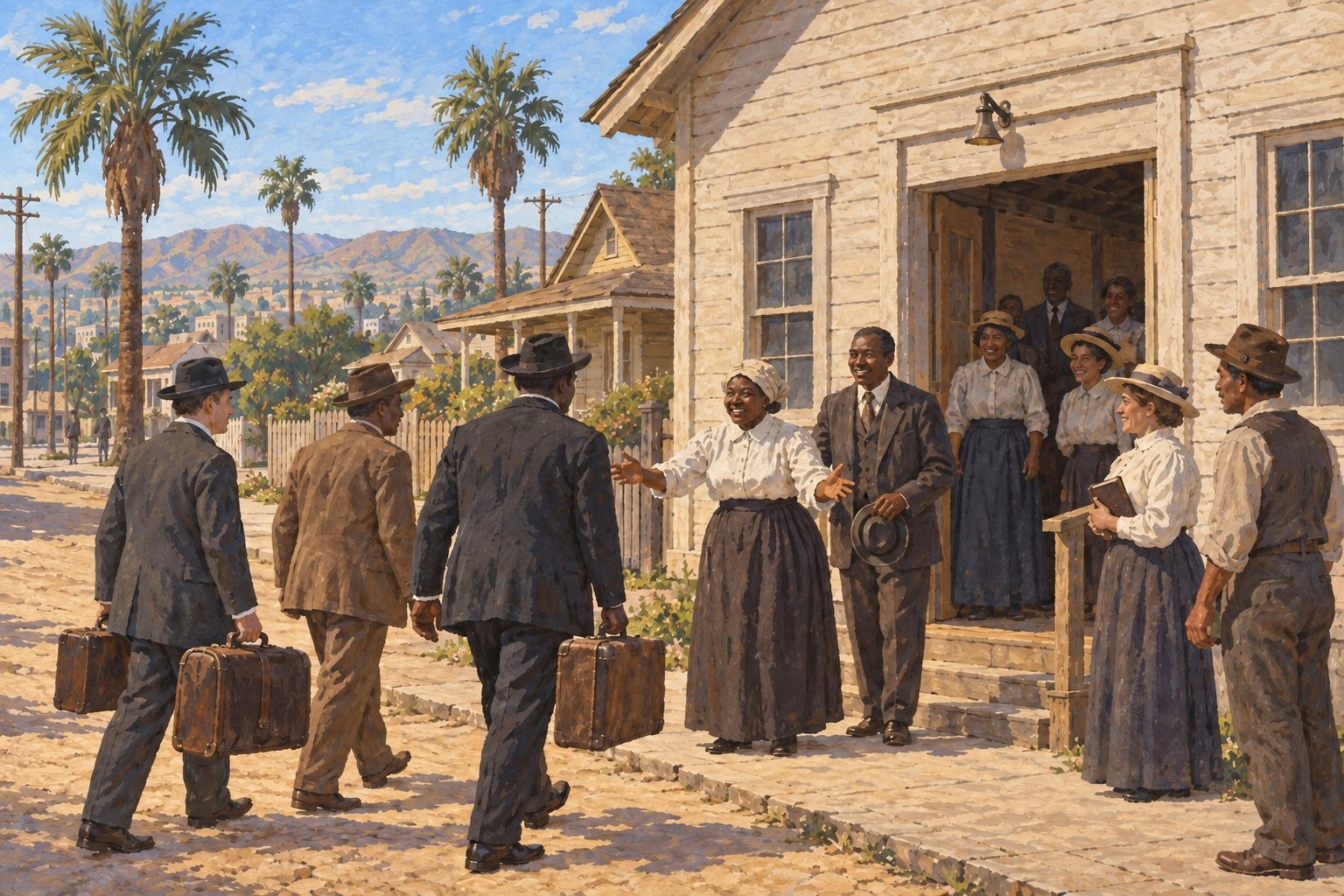
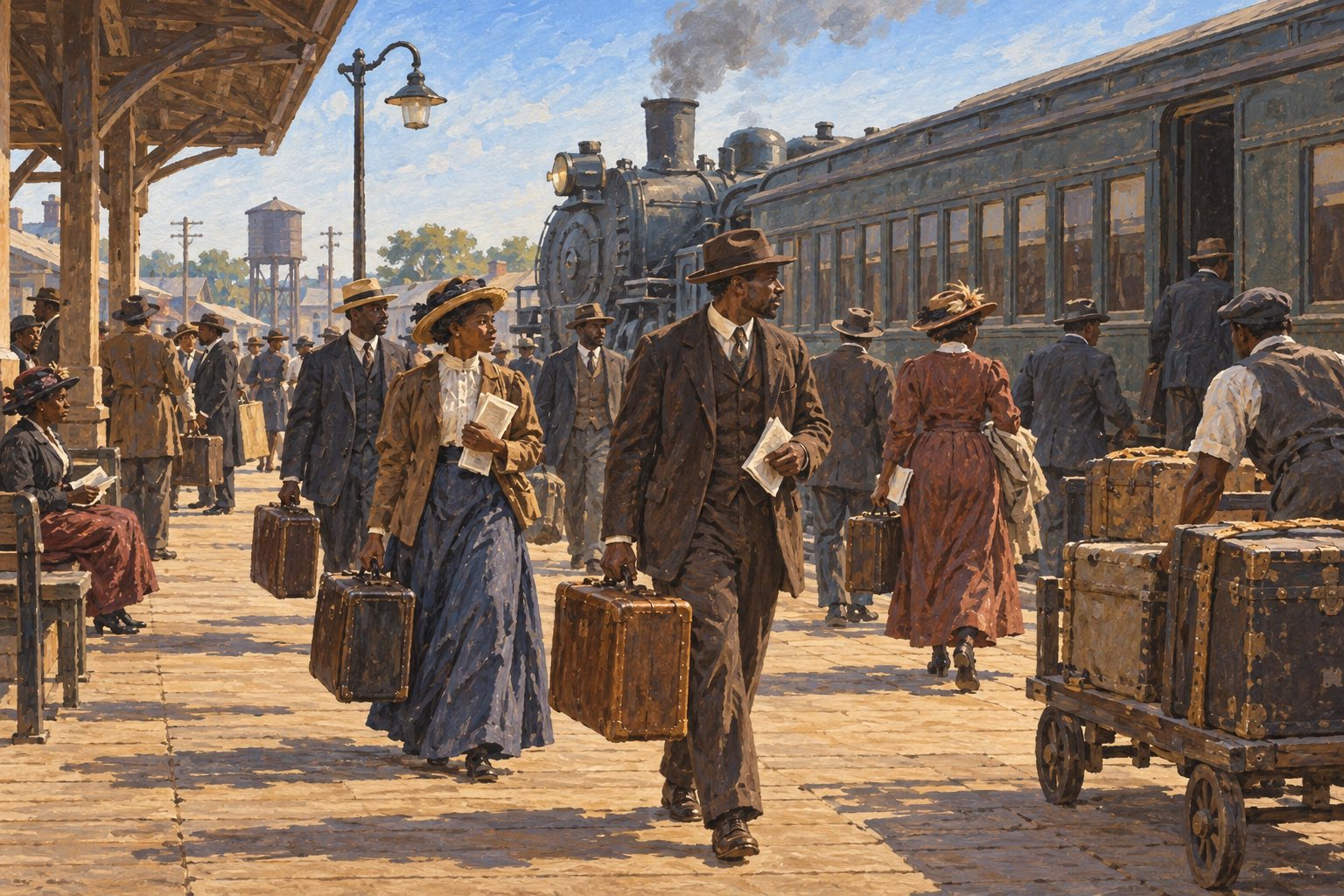
The Mission Meeting Room. For roughly three years a forty-by-sixty-foot former African Methodist Episcopal church building, lately used for stabling and storage, ran services that blurred into one continuous meeting — sawdust floor, plank benches, a pulpit the memoirs describe as shoebox crates — and on the morning of 18 April 1906 the Los Angeles Daily Times introduced it to the city under the headline “Weird Babel of Tongues,” hours before the San Francisco earthquake reached the same front pages, a conjunction the mission’s preachers and tract-writers immediately put to apocalyptic use; within months the visitors it baptised — C. H. Mason from Memphis, William Durham from Chicago, G. B. Cashwell from North Carolina — were carrying the practice home into whole denominations, which is what made a mission a movement.
How it was transmitted
Subscription Free
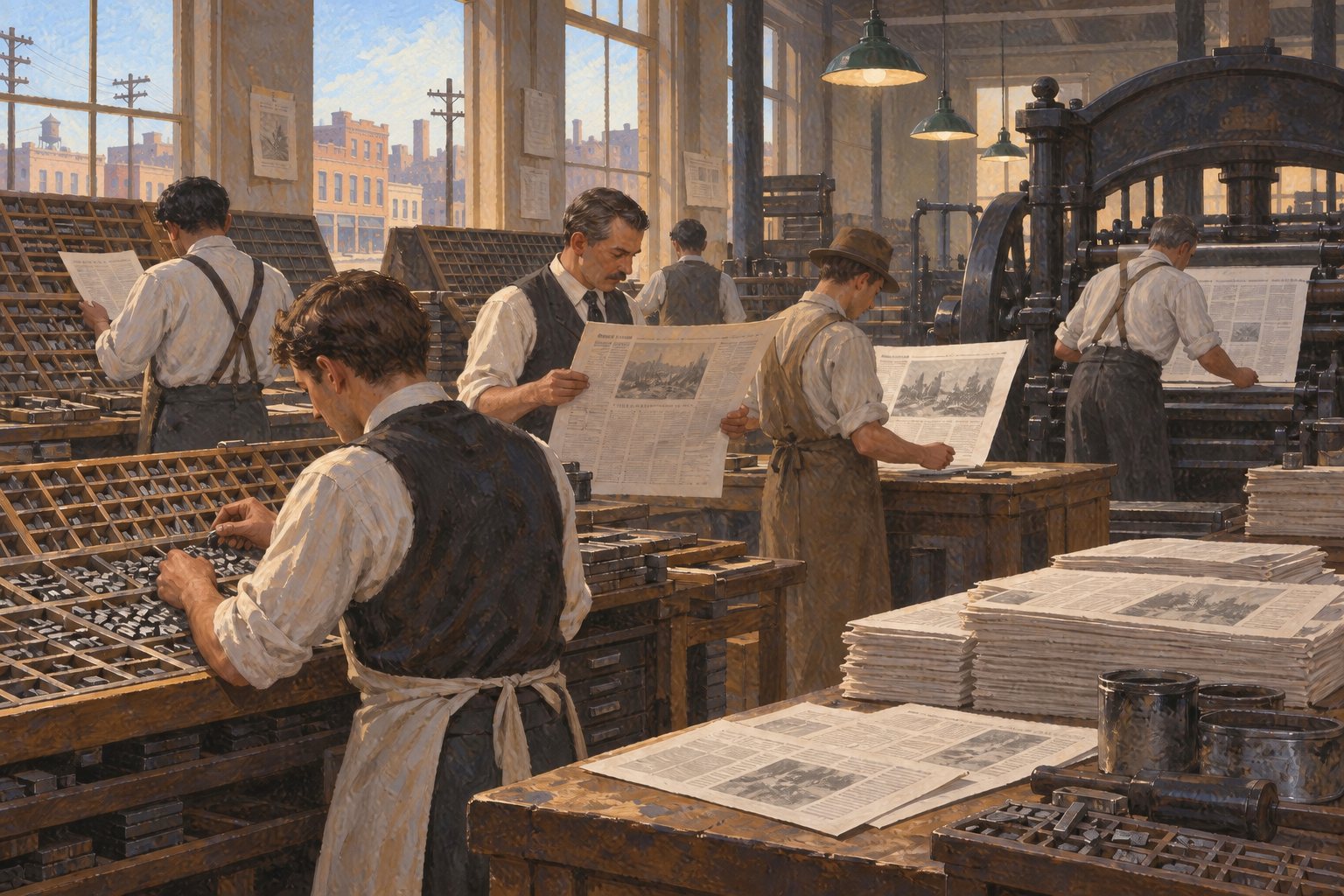
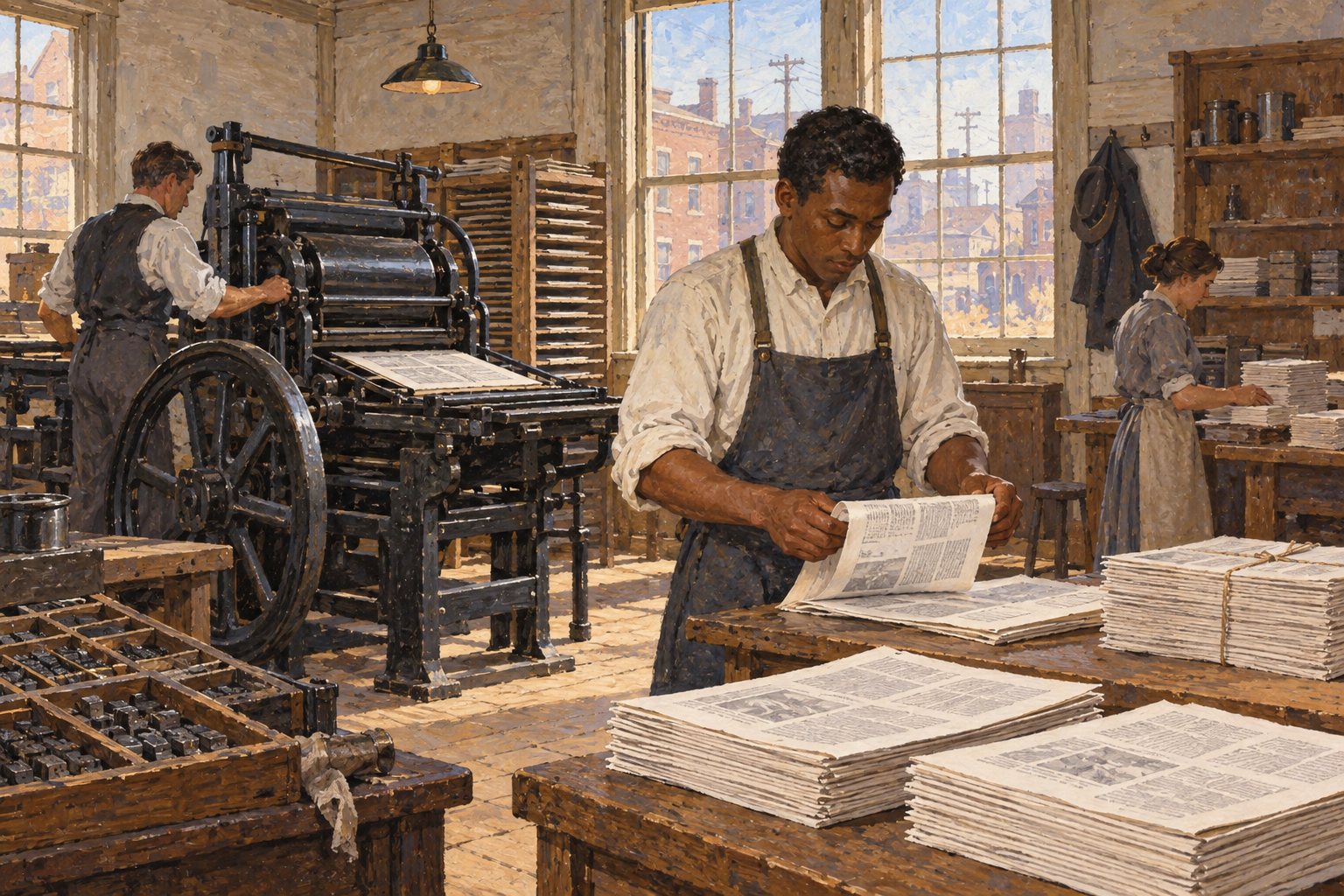
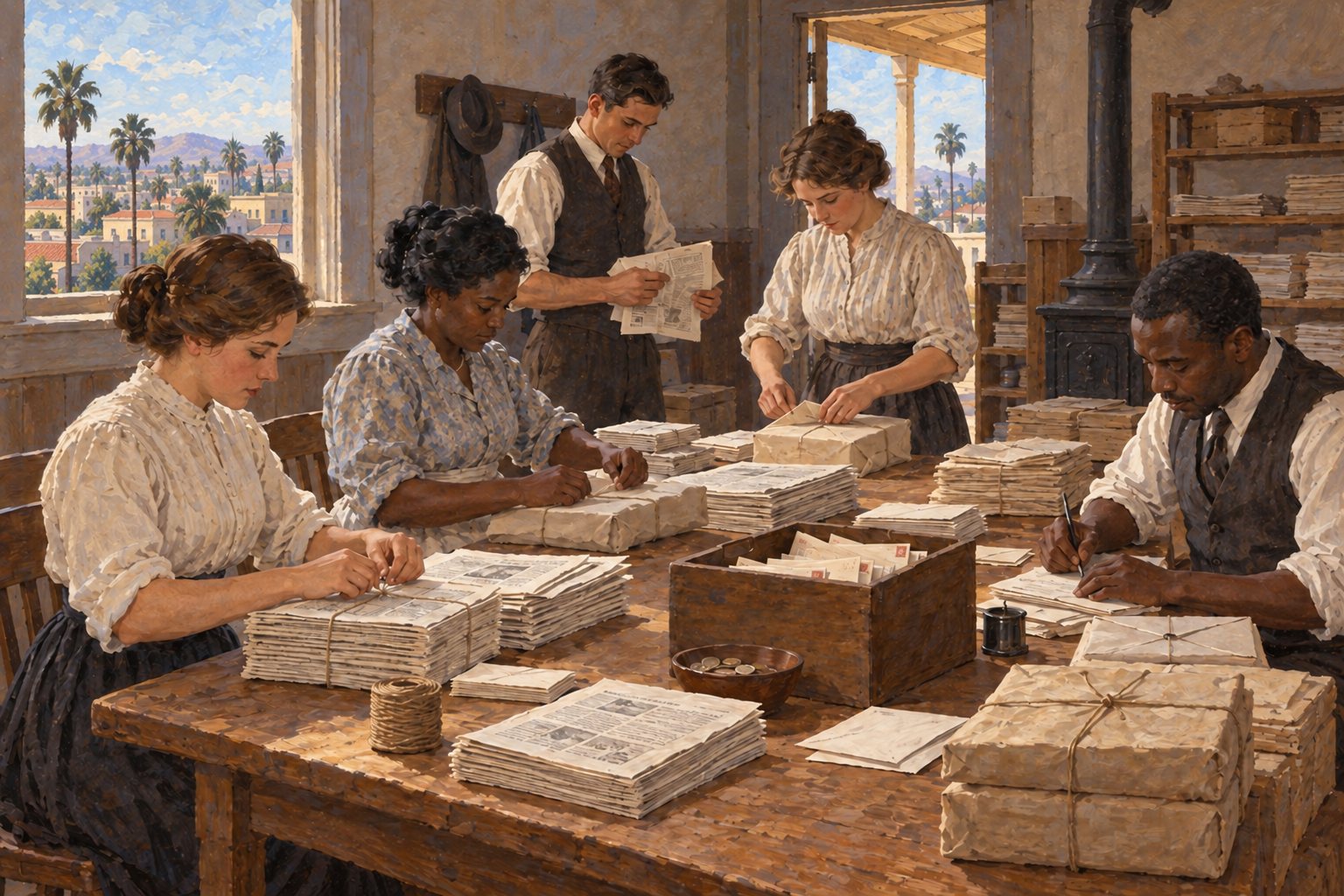
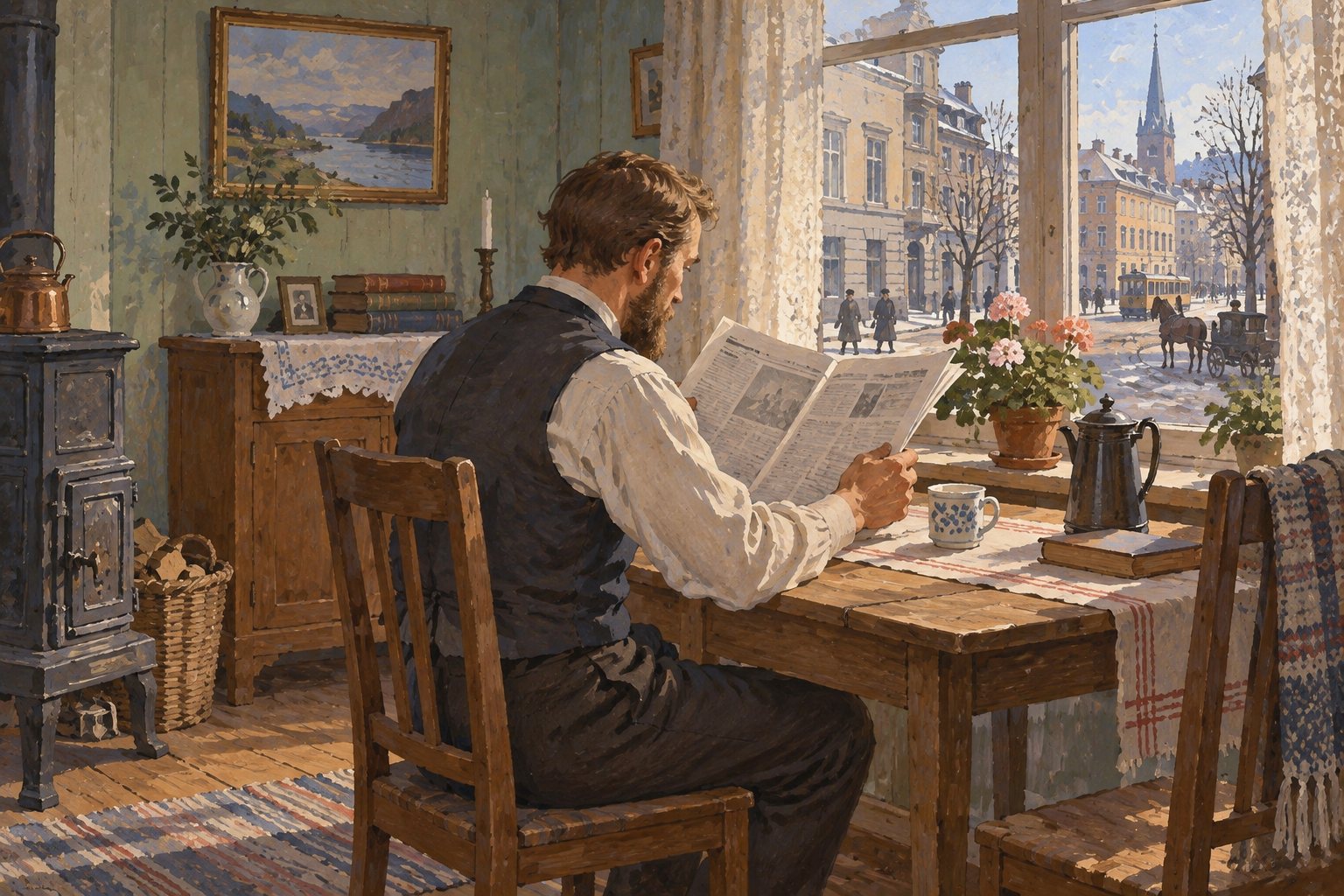
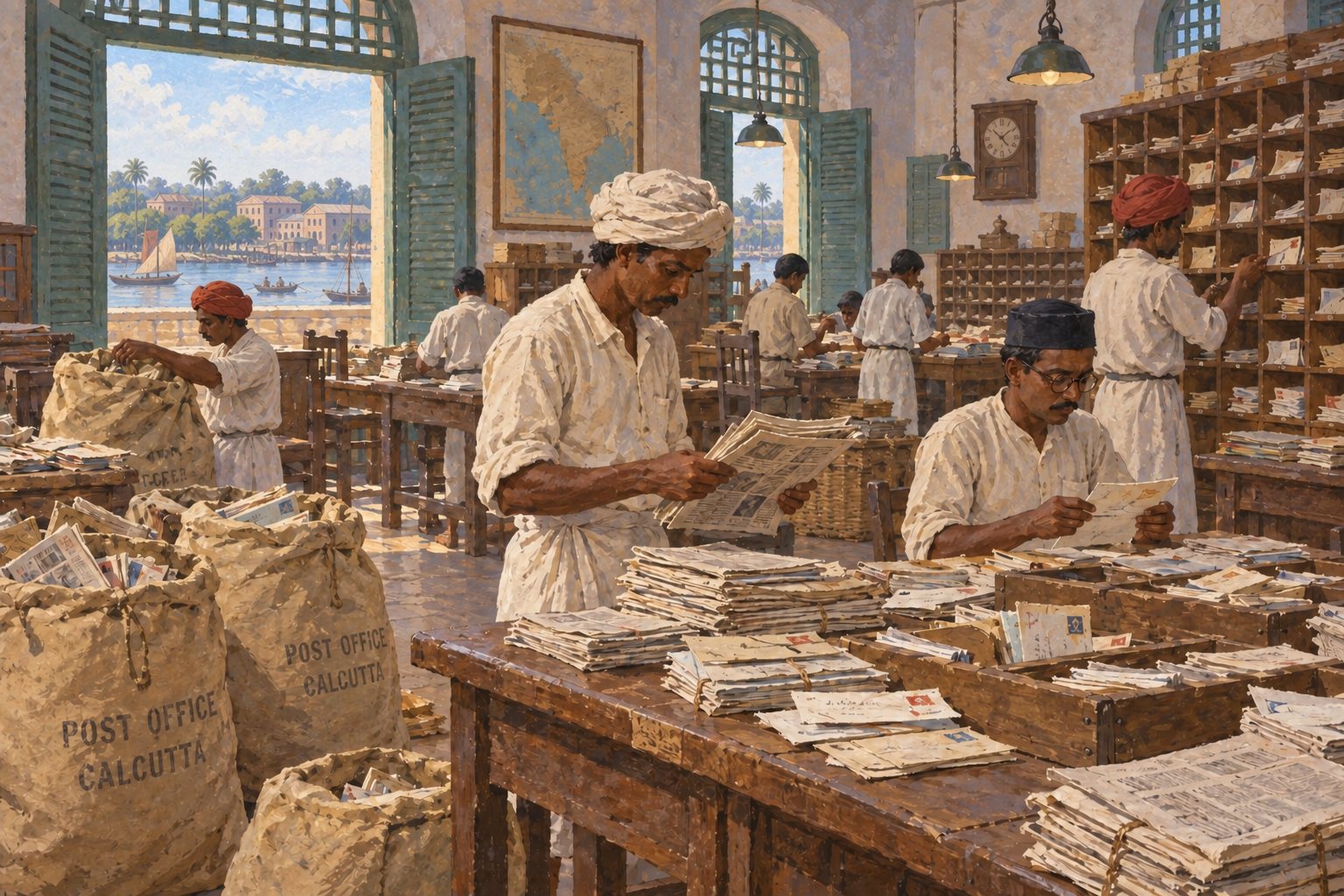
From September 1906 the mission published The Apostolic Faith, a four-page paper printed at Azusa and mailed without charge — no subscription price, no advertising, funded by unsolicited offerings — whose print run went from 5,000 copies to, by the paper’s own printed statements across 1907, more than 40,000; and its content was the machine’s second gear: it printed its readers’ letters and testimonies back to the network, so a Methodist in Oslo or a missionary in Calcutta read the revival as something already theirs, and the movement crossed oceans within about two years of ignition — before it possessed a single denomination, budget or headquarters to send anyone.
The Mailing List Goes to Portland
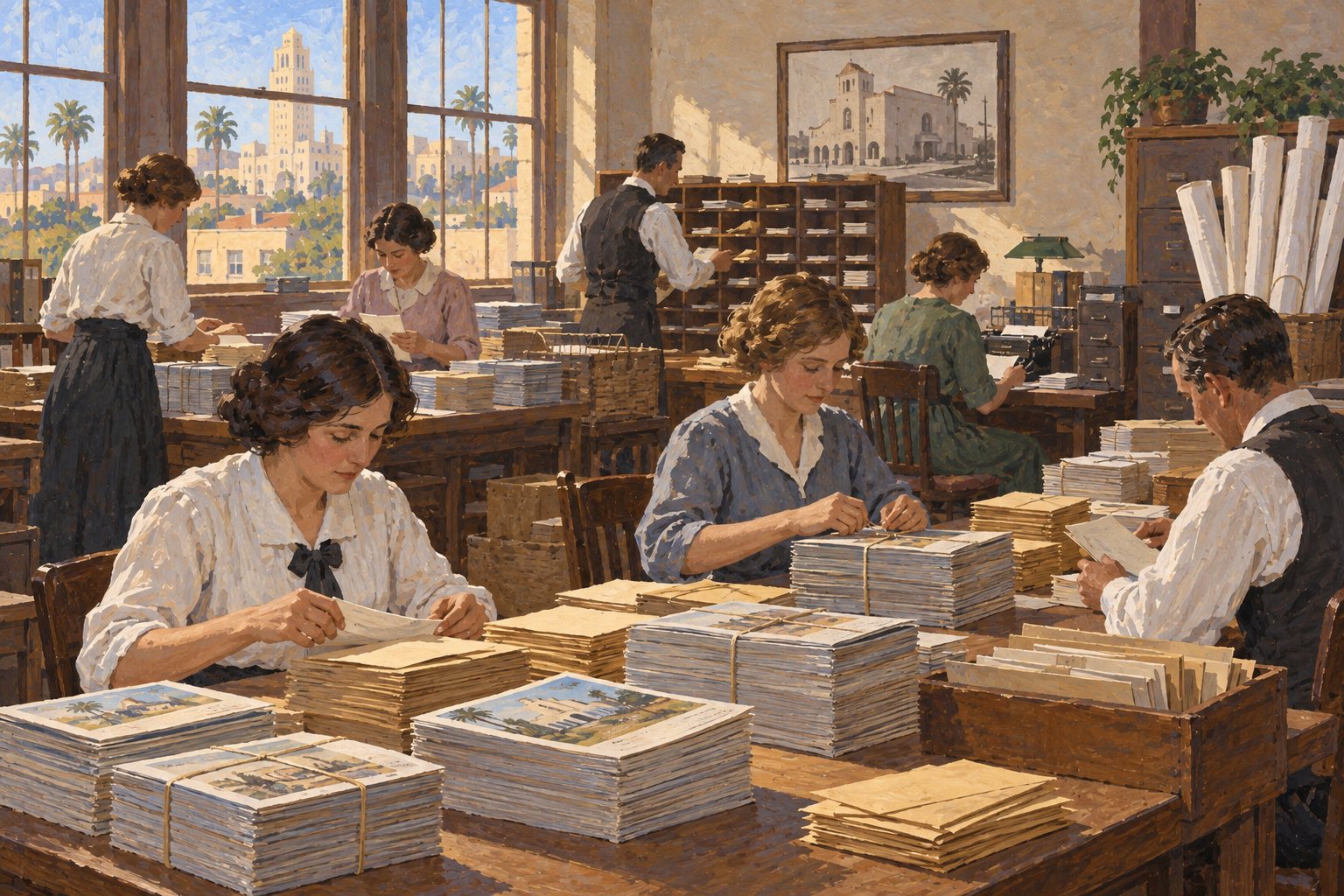
In May 1908 Seymour married Jennie Evans Moore, and within weeks Clara Lum, the paper’s co-editor, moved to Portland, Oregon — where Florence Crawford had established a rival work — taking the national and international mailing lists; the paper’s imprint moved with her, Seymour was left holding only the Los Angeles list, and the network collapsed with the database: the mission that had addressed forty thousand readers shrank inside a few years to a small local congregation, the volume’s cleanest demonstration that the institution was never the building or the man but the list; the reported reasons for the move vary, and every account of motive is an inference this book does not print as fact.
Explore the illustrations6 scenes · A Paper Sent Freely
A Paper Sent Freely. From September 1906 the mission published The Apostolic Faith, a four-page paper printed at Azusa and mailed without charge — no subscription price, no advertising, funded by unsolicited offerings — whose print run went from 5,000 copies to, by the paper’s own printed statements across 1907, more than 40,000; and its content was the machine’s second gear: it printed its readers’ letters and testimonies back to the network, so a Methodist in Oslo or a missionary in Calcutta read the revival as something already theirs, and the movement crossed oceans within about two years of ignition — before it possessed a single denomination, budget or headquarters to send anyone.
Texts and authority
The Script
Open with the argument: Pentecostalism ignited in the age of print saturation and added not one page to its scripture — no new revelation, no supplementary book, no authorised commentary — because its canonical move ran the other way: it took the Book of Acts, in the King James Version the whole movement read, and reclassified it from history to script, a pattern to be re-entered — “and began to speak with other tongues, as the Spirit gave them utterance,” in the King James wording the movement treated as a present-tense job description; what a canon does elsewhere in this series — fix identity, certify membership, settle disputes — the testimony does here: an oral, repeatable, first-person genre that Walter Hollenweger argued is the movement’s real theology, an argument this chapter reports by name; so the transmission problem was solved without a text, and the price was the authority problem the rest of this movement describes.
The Latter Rain
The claim that the apostolic gifts were live again collided with cessationism — the Reformed doctrine that miracles ceased with the apostles — whose fullest statement, Benjamin B. Warfield’s Counterfeit Miracles, appeared in 1918 while the movement it dismissed was doubling around it; the exchange was a genuine argument about authority — who has standing to declare the age of miracles closed? — and the Pentecostal answer was a periodisation borrowed from the King James wording of Joel, “the former rain, and the latter rain,” reading its own century as the promised second downpour before the end; the chapter reports both cases in their own words and adjudicates neither, because the disagreement itself is the datum: a movement without a magisterium met a doctrine of closure without an enforcer, and neither could bind the other.
Institutions and resources
Living by Faith
The founding economy was the machine’s twin: no salaries, no pledged support, no subscription price — Azusa received offerings in a receptacle by the door, Bartleman’s memoir insists nothing was ever solicited (his claim, so labelled), and the “faith missionary” sailed on spontaneous gifts — and the model’s documented cost was stranded workers and unaccountable funds, which is why the movement’s first great act of organisation was financial: the December 1913 call that produced the Assemblies of God at Hot Springs the following April printed its reasons — conserving the work, accountability for missionary money, chartering under a legal name so churches could hold property, credentials the railroads would recognise for clergy fares — so the anti-institutional movement built an institution to do the one thing faith offerings could not: keep books; and the chapter states the law this illustrates across the whole series — money must be accounted, and accounting requires an institution.
Angelus Temple
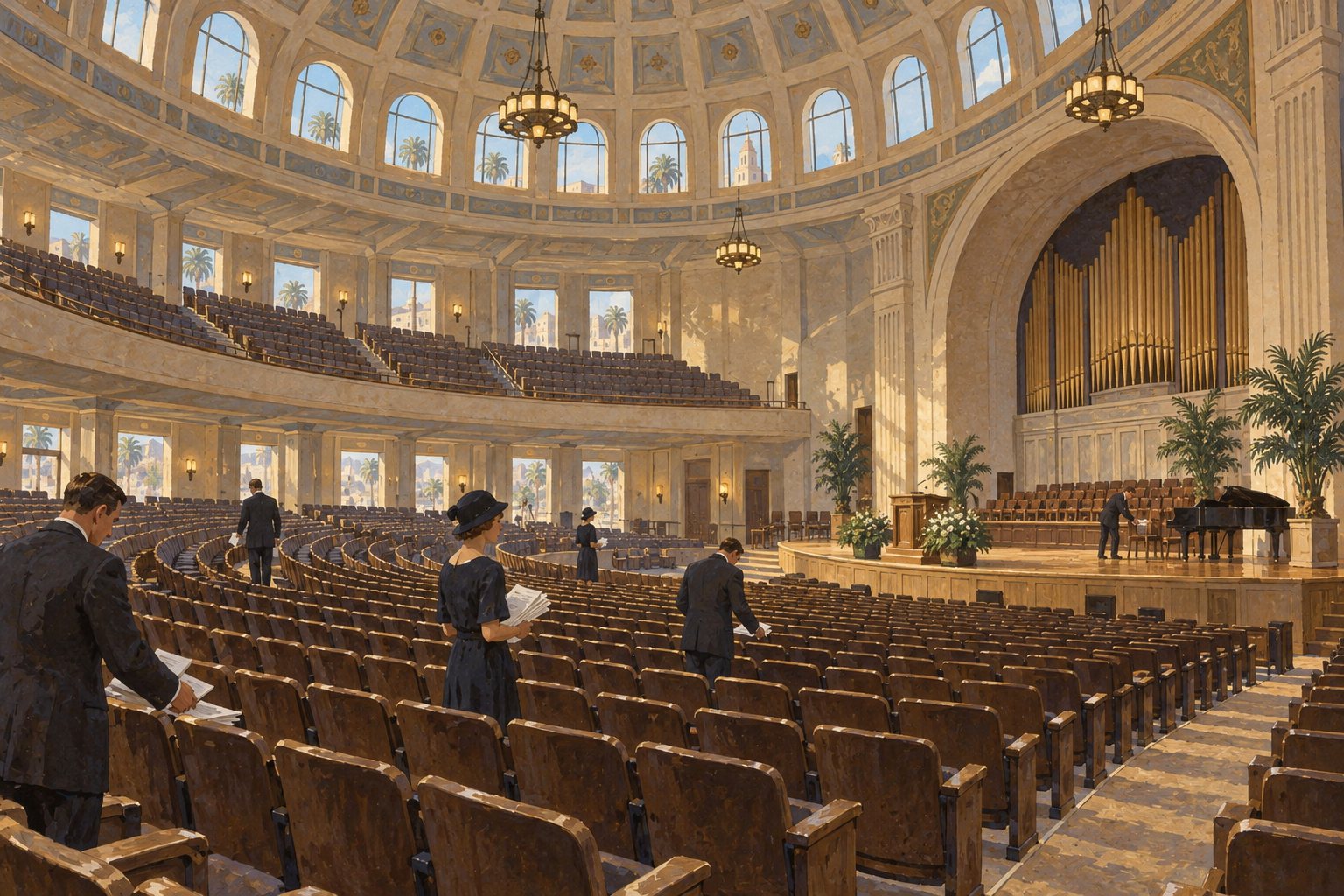
McPherson built the movement’s first monumental economy: Angelus Temple, dedicated 1 January 1923 with seating in the low five thousands (the cost figures in circulation run from about a quarter-million dollars to a million and a half; the chapter prints the spread with sources or prints nothing), funded through the Bridal Call magazine network and pledged memberships; around it grew a denomination — the Foursquare Gospel, incorporated 1927 — a commissary that fed Los Angeles through the Depression, and the radio station of the Machine movement; and in 1926 the temple’s pastor disappeared from a Venice beach on 18 May and reappeared in Mexico on 23 June with an account of kidnapping — the volume reports what is documented: the grand jury proceedings, the obstruction charges filed that September against McPherson and others, and the dismissal of all charges in January 1927, with no judicial finding about the disappearance itself and no characterisation of anyone’s motives — and it reports the ledger fact that outlasted the case: attendance and revenue held, which is itself evidence of how this economy worked.
Explore the illustrations9 scenes · The Commissary
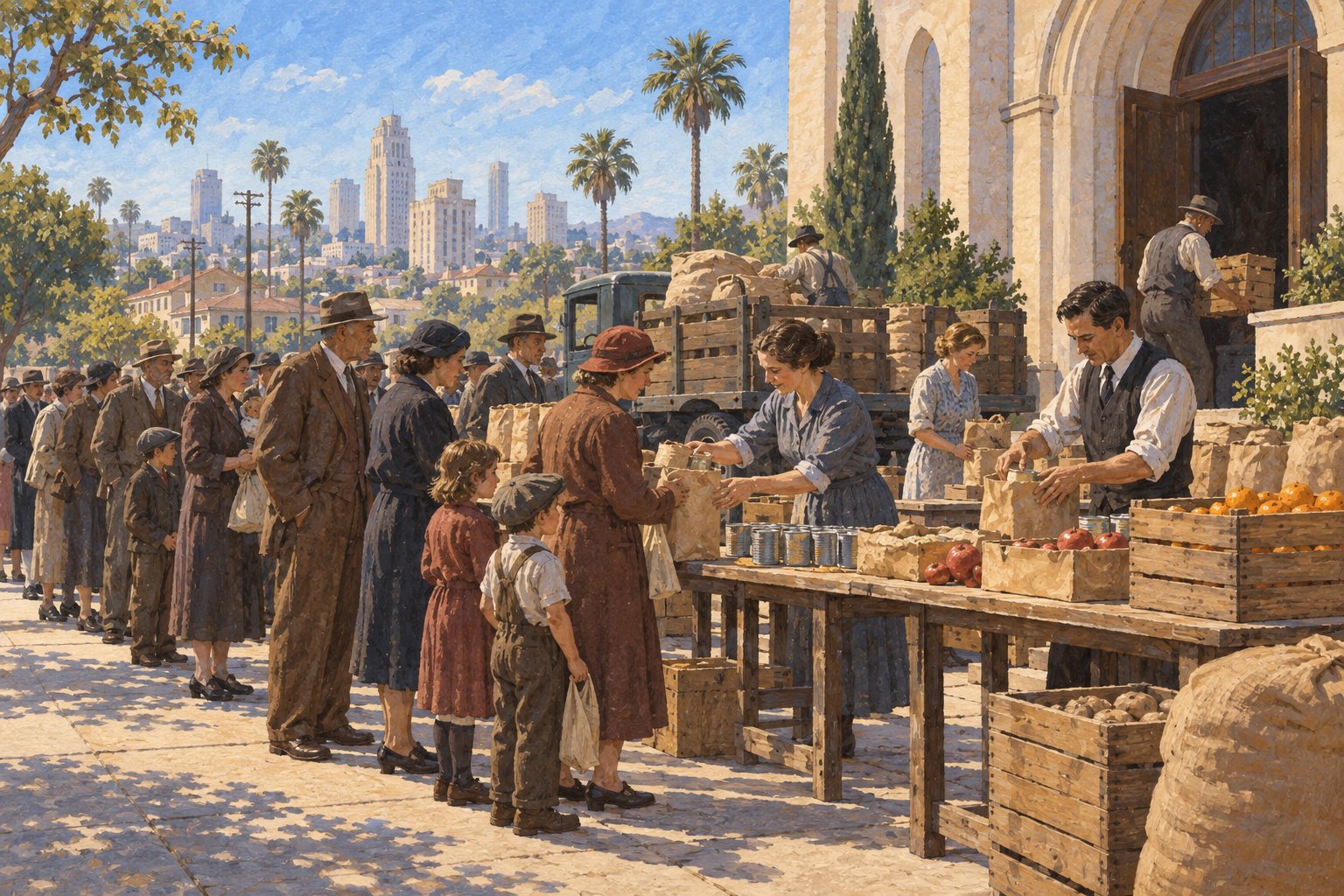
The Commissary. McPherson built the movement’s first monumental economy: Angelus Temple, dedicated 1 January 1923 with seating in the low five thousands (the cost figures in circulation run from about a quarter-million dollars to a million and a half; the chapter prints the spread with sources or prints nothing), funded through the Bridal Call magazine network and pledged memberships; around it grew a denomination — the Foursquare Gospel, incorporated 1927 — a commissary that fed Los Angeles through the Depression, and the radio station of the Machine movement; and in 1926 the temple’s pastor disappeared from a Venice beach on 18 May and reappeared in Mexico on 23 June with an account of kidnapping — the volume reports what is documented: the grand jury proceedings, the obstruction charges filed that September against McPherson and others, and the dismissal of all charges in January 1927, with no judicial finding about the disappearance itself and no characterisation of anyone’s motives — and it reports the ledger fact that outlasted the case: attendance and revenue held, which is itself evidence of how this economy worked.
Changes and divisions
The Finished Work
The first doctrinal split arrived within five years, over sanctification: William Durham, Chicago’s dominant Pentecostal preacher, returned from Azusa teaching the “Finished Work” — that conversion itself sanctifies, dissolving the Holiness movement’s separate second blessing — and when he carried the message into Azusa itself in 1911 Seymour padlocked the mission against him, the same instrument that had been turned on Seymour in 1906, and the chapter says so; Durham died in July 1912, months after Parham had publicly prayed that God would decide between them by striking down whichever man was wrong — Parham’s printed claim of vindication is quoted as his printed words, with no verdict from this book — and the split organised the movement’s entire future map: the Southern Holiness bodies (the Church of God in Christ, the Church of God, the Pentecostal Holiness Church) kept three stages, while the Finished-Work stream produced the Assemblies of God and, through it, most of world Pentecostalism.
The New Issue
The movement’s deepest split began at a camp meeting inside its first decade: at Arroyo Seco in April 1913 a baptismal-service sermon by R. E. McAlister observed that the apostles in Acts baptised “in the name of Jesus Christ” while Matthew’s Gospel commands “in the name of the Father, and of the Son, and of the Holy Ghost” — both formulas quoted in the King James wording in which the entire argument was conducted — and within a year Frank Ewart and Glenn Cook had rebaptised each other and a movement-wide controversy over the Godhead itself, the “New Issue” or Oneness question, was running through the papers; the Assemblies of God, founded in 1914 with a printed disclaimer of any intention to legislate a creed, closed the question in 1916 the only way available to any Pentecostal body — by writing one, the Statement of Fundamental Truths — and accepted the departure of roughly a quarter to a third of its ministerial roll (156 of 585 by the count usually cited; the research file carries “about a third,” and the printed 1916–17 rolls arbitrate before print); the Oneness denominations persist today — the Pentecostal Assemblies of the World, the United Pentecostal Church from 1945, and a large Latino apostolic stream — and the chapter names the structural finding: in a tradition with no authority to close a canon, doctrine closes denomination by denomination, and schism is the canon-closing mechanism.
Limits of the evidence
These limits are stated in the book before its argument.
- What was spoken — at Topeka, at Azusa, or anywhere No sound recording of the early glossolalia exists; every claim that a specific language was spoken (Ozman’s “Chinese,” Garr’s Bengali) rests on testimony, and where the claim was field-tested by its own believers it is documented as not functioning as language. Linguistic and neuroimaging studies are reported with authors and findings; whether the utterances are what practitioners hold them to be is not a question this kind of evidence can reach. (The volume’s signature limit, stated inside Movement Two, not saved for a coda.)
- Whether anyone was healed Healing claims are reported as claims, with names, dates and the documented disputes; a medical adjudication is neither possible from this evidence nor this book’s job.
- The events of 1 January 1901 beyond a hard minimum The surviving accounts were written years later and conflict — including Agnes Ozman’s own memoir against Parham’s telling — on the order and even the date of events; the first-day-of-the-new-century date is the tradition’s own, and its neatness is one reason historians handle it with care.
Sources and reading
This article brings together the series’ existing overview and chapter summaries. The linked book page provides the full outline and bibliography.
- John Wesley, A Plain Account of Christian Perfectionfirst printed 1766. entire sanctification as a datable second change
- Phoebe Palmer, The Way of Holiness1843. the altar covenant; a crisis that could be dated and told
- Vinson Synan, The Holiness–Pentecostal Tradition1997 ed.. Holiness as one revival culture already asking for evidence
- John Alexander Dowie, Leaves of Healing1901. printed self-designation as “Elijah the Restorer”
- Chicago press and the Zion receivership file1906. Dowie’s deposition; the company town in court
- Philip L. Cook, Zion City, Illinois1996. one employer, one landlord, one church, one press
- Grant Wacker, Heaven Below2001. Zion diaspora; faith offerings versus bookkeeping; COGIC credentials
- The Apostolic Faith (Los Angeles) No. 1September 1906. “Pentecost Has Come”; Seymour’s call; the lock; the 5,000-copy notice
Illustrations are newly generated interpretations of themes in the book. They are not surviving artifacts, historical photographs or evidence for the events described.