14 illustrations · 1:36
Watch & listen.
Follow the images with a narrated journey through the book.

Overview
- Coverage
- c.500 BCE–1400 CE
- Earliest secure evidence
- c.50 BCE
- Transmission
- none of its own — recorded by its conquerors
Every figure arrives with the object or the hostile author it came out of, and with that author’s distance from the event in the same sentence. The set pieces everyone knows — the druids’ twenty years of training, the beheadings at Verden — are printed as the reports they are.
The coverage period and the earliest secure evidence are different dates. A tradition’s own account of its beginnings may differ from both.
Historical setting
The Man in the Bog
A man dug out of a Danish bog in 1950 with the rope still round his neck and his last meal still in his stomach shows exactly what the evidence for this volume can and cannot do — excavation establishes the deposition, the date and the diet to a margin of decades, while the reason he died there is an inference that specialists still argue case by case, and the whole book works inside that gap.
A Map Without a Centre
From Ireland to the Volga and across nearly two thousand years there was no founder, no centre, no membership and no name — paganus is the church’s word, its religious sense a fourth-century Christian coinage — and what the evidence actually shows is local, plural cult tied to place: a map of groves, springs, islands and enclosures recoverable today mainly through the names still sitting on it.
Explore the illustrations4 scenes · The lake’s material record
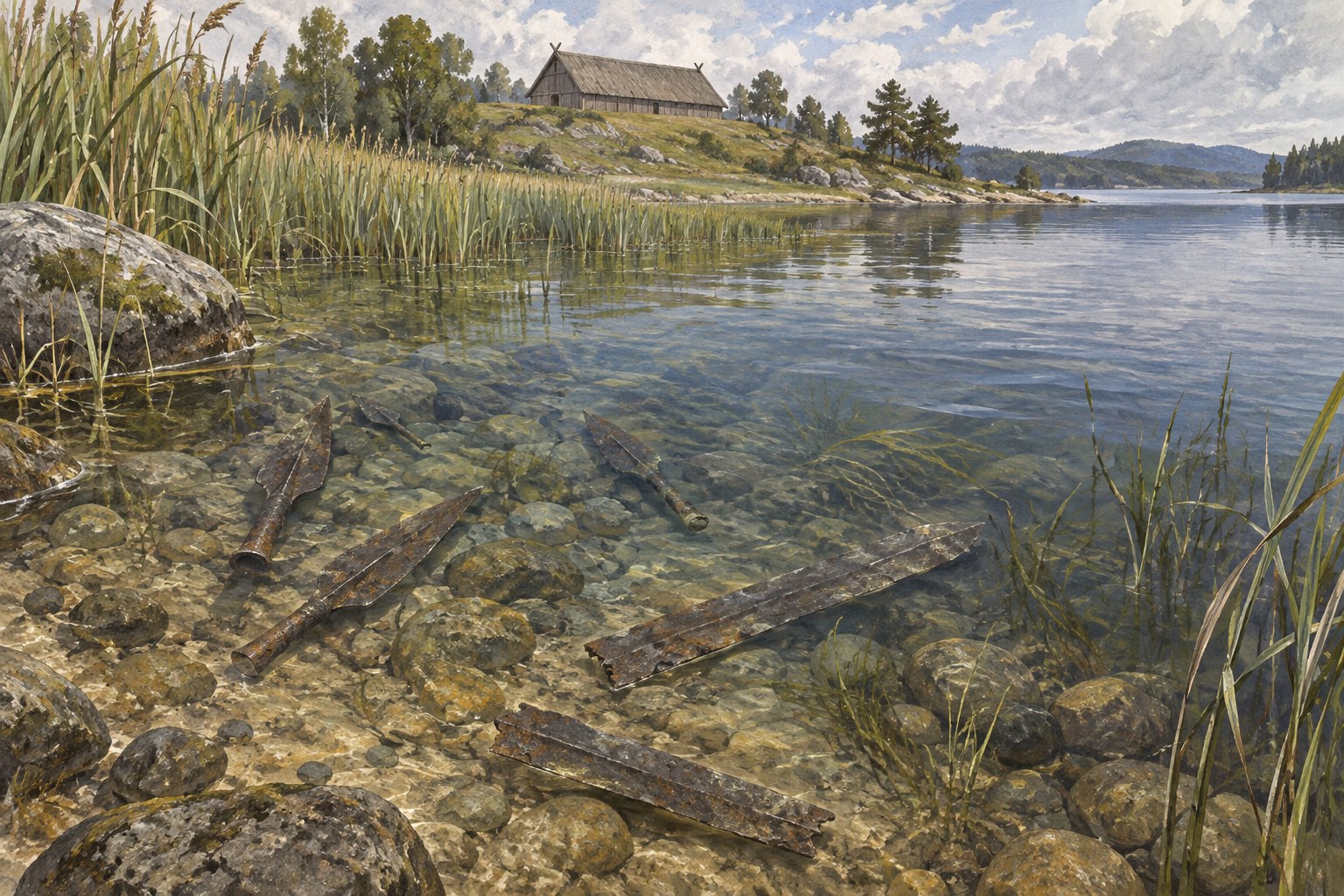
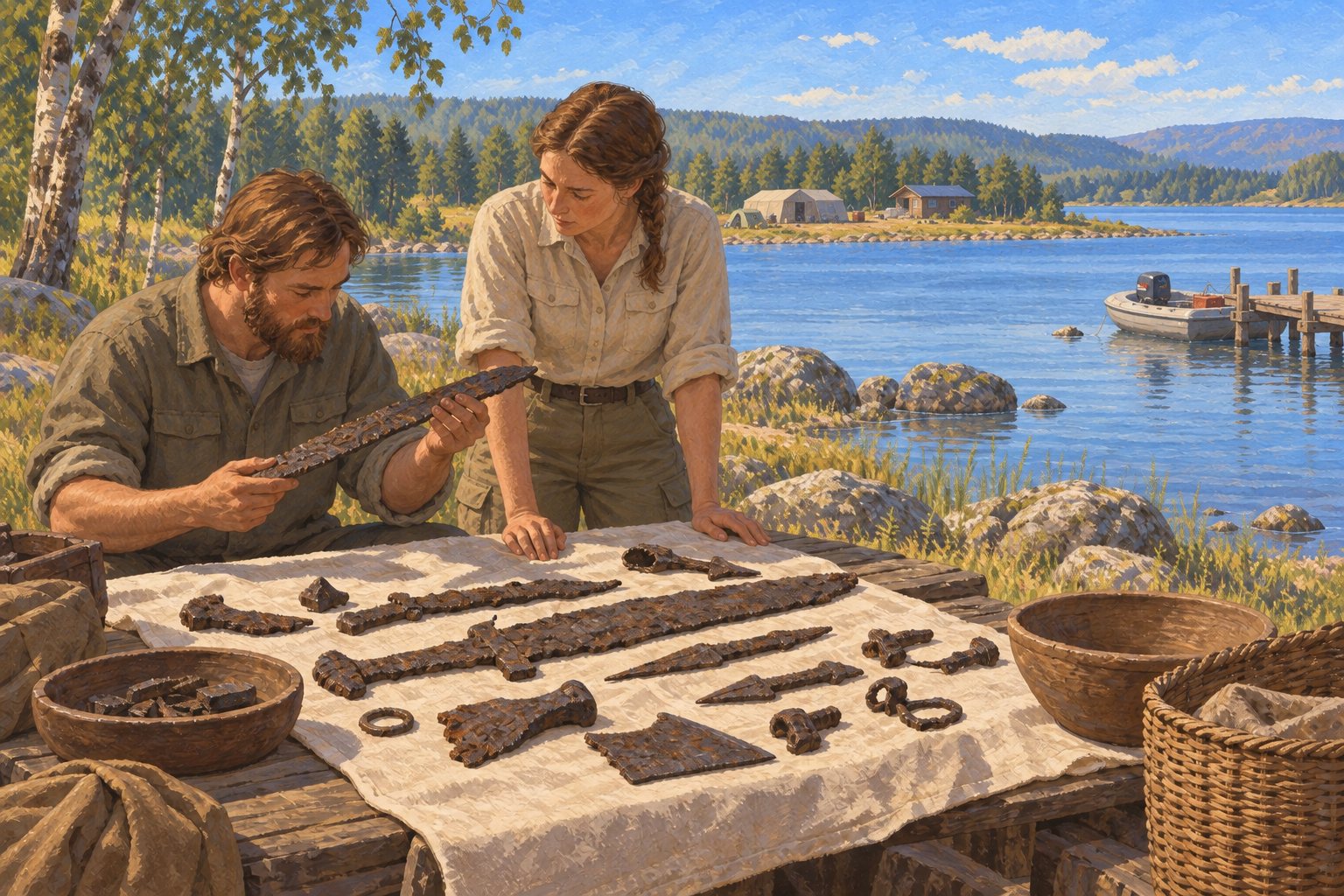
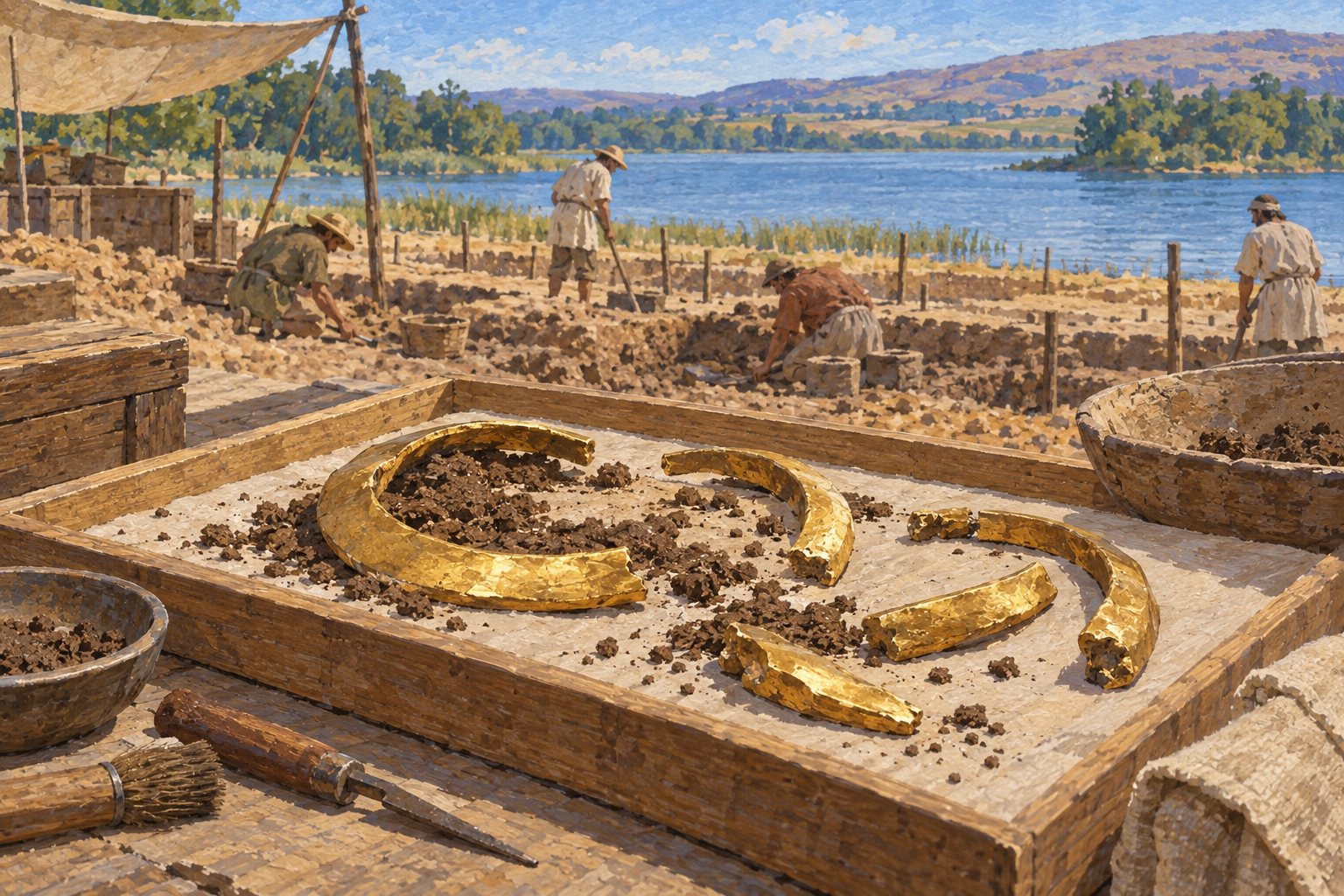
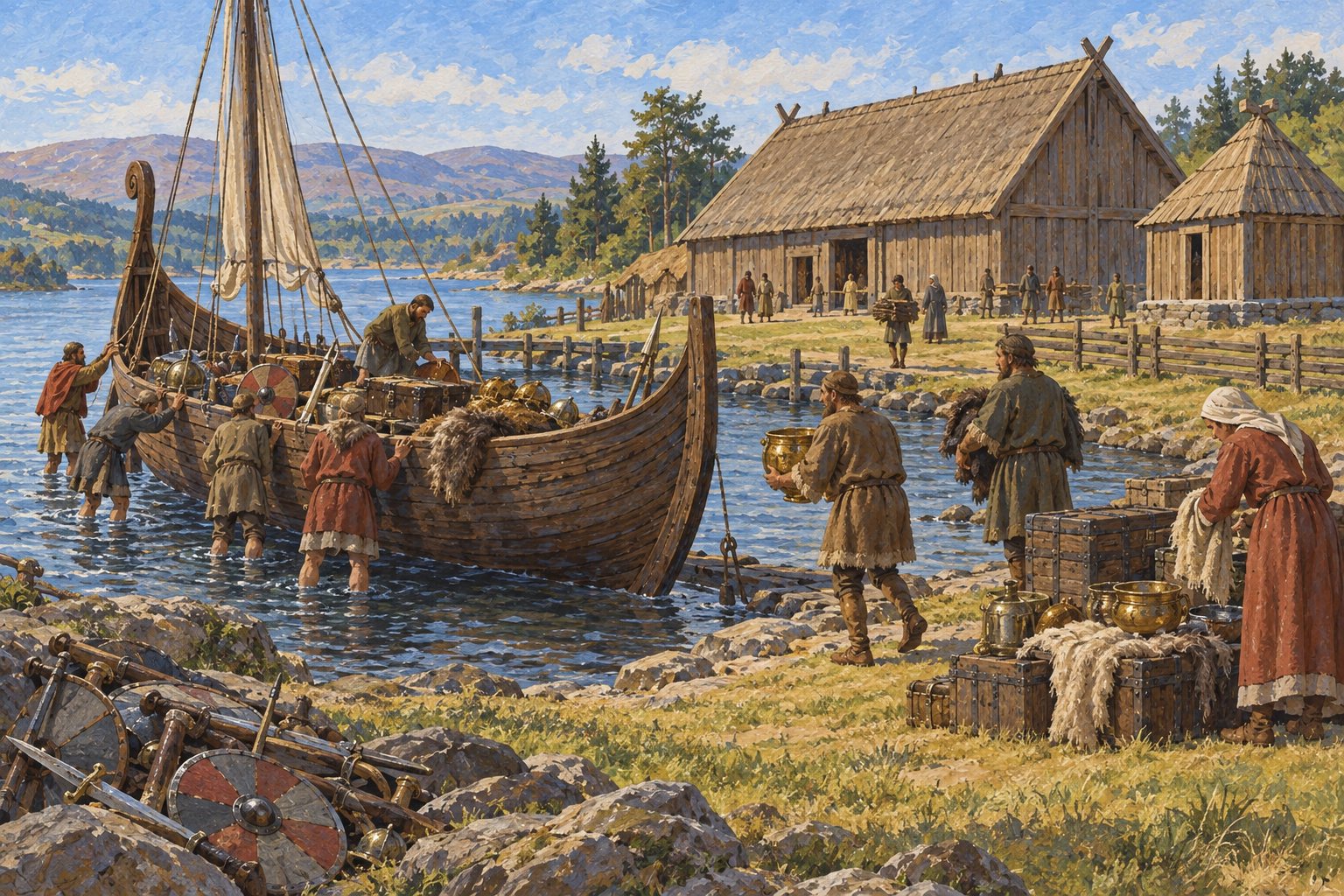
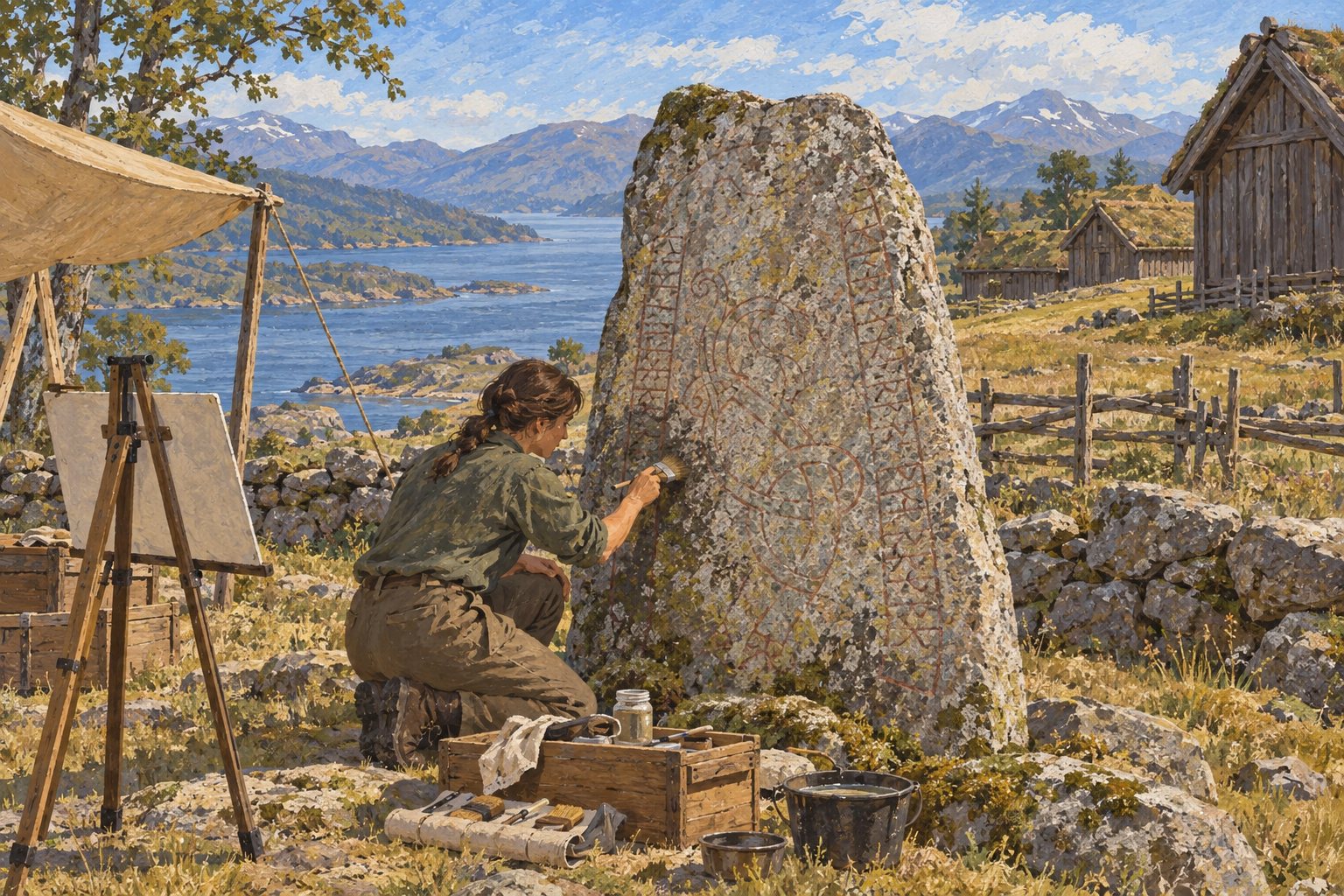
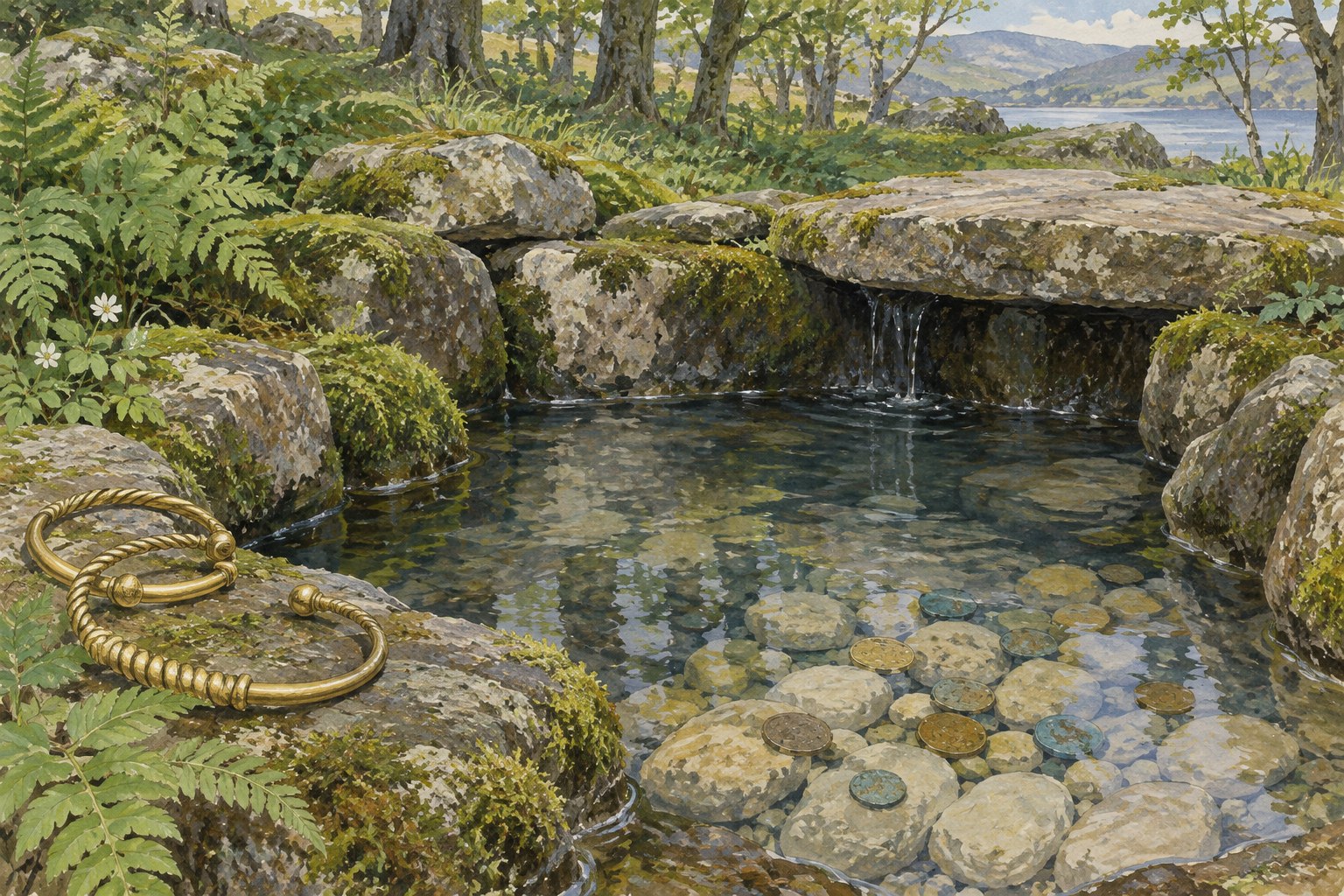
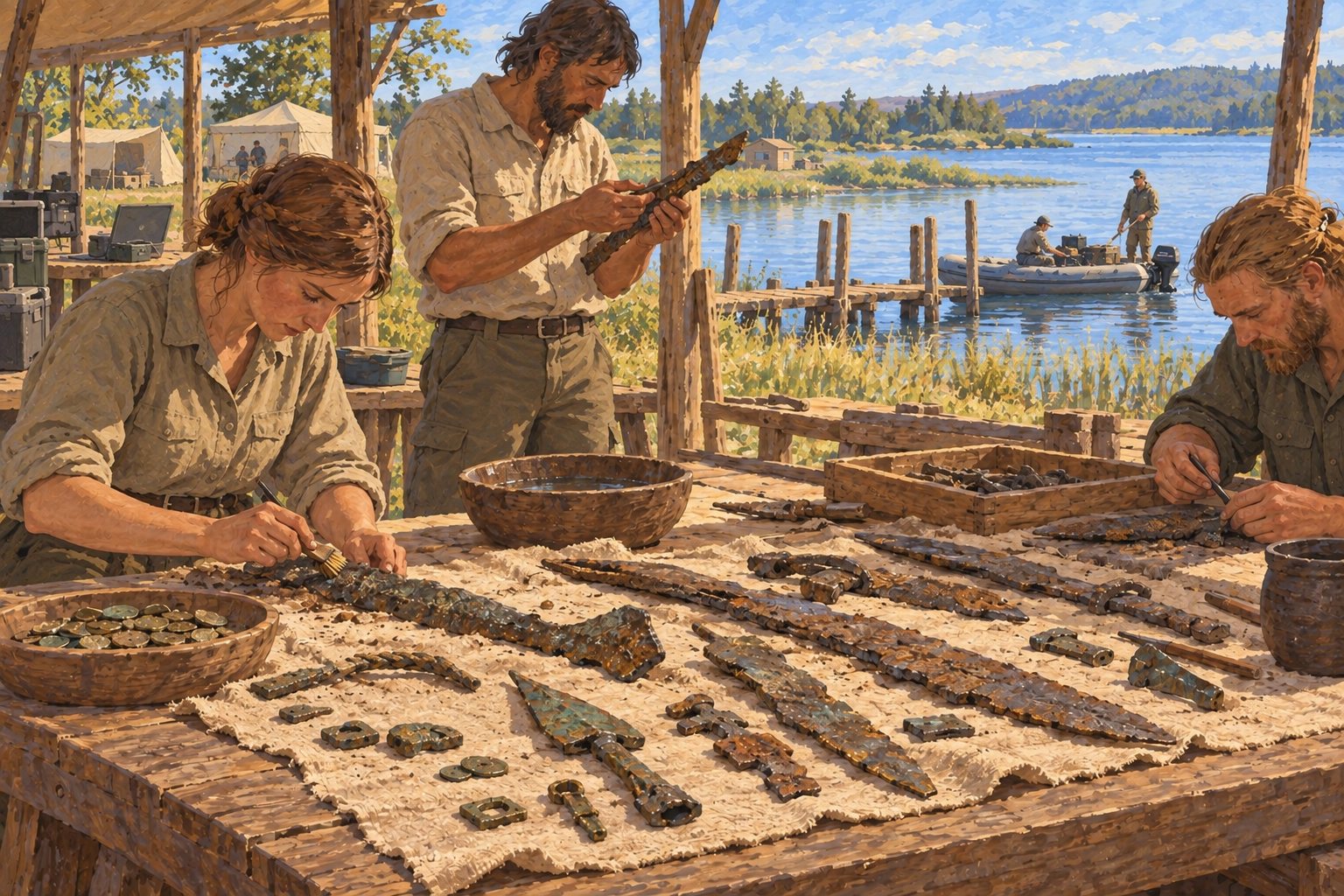
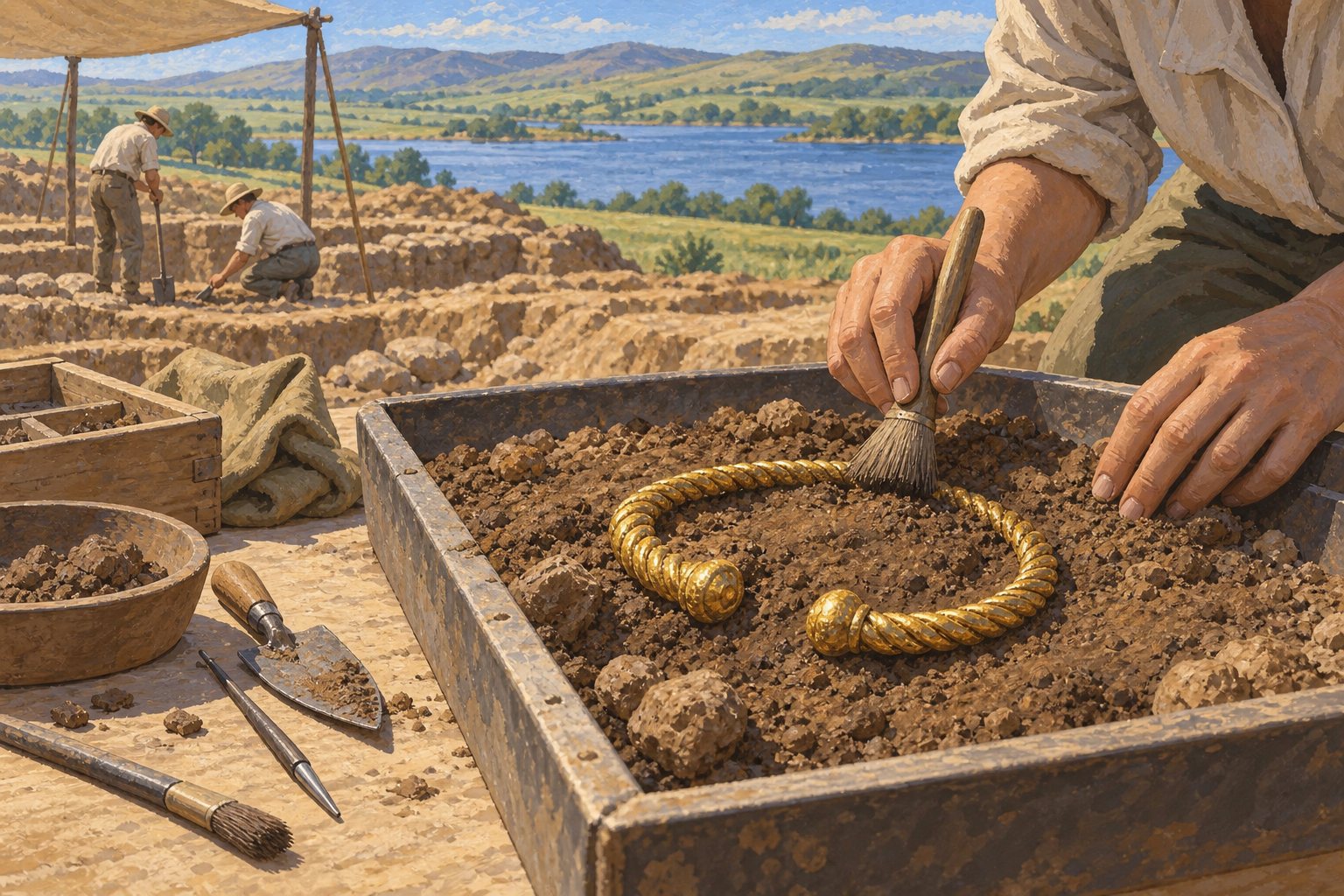
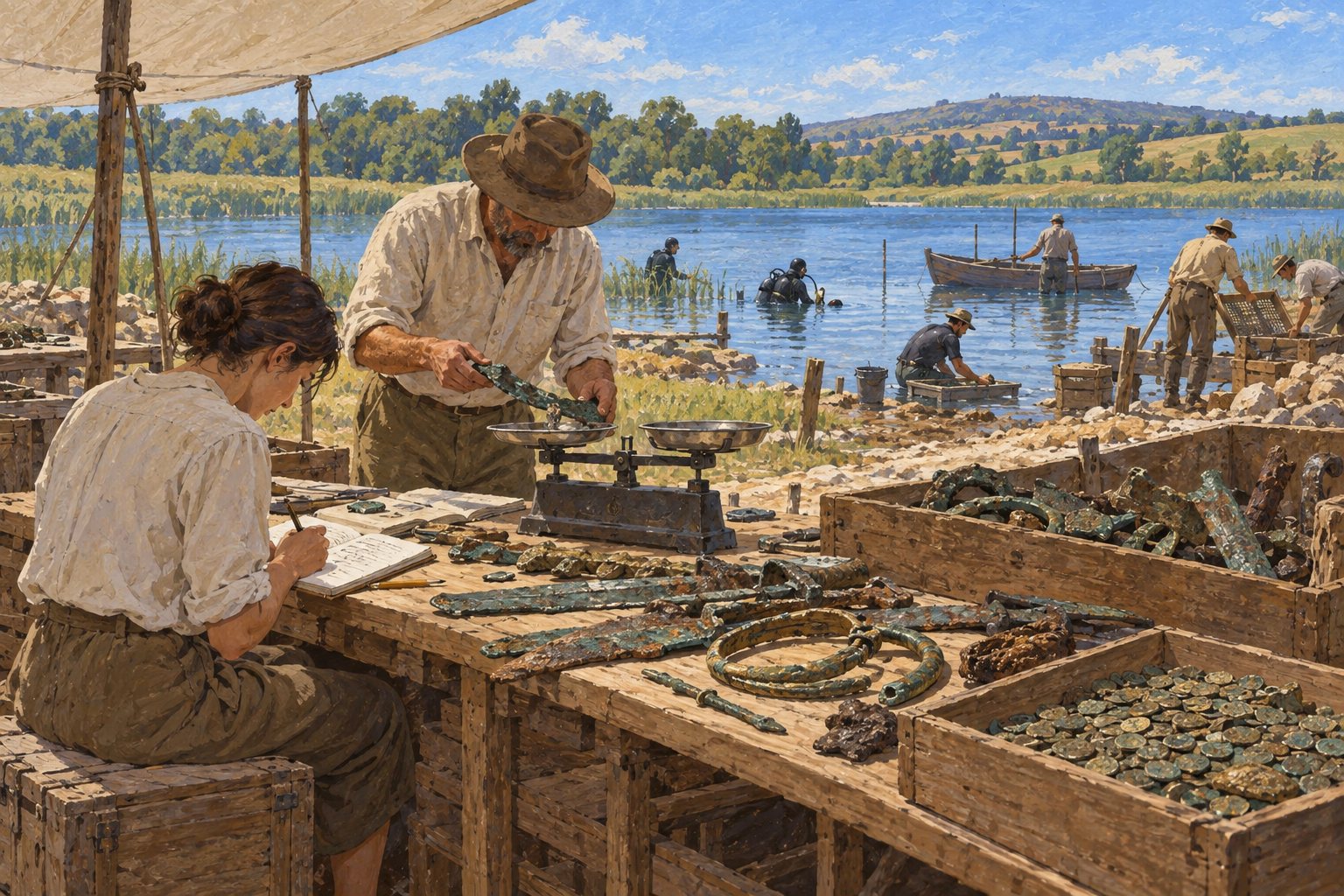
The lake’s material record. Stripped of every text, the archaeology alone still establishes a religion-shaped pattern — weapons of defeated armies sunk in lakes for six centuries, gold taken out of circulation into hoards and bogs, buildings set apart beside great halls, the dead sent off in ships with extravagant goods — and the chapter builds that text-free minimum first, because it is the firmest floor the volume has.
How it was transmitted
The Refusal
Caesar reports that the druids considered it wrong to entrust their teaching to writing while using Greek letters for almost everything else, and whatever that policy’s real reason — his own guesses are memory-training and secrecy, and he offers them as guesses — the reported result is a doctrine held in trained memory across a reported twenty years of schooling, resting entirely on one conqueror’s paragraph; the refusal, if it was one, worked so completely that nothing of what was refused survives to check him against.
Letters for Everything but Doctrine
Writing was present in this world for most of the volume’s span and was never once used to carry scripture — Gaulish in Greek and Roman letters yields a great bronze cult calendar and lead curse-prayers but no teaching, and the runic corpus, thousands of inscriptions across a millennium, is names, ownership, memorial formulas and charms, of which the most theological complete sentence is a three-word hallowing — so the machine-shaped hole is not illiteracy, it is allocation: letters served cult without ever carrying doctrine.
Explore the illustrations5 scenes · Verse in the hall
Verse in the hall. The nearest thing to an error-correcting machine here is verse form itself — the skalds’ dróttkvætt binds every line with syllable count, alliteration and internal rhyme so tightly that corruption tends to break audibly, which is why ninth-century praise-poems could survive four centuries of mouths to be quoted by Snorri as evidence — but it was a court technology preserving the praise of kings, not a liturgical one preserving a cult’s words, and one runestone title is the only trace of anything like a reciter’s office.
Texts and authority
A Canon Nobody Closed
Every canon in this series was closed by somebody with authority to close it — a council, a caliph, a scribal college — and this tradition had no text, no council and no office, so it never closed anything; what it has instead is the accident that one Christian island in the North Atlantic, for reasons of law, genealogy and poetry, wrote down in the thirteenth century a version of what its great-grandparents had believed, and the movement’s real question is why Iceland wrote at all and what its writers selected.
The Handbook That Saved the Myths
Our fullest account of Norse mythology is a technical manual — Snorri Sturluson, a Christian chieftain writing around 1220, composed the Prose Edda so that young poets could keep using the pagan kennings that court verse required, wrapped the god-stories in a frame that explains them away, prefaced them with a genealogy making the Æsir migrating Trojans, and warned Christian readers not to believe what follows — and the volume sits with that fact rather than rushing past it, because everything the modern world knows as “Norse mythology” passed through this one author’s editorial hands, for this purpose.
Institutions and resources
Wealth Thrown Away
The one cult expenditure that can actually be measured is the wealth this world destroyed on purpose — armies’ worth of weapons bent and sunk in lakes over six centuries, gold torcs buried by the hoard, coins accumulating in sacred springs for four hundred years — and while no text explains the transaction, the scale is countable in kilograms and coin-counts, which makes deliberate deposition the volume’s only auditable economic behaviour: an economy visible in what it removed from circulation.
The Vow Was a Contract
For roughly four Roman centuries the Celtic and Germanic provinces did leave receipts, because the empire brought writing into cult: hundreds of stone altars closing with votum solvit libens merito — “paid the vow, willingly, deservedly” — record completed bargains with named gods, and at the shrines of Nehalennia merchants shipping to Britain had their trades carved into the stone, so the one period with documented cult finance is precisely the period under an occupier’s literacy, which is the volume’s source problem restated in money.
Explore the illustrations5 scenes · Wealth out of circulation
Wealth out of circulation. The one cult expenditure that can actually be measured is the wealth this world destroyed on purpose — armies’ worth of weapons bent and sunk in lakes over six centuries, gold torcs buried by the hoard, coins accumulating in sacred springs for four hundred years — and while no text explains the transaction, the scale is countable in kilograms and coin-counts, which makes deliberate deposition the volume’s only auditable economic behaviour: an economy visible in what it removed from circulation.
Changes and divisions
The Missionary’s Wager
The mission’s characteristic instrument was the staged confrontation with a god who fails to defend his property — Willibrord slaughters Fosite’s sacred cattle and baptises converts in the holy spring, Boniface fells the Oak of Jupiter at Geismar and builds an oratory from the planks, Poppo carries hot iron before Harald Bluetooth — and whether each scene happened as written or was written as a scene, the genre itself is evidence of the theology being replaced: a religion of local power meets a demonstration that the local power does not retaliate; Rome’s own instruction, meanwhile, was subtler — Gregory’s letter tells the English mission to convert the temples and keep the festival days, substitution rather than demolition.
The Sword at Verden
The other instrument was force of state: Charlemagne destroys the Irminsul in 772, the Royal Frankish Annals report 4,500 Saxons beheaded at Verden in 782 — the figure is the annalist’s, historians contest it, and the sentence carries both — and the Capitulatio de partibus Saxonum makes paganism capital by statute, death for cremation, death for refusing baptism, while the surviving Old Saxon baptismal vow requires converts to renounce Thunaer, Woden and Saxnot by name; thirty years of revolt and the Stellinga rising a generation later measure the resistance, and Alcuin’s protest letters show the method was contested inside the church that used it.
Limits of the evidence
This public outline does not list separate evidence limits. Consult the chapter summaries and sources for the scope of its claims.
Sources and reading
This article brings together the series’ existing overview and chapter summaries. The linked book page provides the full outline and bibliography.
- Tollund Man, Bjældskovdal; Silkeborg Museum radiocarbon intervalfound 8 May 1950; death 405–380 BCE. deposition, diet and noose; reason cannot be established
- Grauballe Man, Nebelgård Fenfound 1952. a second bog death, throat cut
- Lindow Man, Lindow Moss; British Museumfound 1 Aug 1984; deposition 2 BCE–119 CE. dating spread that straddles the Roman conquest
- Anne Ross and Don Robins, The Life and Death of a Druid Prince1989. the “triple death” reading of Lindow Man
- Ronald Hutton on the Lindow dating and the triple-death readinglate 20th c.. the contest named against Ross and Robins
- P. V. Glob, The Bog People1965. classic sacrifice argument, cited as argument not verdict
- Miranda Aldhouse-Green, Dying for the Gods2001. fuller sacrifice case across a wider field
- Tacitus, Germania, Church and Brodribblate 1st c. CE; trans. 1876. bog punishments; Nerthus cart; interpretatione romana; Mercury among the Germani
Illustrations are newly generated interpretations of themes in the book. They are not surviving artifacts, historical photographs or evidence for the events described.