16 illustrations · 1:56
Watch & listen.
Follow the images with a narrated journey through the book.



Overview
- Coverage
- 661 CE–present
- Earliest secure evidence
- 656 CE
- Transmission
- the isnad — verification by named human chain
Karbala is printed as a hard minimum: a date, a death, two framings, and neither given the last word. Ashura, the hidden Imam, the conversion of Iran, the call from Najd: each is dated to the documents that carry it. Wahhabism is the closing arc, not a thirty-second volume.
The coverage period and the earliest secure evidence are different dates. A tradition’s own account of its beginnings may differ from both.
Historical setting
Two Cities
After 661 the empire is ruled from Damascus by the clan the conquests enriched, and the objection lives in Kufa — a garrison city on the Euphrates whose people had backed Ali and considered the settlement provisional — so that shi’at Ali, “the party of Ali,” is at first a political label from a civil war, decades older than any doctrine attached to it, and the earliest events this volume can date are a party being policed: Hujr ibn Adi, a partisan of Ali, executed on the government’s order in about 671.
What Both Sides Agree Happened
Before either case is put, the shared skeleton, because there is one: Muhammad died in 632 leaving no surviving son; Abu Bakr, Umar, Uthman and Ali held power in that sequence; Ali’s rule was contested from its first year; his son Hasan settled with Mu’awiya in 661 — none of this is disputed between the traditions, and the entire quarrel lives in one distinction the chapter states on the shared facts: whether holding the office made a man entitled to it, or entitled men were kept from an office others held.
Explore the illustrations5 scenes · The river city
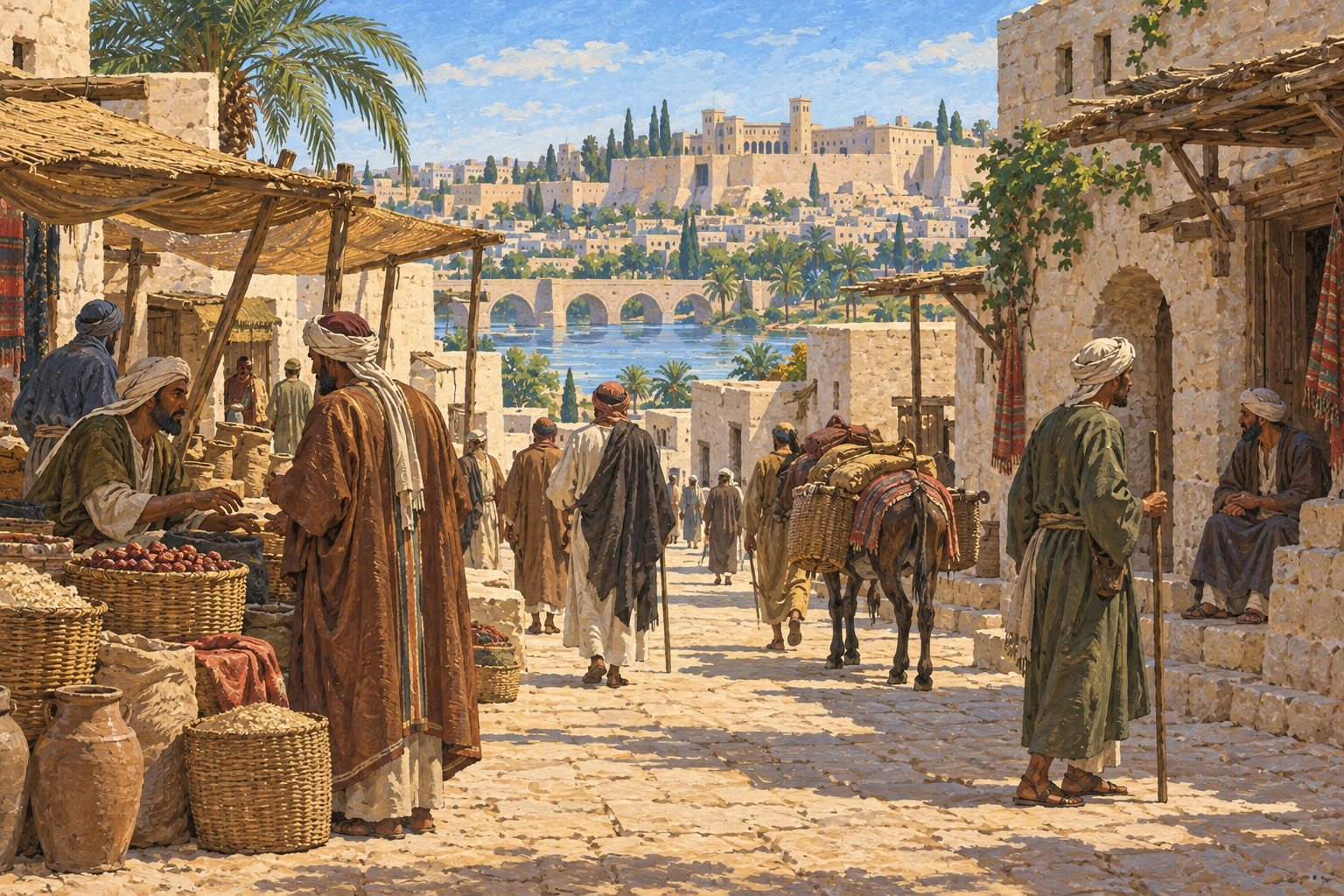
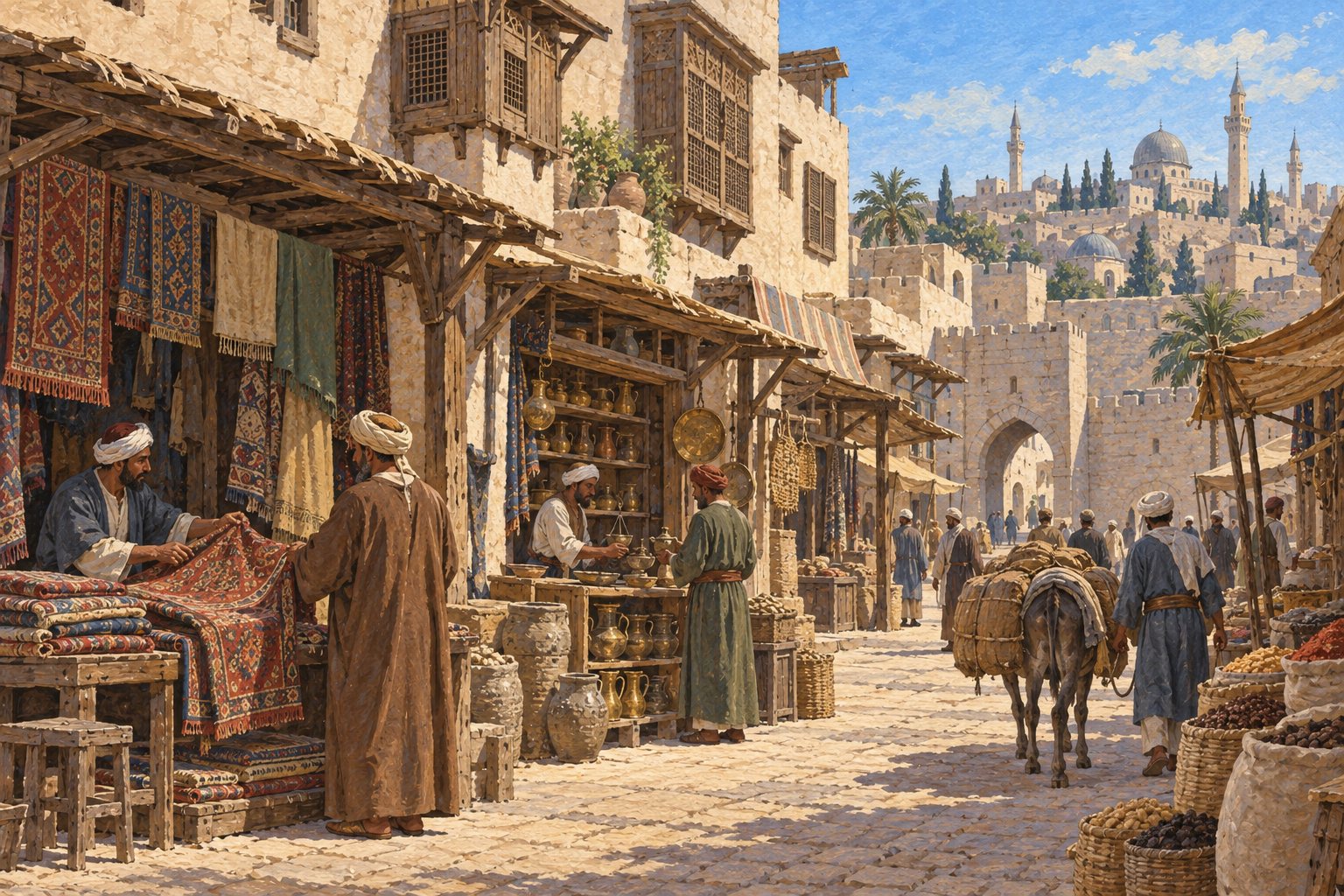
The river city. After 661 the empire is ruled from Damascus by the clan the conquests enriched, and the objection lives in Kufa — a garrison city on the Euphrates whose people had backed Ali and considered the settlement provisional — so that shi’at Ali, “the party of Ali,” is at first a political label from a civil war, decades older than any doctrine attached to it, and the earliest events this volume can date are a party being policed: Hujr ibn Adi, a partisan of Ali, executed on the government’s order in about 671.
How it was transmitted
The Chain
Every report (matn) travels with its sourcing (isnad) — A said that B told him that C heard D say — and the chapter opens with one real chain printed whole, name by name, before any theory, because the machine’s premise fits in one sentence: a claim is audited by auditing the people who carried it, which no reader of this series will mistake for a small idea.
The Journey
Chains were collected on foot: the rihla, the journey in search of hadith, is the machine’s supply line — a shorter chain to the source is a better chain, so scholars crossed the empire to hear old men and licensed what they heard through certified audition (sama') and onward permission (ijaza) — and the system’s paperwork survives physically, as audition certificates in manuscript margins, some listing women among the certified, because the licence followed the hearing, not the office.
Explore the illustrations5 scenes · The biographical shelf
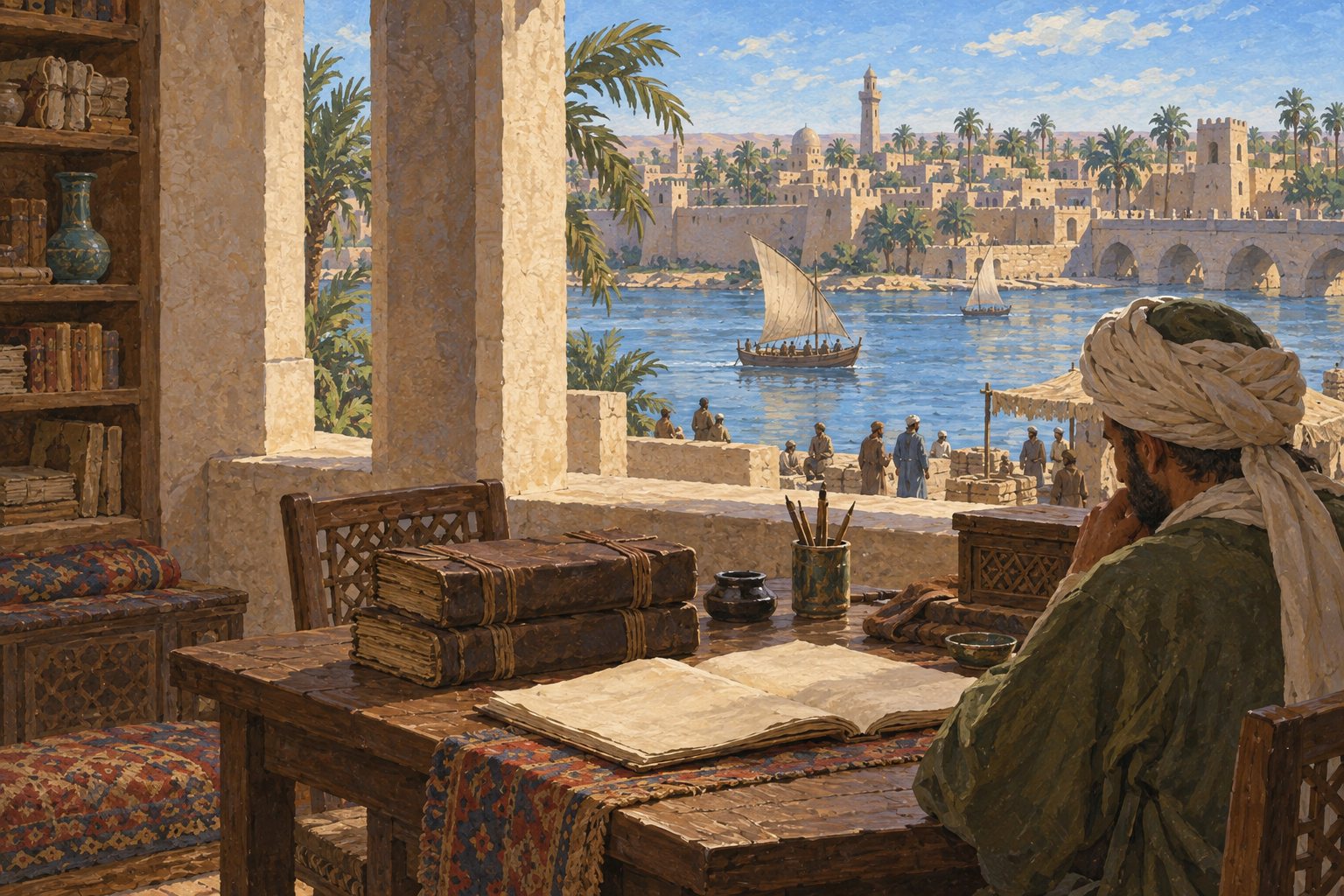
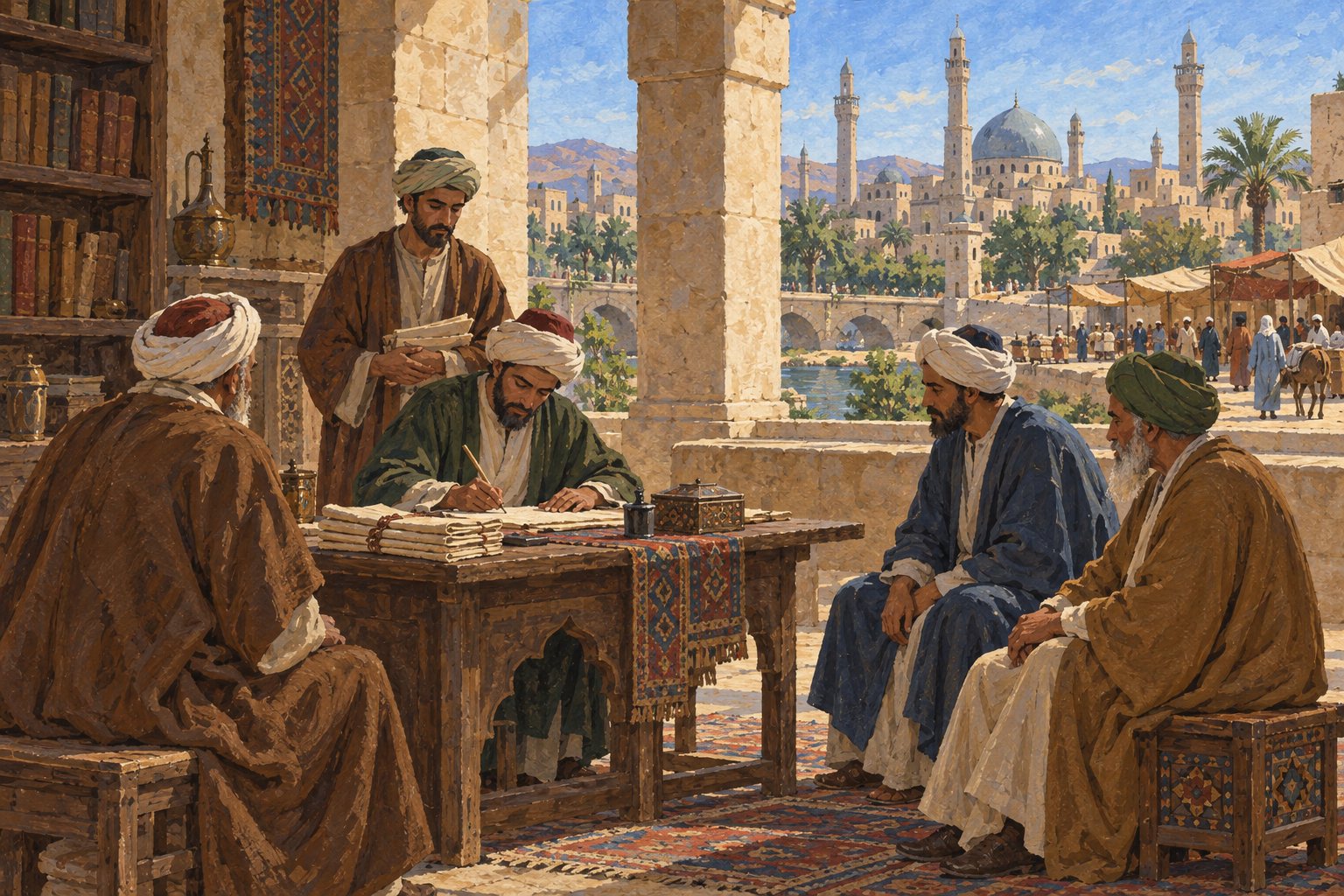
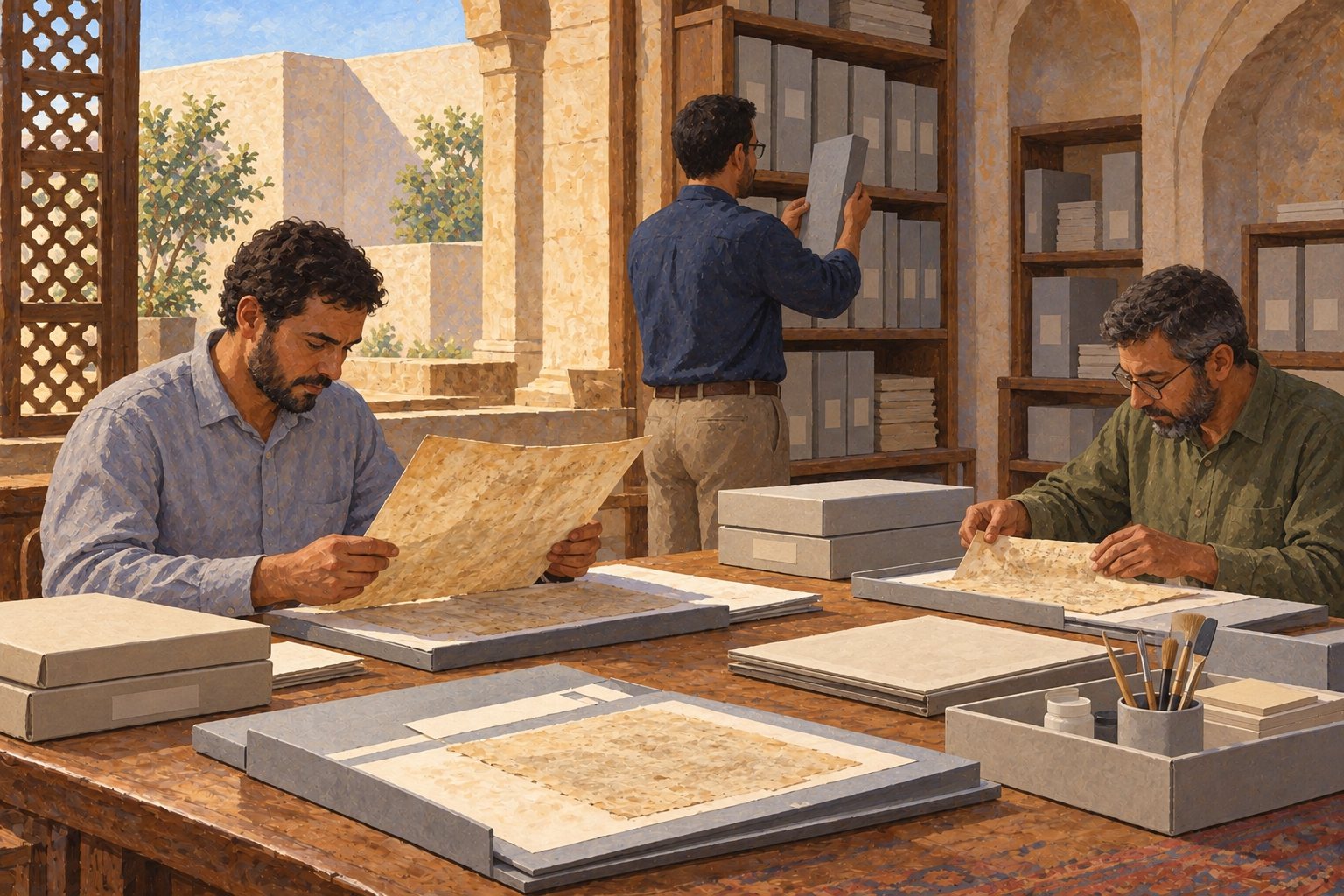
The biographical shelf. The reviewer database: biographical dictionaries — the rijal literature, “the men” — logging tens of thousands of transmitters with dates, teachers, students and a verdict in a fixed vocabulary (thiqa, trustworthy; saduq, truthful; da’if, weak; matruk, abandoned; kadhdhab, liar), a genre whose own name for itself is the honest one — al-jarh wa-l-ta’dil, the wounding and the accrediting — and one entry is quoted whole, two lines long, so the reader sees that these are reviews, not biographies.
Texts and authority
The Canon Nobody Closed
The argument first: the Qur’an was closed by a caliph inside a generation, but the second corpus — reports of what Muhammad said and did — had no Uthman, no council and no decree; it closed slowly, by scholars grading and communities adopting, across three centuries; the majority took its very name from the corpus it kept — ahl al-sunna wa-l-jama’a, the people of the practice and the community, a self-designation that crystallises among the hadith scholars in the ninth century — and the result is the oddity this movement exists to state plainly: a canon split without a scripture split, two traditions reciting one book and diverging almost entirely on the secondary corpus, a way of dividing that nothing else in this series exhibits.
The Six
The Sunni canon: al-Bukhari (d. 870) and Muslim (d. 875) foremost, then the four Sunan — Abu Dawud (d. 889), al-Tirmidhi (d. 892), al-Nasa’i (d. 915), Ibn Majah (d. 887) — with al-Bukhari’s figures printed as exactly what they are, the tradition’s own numbers for itself: some six hundred thousand reports sifted to seven-thousand-odd with repetitions and under three thousand without, figures transmitted in biographies generations later and varying with the counting conventions — whether a matn recurring under different chains counts once or many times — because the traditional totals were reverence, never an inventory; and the set’s soft edge is the proof no one closed it: Ibn Majah’s seat was argued for centuries against Malik’s Muwatta and al-Darimi, and canonical rank arrived as commentary and curriculum, not decree.
Institutions and resources
The Fifth
Khums, “the fifth”: one verse assigns a fifth of ghanimtum — “that which ye take as spoils of war,” in Pickthall’s rendering — and the fiscal divergence of two traditions turns on the scope of that single verb, because Sunni law read it narrowly (war spoils, treasure, minerals) while Twelver jurisprudence read it as gain at large and by the classical period had defined the liable categories, the decisive one being arbah al-makasib, the year’s surplus of earnings — a levy on profit itself; half the fifth is the sahm al-imam, the imam’s share, and what to do with the imam’s money while the imam is hidden became a live juristic problem with a documented answer-history — bury it, hold it in trust, or spend it on his community through his deputies the jurists — which is the whole institutional future of Shia finance argued in advance.
The Payer Chooses
The marja’iyya: an observant Twelver selects a living jurist — a marja al-taqlid, a reference point for emulation — follows his rulings and pays the khums to his office, through agents (wukala) who collect and receipt it; the jurist’s treasury rises with his following, which makes the payers, collectively, the electorate — and the structural consequence is stated as structure: senior Shia jurists are funded by revocable personal allegiance, not by a state, a diocese or an endowment they must sit on, which makes the marja’iyya one of the very few clerical institutions in this series with real fiscal independence, an independence this movement documents and the volume’s final chapter complicates.
Explore the illustrations6 scenes · Property and endowment
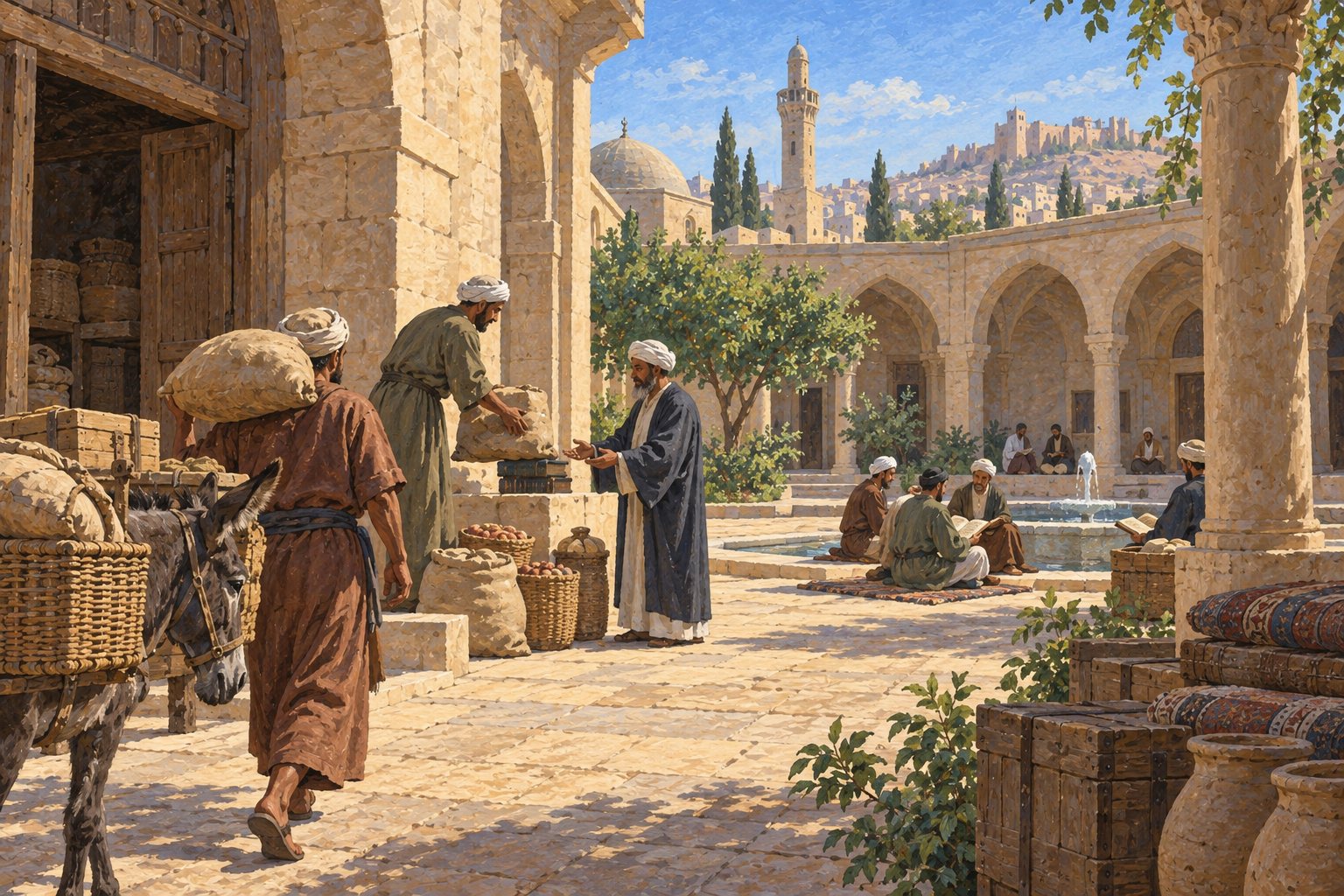
Property and endowment. The first contrast: the waqf — property immobilised by deed, its income assigned in perpetuity to a named purpose — funded the Sunni world’s mosques, madrasas and scholars, and the deed is this series’ favourite kind of evidence, a document; but an endowment is real estate, and real estate sits where a state can see it, so the chapter follows the pattern — supervision, regulation, confiscation — through named, dated cases, and prints the test that proves the pattern structural rather than sectarian: Iran’s own great shrine endowments have sat under state-appointed custodians in every era, and khums never has, because allegiance is portable and land is not.
Changes and divisions
Karbala
The hard minimum first: Husayn ibn Ali, grandson of Muhammad, refused allegiance to the new caliph Yazid and was killed with a small company by government forces near the Euphrates on a date conventionally fixed as 10 Muharram 61 — 10 October 680; the earliest substantial narrative is a century younger than the day, the seventy-two dead and the speeches and the thirst belong to the maqtal genre and are printed as the tradition’s; then both framings, each in its own vocabulary, neither given the last word — in Shia telling the imam’s redemptive stand against usurpation, in Sunni telling a grievous crime against the Prophet’s family from within the community, with Yazid’s standing contested inside Sunni scholarship itself, where cursing him has been both defended and forbidden by named scholars — and no one’s thoughts are narrated: not Husayn’s, not Yazid’s, not anyone’s.
Ashura
The chapter this movement exists for: the split is not carried by a proposition a council could rule on — it is renewed annually, in public, with bodies: the mourning assembly (majlis), the narrated lament (rawda, named for Kashifi’s Rawdat al-shuhada of about 1502), processions, chest-beating and in some communities self-flagellation, the ta’ziya passion drama of Qajar Iran, and the Arba’in walk to Karbala forty days on, today among the largest annual gatherings on earth — a living liturgy, written in the present tense — and its history is datable: the penitents at the grave in 684, expiating by dying where they had failed to fight; the Buyid decree of public mourning in Baghdad in 963 with markets shut, and the sectarian street-fighting the chroniclers report following it; so the argument lands plainly — an annually re-embodied grief does not need to win a debate; the liturgy transmits the verdict without ever holding the trial, a schism kept alive by a calendar.
Limits of the evidence
These limits are stated in the book before its argument.
- Who was entitled to succeed Muhammad The question the whole volume orbits. Both cases are given in full, each in its own vocabulary, with its earliest sources named and dated; the surviving evidence cannot decide between two theories of legitimacy articulated by later communities, and the volume does not try. The preface says this in terms.
- What was decided at Saqifa or said at Ghadir Khumm The events belong to the Islam volume (the chapter called The Meeting in the Portico), which also established that the operative word at Ghadir cannot be fixed from the reports alone. This volume owns the doctrines built on those events, not the events.
- Anything about the succession dispute from the seventh century itself The earliest connected narratives — Ibn Ishaq (d. 767) in Ibn Hisham’s (d. 833) recension, al-Baladhuri (d. 892), al-Tabari (d. 923) — postdate the founding events by well over a century. The gap bears on the Sunni account and the Shia account equally, and the volume says so wherever either account carries weight.
Sources and reading
This article brings together the series’ existing overview and chapter summaries. The linked book page provides the full outline and bibliography.
- Maronite ChronicleSyriac, 660s. Mu’awiya’s throne at Damascus; outsiders see the fighting, not the claims
- Hammat Gader bathhouse inscriptionyear 42 of the Arabs (662/3). Mu’awiya named servant of God and commander of the faithful
- al-Tabarid. 923. Hasan–Mu’awiya settlement; Hujr; Karbala via Abu Mikhnaf; the tawwabun of 684
- al-Baladhuri, Ansab al-Ashrafd. 892. settlement terms and Hujr’s execution, two centuries on
- Najam Haider, The Origins of the Shi’a2011. Kufa as the crucible
- Hugh Kennedy, The Prophet and the Age of the Caliphates1986. the Syrian court against the garrison city
- al-Ya’qubid. c. 898. the same four holders, from the other sympathy
- Wilferd Madelung, The Succession to Muhammad1997. the modern account that put the dispute back at the centre
Illustrations are newly generated interpretations of themes in the book. They are not surviving artifacts, historical photographs or evidence for the events described.