16 illustrations · 2:01
Watch & listen.
Follow the images with a narrated journey through the book.





Overview
- Coverage
- c.700–750 onward
- Earliest secure evidence
- c.700 CE
- Transmission
- the lineage certificate
Bodhidharma grows a biography the way a code needs a founder. The four-line motto is a Song assembly of older parts, and is dated as one. Welter is named for that textual history. The sealed library at Dunhuang is the other date-stamp.
The coverage period and the earliest secure evidence are different dates. A tradition’s own account of its beginnings may differ from both.
Historical setting
Five Thousand Scrolls, Counted
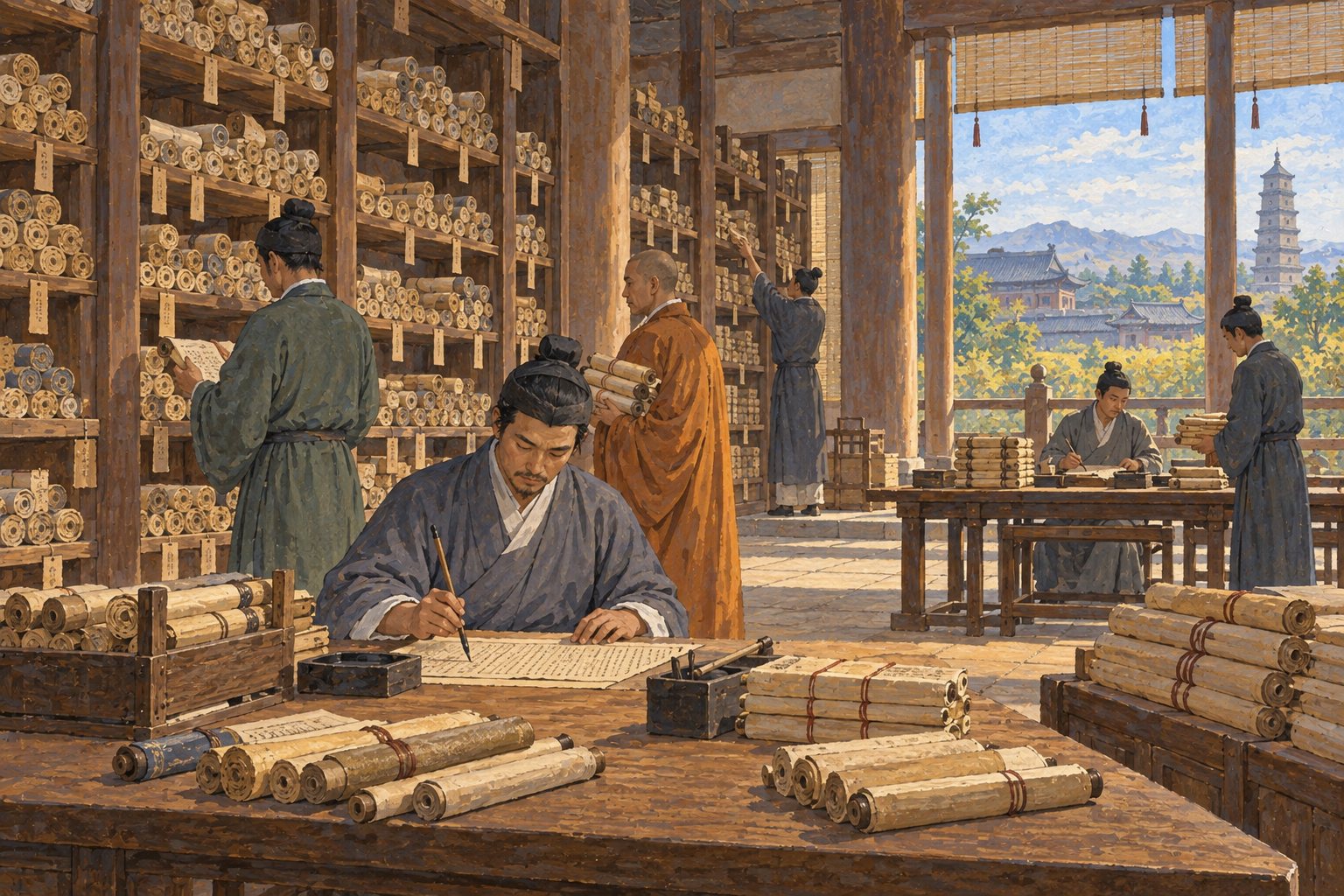
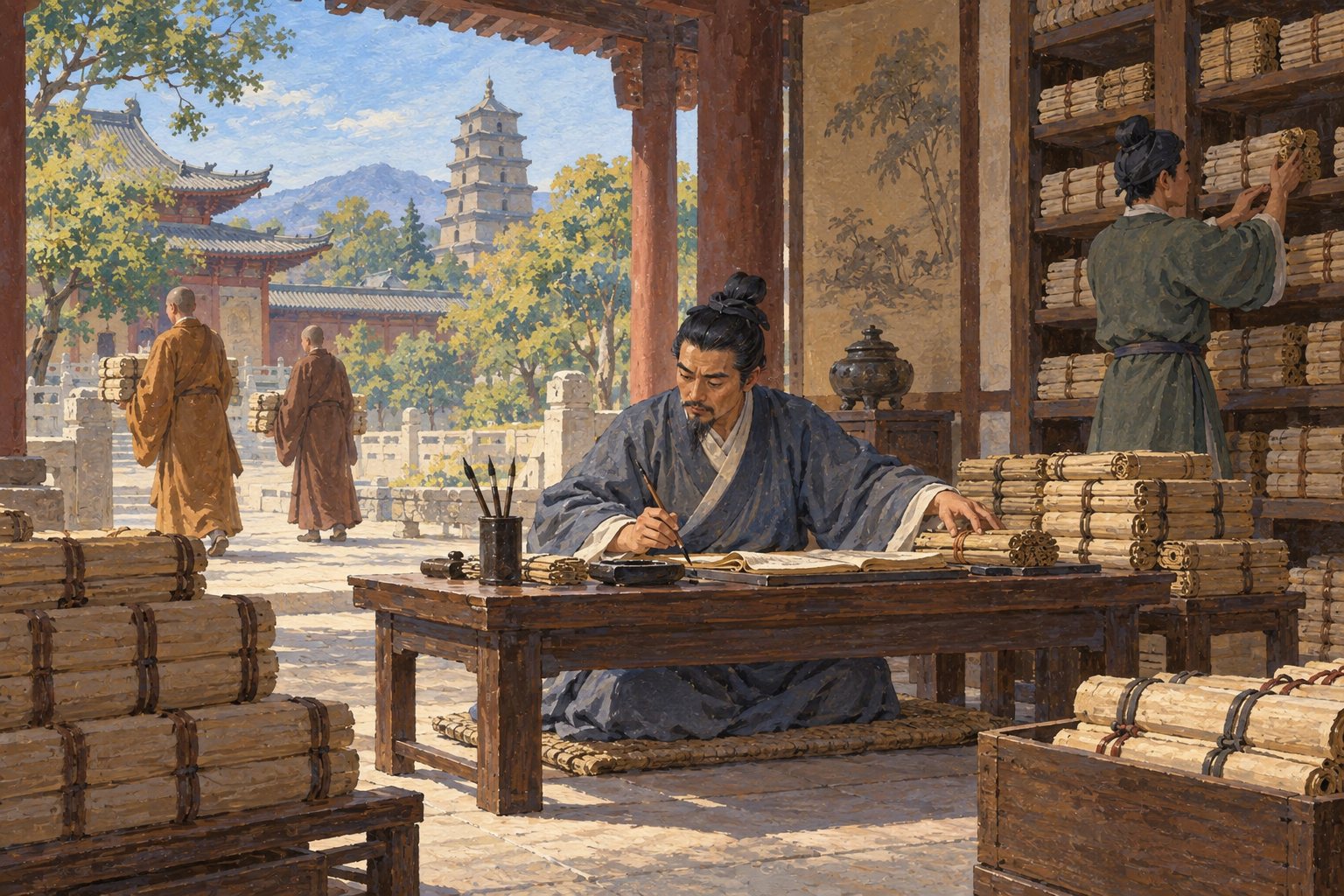
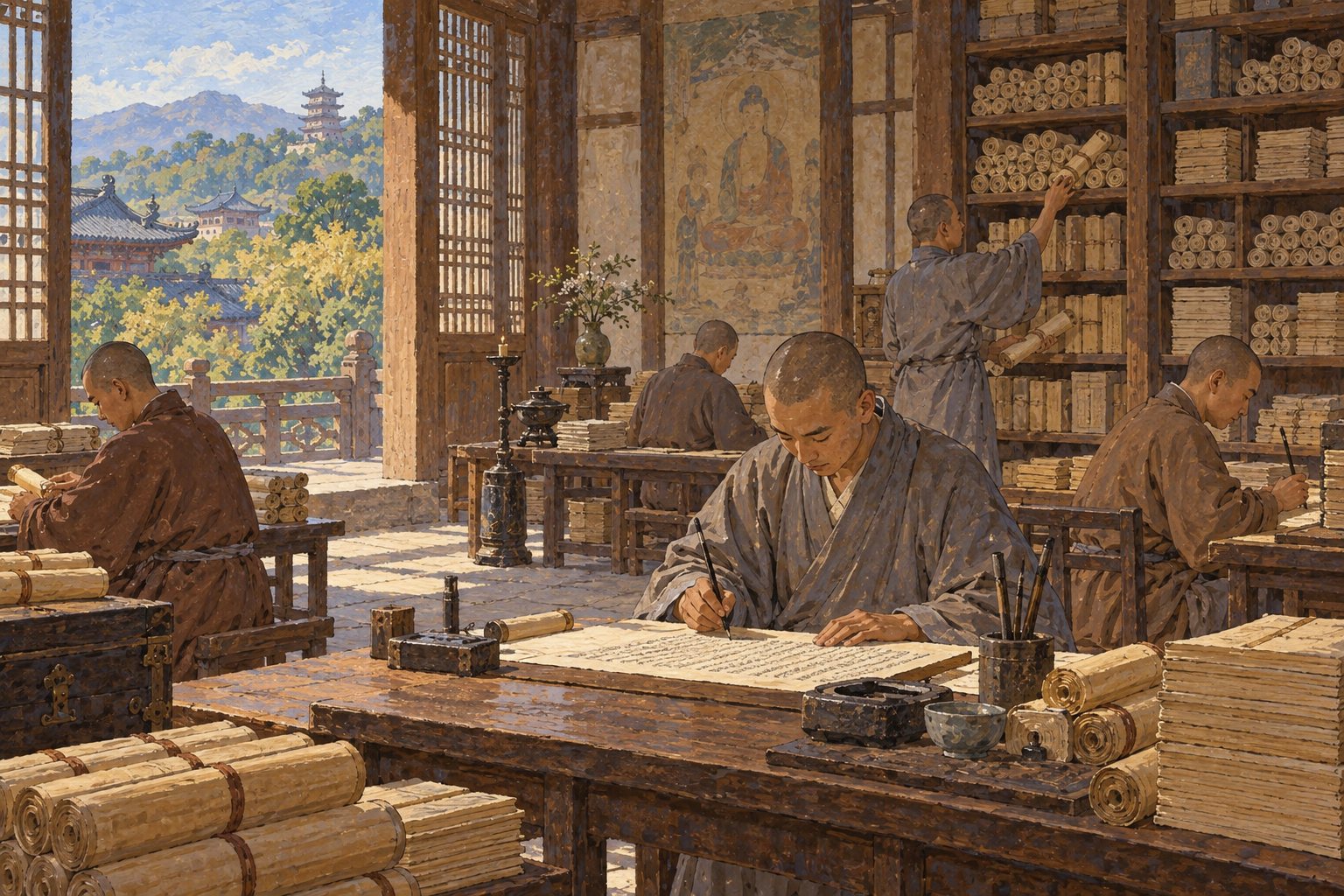
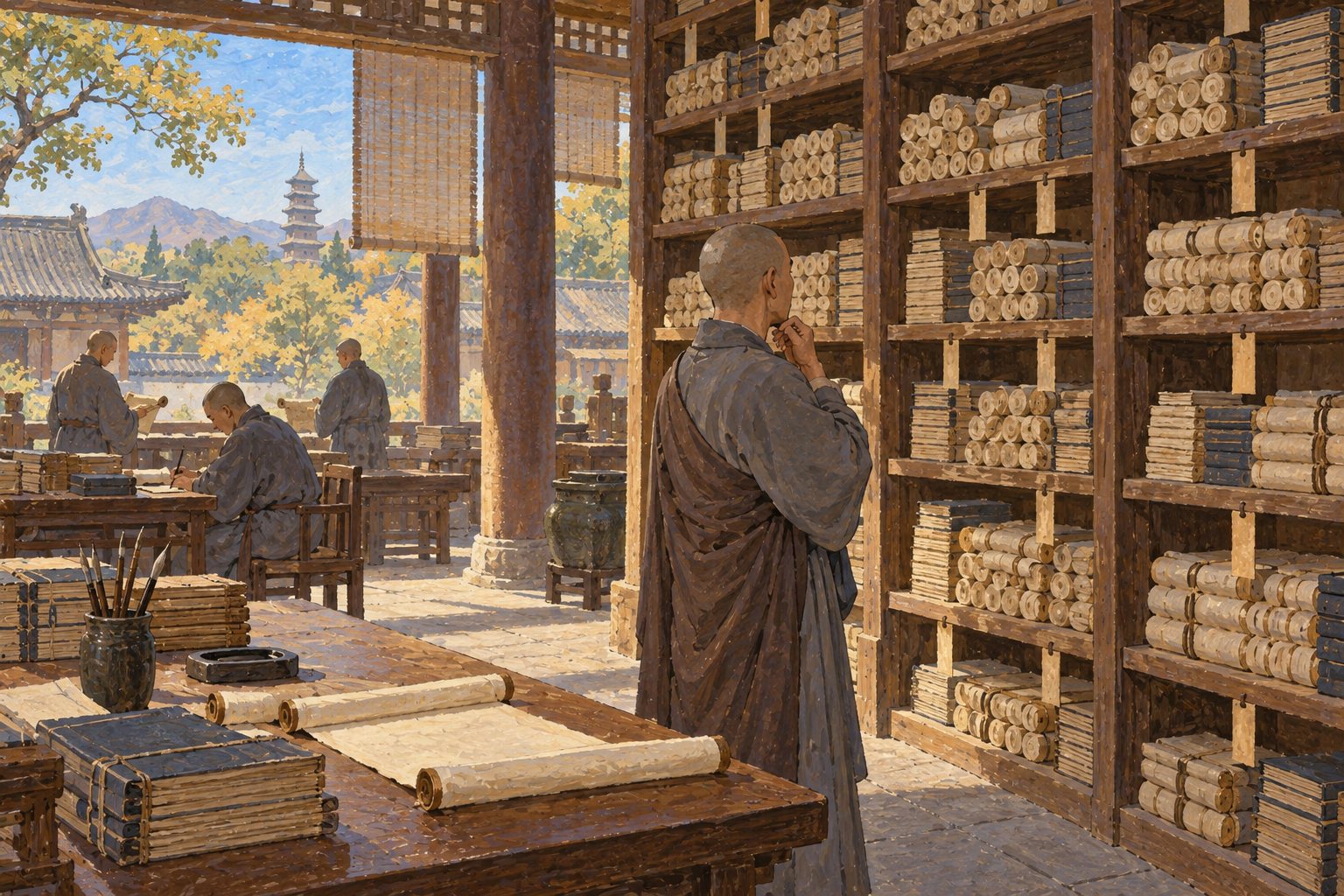
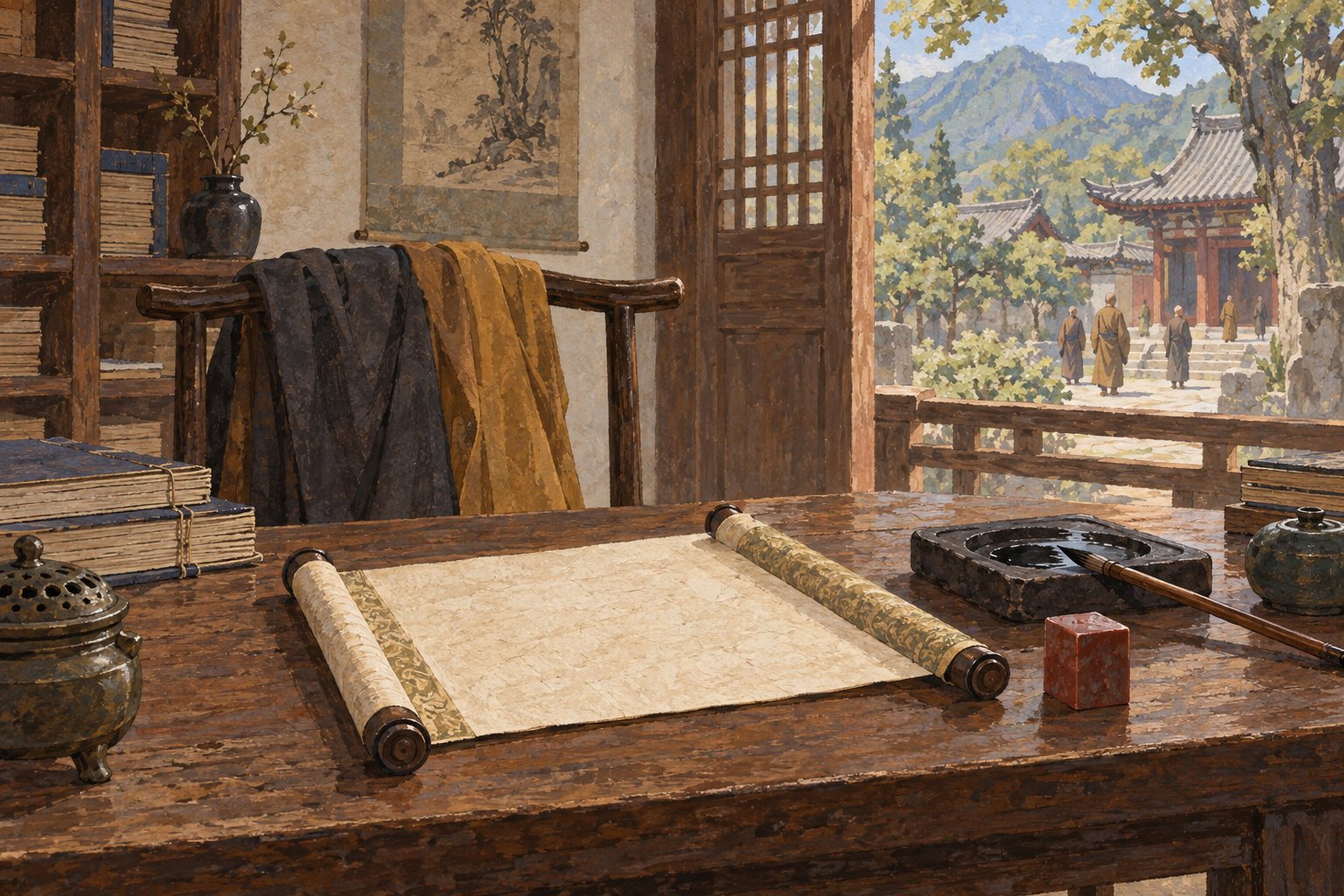
Open on the object — the state catalogue of 730, which fixed the Chinese Buddhist canon at 1,076 works in 5,048 scrolls: the tradition that would advertise a transmission outside the scriptures appears in the one century when the scriptures had just been counted, translated and state-licensed, and the question it answered was the question that count created — which of five thousand scrolls carries the Buddha’s mind, and who in China has the standing to say. The inherited machinery — the translated canon, the merit economy of copying — is handed in by name from the Mahayana Buddhism volume.
The Man Who Grew
The tradition holds that Bodhidharma came from the west in about 520, sat nine years facing a wall at Shaolin, told Emperor Wu his pious works earned no merit, and transmitted the mind-seal to Huike — and the volume reports that account whole, in the tradition’s voice; the record shows a different shape: a datable series of texts in which the biography visibly accretes, and this chapter prints the two accounts separately and dates each layer as it appears.
Explore the illustrations5 scenes · A counted library
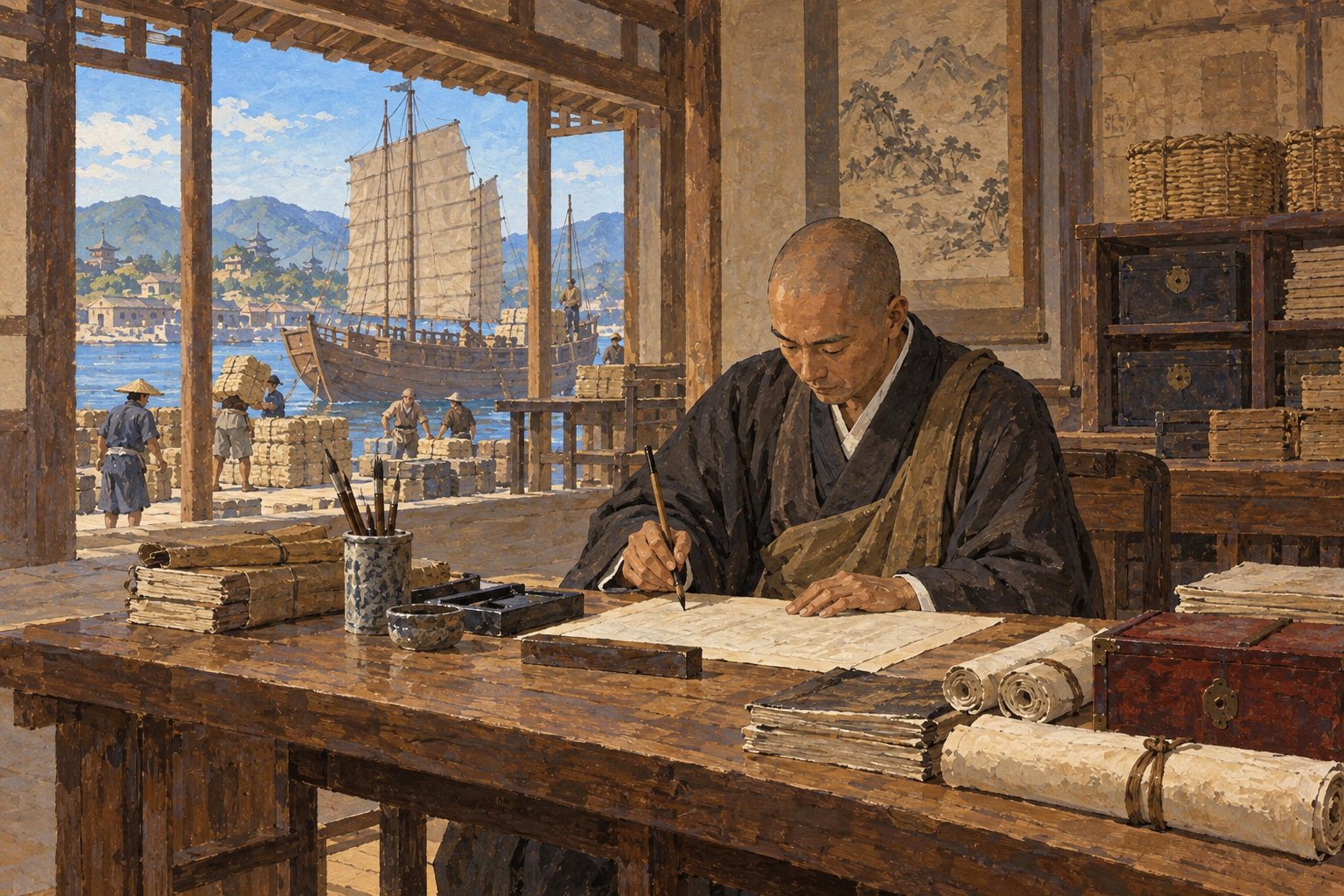
A counted library. Open on the object — the state catalogue of 730, which fixed the Chinese Buddhist canon at 1,076 works in 5,048 scrolls: the tradition that would advertise a transmission outside the scriptures appears in the one century when the scriptures had just been counted, translated and state-licensed, and the question it answered was the question that count created — which of five thousand scrolls carries the Buddha’s mind, and who in China has the standing to say. The inherited machinery — the translated canon, the merit economy of copying — is handed in by name from the Mahayana Buddhism volume.
How it was transmitted
A Robe, a Bowl, a Name in a Chart
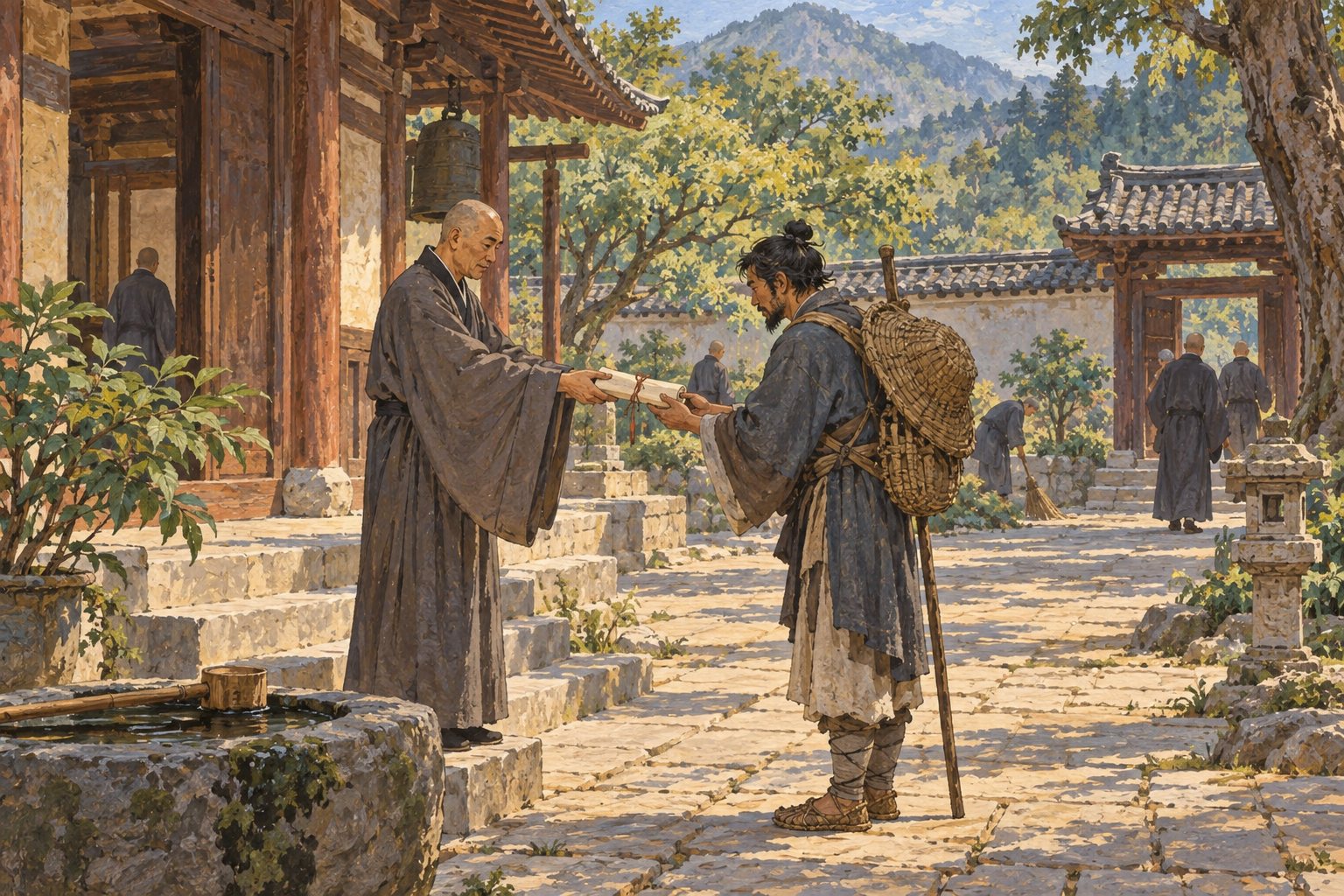
What Chan transmits is not a text but a person, and a person needs authentication: the regalia (the tradition holds Bodhidharma’s robe passed to Huineng and then deliberately stopped), the portrait, and above all the document — a certificate naming the successor, and behind it a chart of names running to the Buddha. The chapter treats the certificate as an artefact: who writes it, what it physically says, and what it is for — a credential, individually issued, that makes authority portable and disputable at once.
Ancestors for a Church
The chart is a genealogy because the model is the Chinese family: patriarch is the ancestor word, the halls where the charts hang are ancestral halls, the death-day offerings are ancestor rites — Chan built a monastic clan inside a civilisation where descent was the strongest legitimacy there was. And the chart runs backward: the twenty-eight Indian patriarchs were stabilised in 801 after the school’s own earlier texts had disagreed on the count — the disagreement is the evidence of construction. Compare, by name, the isnad of the Sunni and Shia volume: also a chain of named humans, but one that authenticates a report and can be cross-checked; the Chan chain authenticates a successor and carries no checkable content — which is why the chart itself, not any text, is what the school would fight over.
Explore the illustrations5 scenes · The portable credential
The portable credential. What Chan transmits is not a text but a person, and a person needs authentication: the regalia (the tradition holds Bodhidharma’s robe passed to Huineng and then deliberately stopped), the portrait, and above all the document — a certificate naming the successor, and behind it a chart of names running to the Buddha. The chapter treats the certificate as an artefact: who writes it, what it physically says, and what it is for — a credential, individually issued, that makes authority portable and disputable at once.
Texts and authority
The Slogan and the Shelf
Open with the argument, stated as the tradition’s own paradox and resolved without a gotcha: the four-line slogan — a separate transmission outside the scriptures, not depending on words and letters — is attributed to Bodhidharma but assembled in the Song, so the motto of textlessness is itself a datable text; and the school that recited it produced one of the largest sectarian literatures in Buddhism. The resolution is structural, and it is this movement’s thesis: a tradition whose authority is a person needs documents about persons — genealogy, biography, dialogue, certificate — so Chan wrote people instead of doctrine, in bulk, and its canon is exactly the shape its machine required.
The Sutra That Edits Itself
The case study: the Platform Sutra, the only Chinese composition its tradition titled a sutra — Huineng’s autobiography, the verse contest, the midnight transmission. The Dunhuang manuscript preserves a text roughly half the length of the received one, with the famous verses in different wording; the received text every modern reader knows descends from thirteenth-century Yuan editions. The chapter states the finding exactly and no further: the foundational document of a school built on person-to-person transmission was maintained, expanded and re-edited across five centuries — which is what documents in institutional custody do; it discredits nothing, and what it demonstrates is that the school’s continuity was institutional rather than textual. One more turn of the screw, from the Dunhuang text itself: possession of the sutra is there declared the proof of transmission — the anti-textual school’s charter text functioning as a certificate.
Institutions and resources
Nothing to Attain, Rice to Grow
Open on the self-image — the work-day maxim, the hoe, the school that farms — and then audit it: Chan monasteries held estates, mills and bound labourers like every other large Buddhist house, the tradition’s claim that self-sufficiency carried it through the 845 confiscations is contested, and the Song base was the conventional one — land, donors and the state. The movement’s method is set here: the school’s economic self-description is a source about its ideals, and the record of what it owned is a different source, and the volume prints both with their dates.
The Abbacy Is a Public Office
In Song China the great monasteries were “public” houses: the abbacy could not pass master-to-disciple within the house but was filled from the certified lineages and ratified by officials — the state as clearing-house for the credential machine of Movement Two — and the empire ranked the top houses into the Five Mountains. Japan copied the ranking: the gozan network under the Kamakura and Muromachi shogunates was a Zen civil service — monk-diplomats, monk-secretaries, monk-accountants, with their own publishing houses (whose technology’s story stays, by name, with the Mahayana Buddhism volume). A school of sudden awakening administered by career examination and government appointment: reported without irony, because it is how the institution actually persisted.
Explore the illustrations6 scenes · The temple’s trading ship
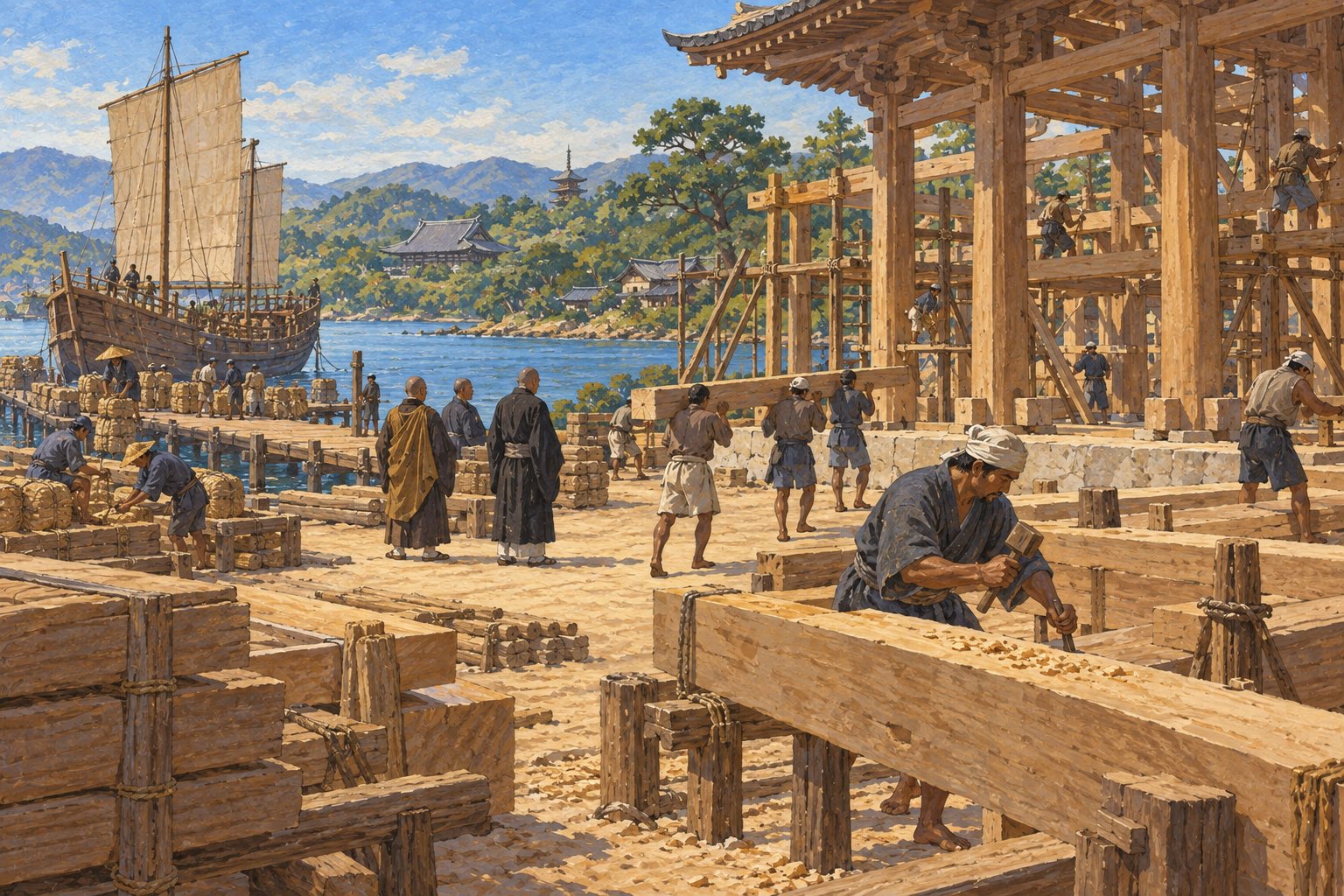
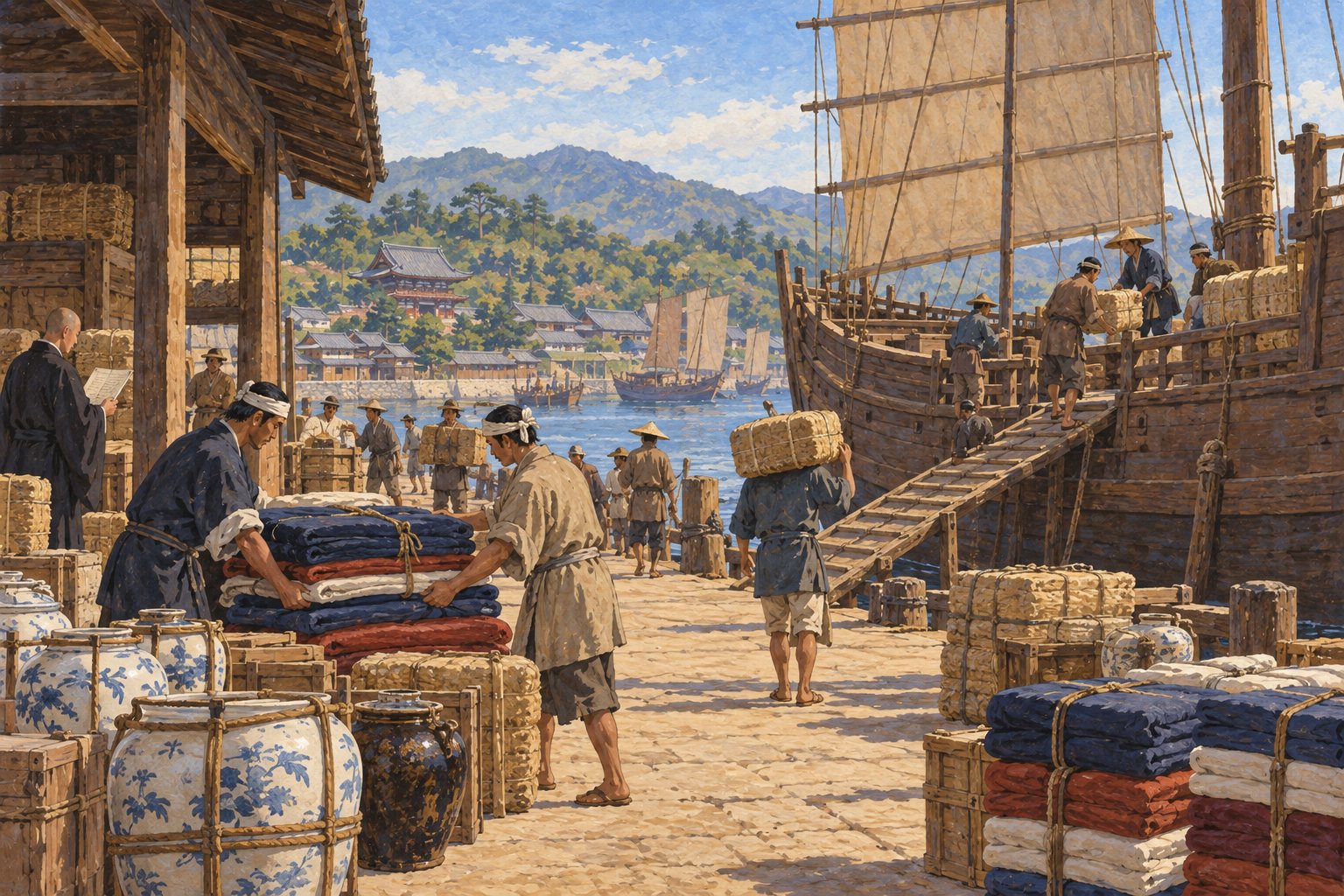
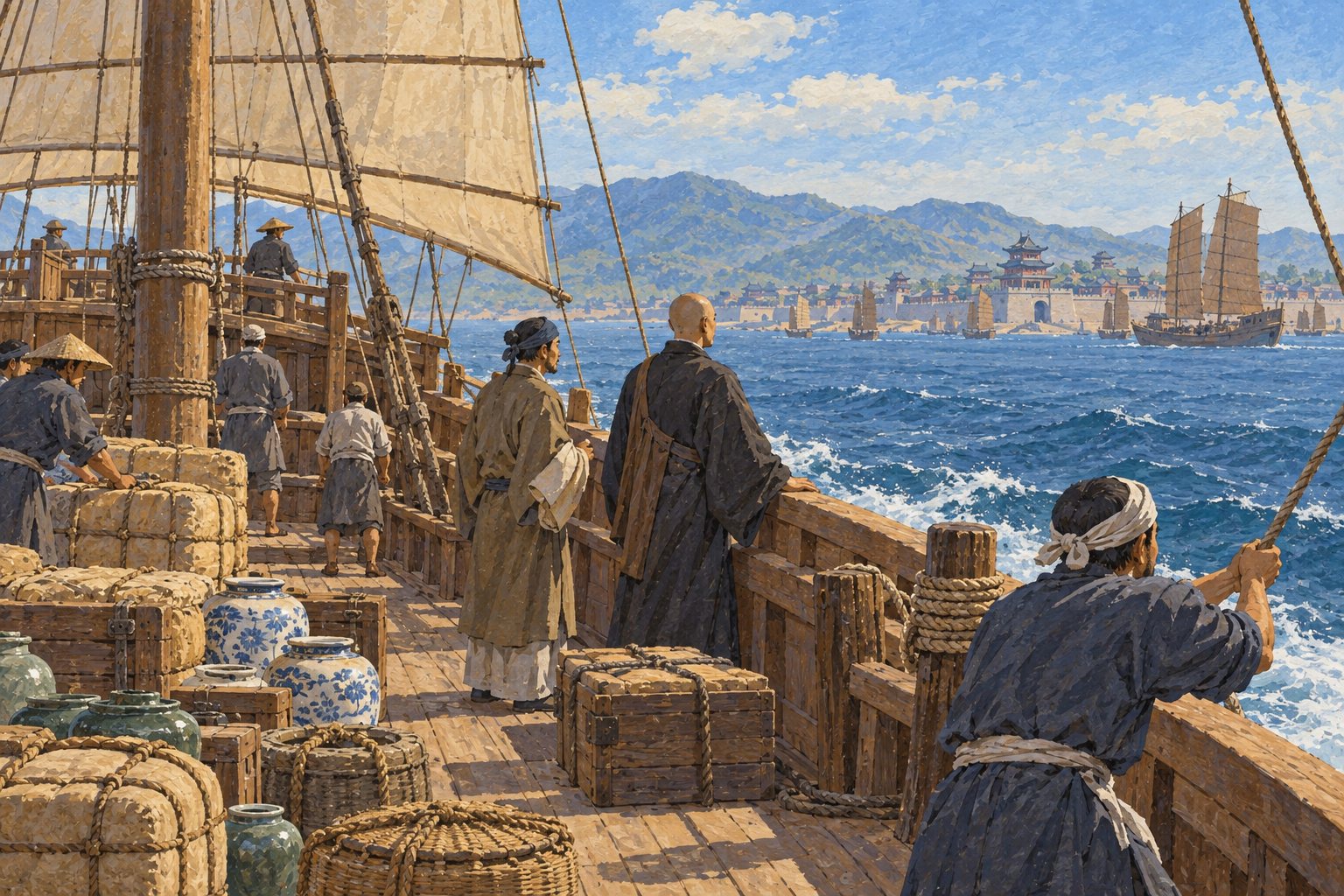
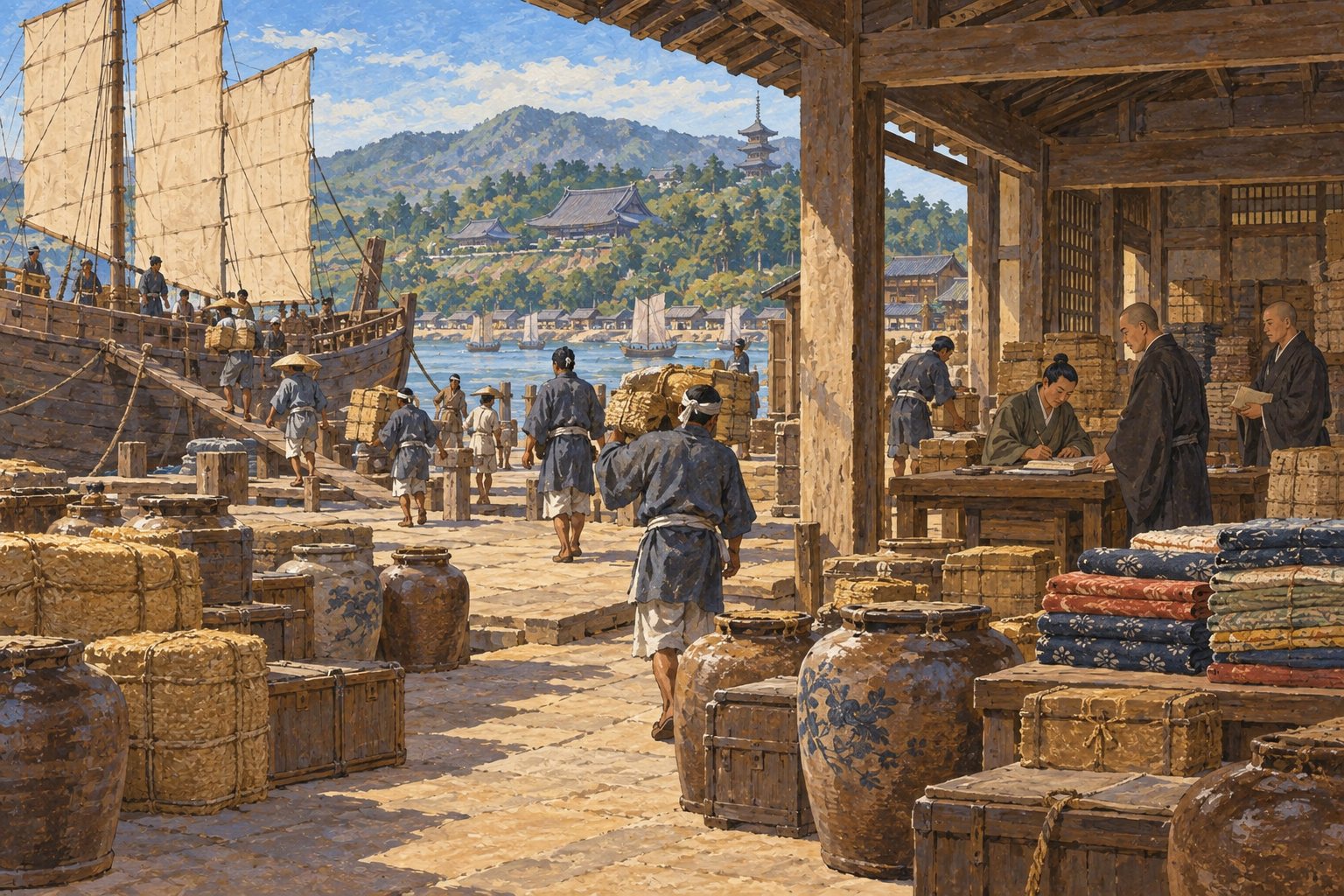
The temple’s trading ship. Open on the vessel: the Tenryuji-bune. To build Tenryu-ji — founded 1339 for the spirit of the emperor the new shogun had just outlived, at the urging of the Zen master Muso Soseki — the bakufu licensed trading voyages to China in 1342, profits to the building fund: an ecclesiastical venture in the China trade, and it normalised. Inside the Ming tally system from 1404, Zen temples came to near-monopolise Japan’s legitimate China trade — the monks held the classical Chinese and the diplomatic forms, so the school that transmitted mind outside scriptures drafted the state’s trade correspondence for a living. The financial terms of the 1342 licence did not verify and no figure ships without a source.
Changes and divisions
The Assembly at Huatai
In 732, at a convocation at Huatai, a provincial monk named Shenhui publicly indicted the dominant metropolitan line — the heirs of Shenxiu — as a collateral branch teaching a gradualism the true school rejected, and named Huineng, robe and all, the real sixth patriarch. The campaign worked, and part of how it worked was fiscal: after the rebellion of 755 emptied the treasury, the government employed Shenhui’s preaching platforms to sell ordination certificates for the war effort — the propagandist as revenue agent, rewarded after death with a place in the succession. The essential point, well supported in the named modern scholarship: the Northern–Southern split was substantially manufactured by its winner’s campaign, and “the Northern school” as described is largely its opponents’ construction — a schism written into history by the side that won the publicity.
Sudden, Gradual, and the Words for Losing
What did the argument actually claim? The chapter reports both positions from the surviving texts — and then reports the philology: the Northern school’s own recovered treatises do not teach the caricatured gradualism, the labels “Northern” and “Southern” were themselves the winner’s weapons, and the deepest irony is institutional: Shenhui’s publicity won and his lineage died anyway — every surviving house of Chan routes through Huineng by other disciples, so the propaganda victor was not the institutional victor. The argument echoed abroad: at the Samye debate in Tibet a Chan master argued the sudden case and, on the Tibetan tradition’s account, lost — a story that belongs, by name, to the Tibetan Buddhism volume.
Limits of the evidence
These limits are stated in the book before its argument.
- Bodhidharma, beyond a sixth-century notice A monk of that name from the western regions appears in a Luoyang gazetteer of about 547 admiring a pagoda; everything else — Shaolin, the nine years, the interview with Emperor Wu, the robe — enters the record in datable later layers. The layers can be dated; the man behind them cannot.
- The historical Huineng The earliest notices are eighth-century and thin; the autobiography every reader knows is the charter document of the party that won by claiming him. What he taught, or whether he could read, cannot be established.
- Any link in the Indian half of the lineage chart The tradition’s own early texts disagree about the number and names of the patriarchs between the Buddha and Bodhidharma, and the founding scene of the whole transmission — the flower held up, the smile — is first attested in Song works of the eleventh century, some fifteen hundred years after its setting.
Sources and reading
This article brings together the series’ existing overview and chapter summaries. The linked book page provides the full outline and bibliography.
- Zhisheng, Kaiyuan catalogue730. state list of the Chinese Buddhist canon: standard totals 1,076 works in 5,048 scrolls
- Samuel Beal, Life of Hiuen-Tsiang1888. Xuanzang’s return inventory of 657 works
- Yang Xuanzhi, Record of the Monasteries of Luoyangc. 547. a monk Bodhidharma from the western regions at the Yongning pagoda — no wall, no robe, no lineage
- Two Entrances and Four Practices, with Tanlin’s prefaceearly text attributed to Bodhidharma. the one treatise attached to the name; quoted from the Chinese, not from Suzuki’s post-1929 English
- D. T. Suzuki, Essays in Zen Buddhism, First Series1927. pre-1929 English discussion of Bodhidharma and the finished biography; also the export product of 1927
- Daoxuan, Continued Biographies of Eminent Monks645. a wall-contemplating teacher and Huike; Daoxin’s East Mountain community in the hundreds
- Anthology of the Patriarchal Hall (Zutang ji)952. Song assembly of the full Bodhidharma legend; lost in China, preserved in the 1245 Haeinsa supplement
- Jingde Record of the Transmission of the Lamp1004. 1,701 lives as the collection’s standard count; finished saint-biography
Illustrations are newly generated interpretations of themes in the book. They are not surviving artifacts, historical photographs or evidence for the events described.